Posted on Leave a comment

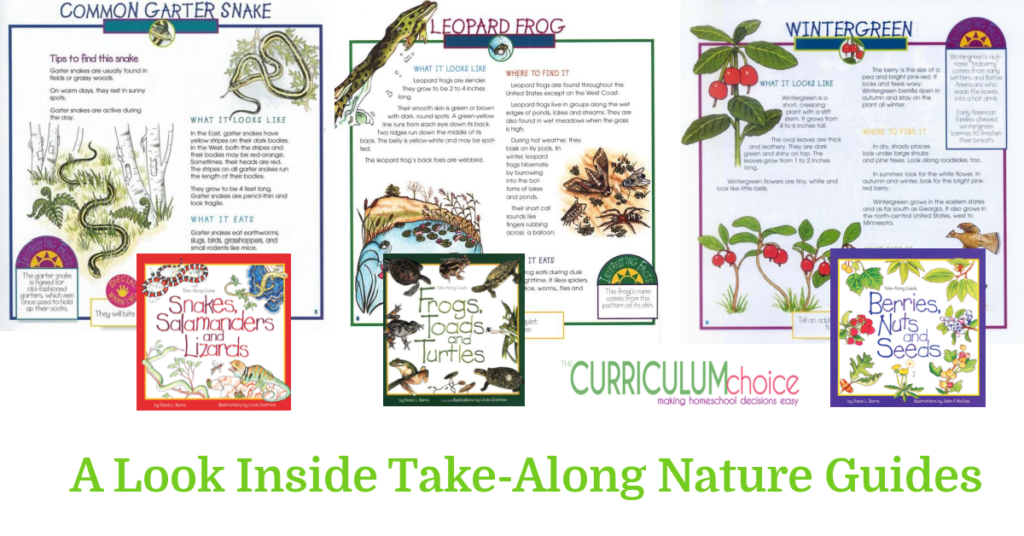
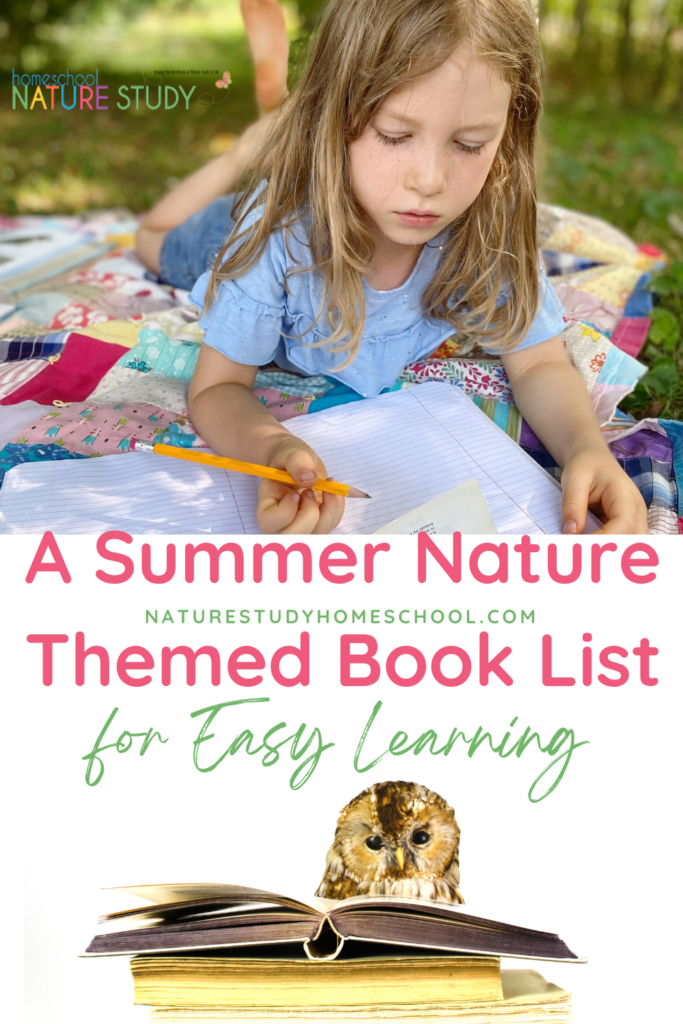
The Ultimate List of Preschool Nature Study Books

While nothing beats experiencing nature first-hand, preschool nature study books are a vital component of our preschool nature studies. We have used both fiction and non-fiction books to introduce a topic, supplement a topic and study a topic in-depth.

Sometimes the books we read have been intentionally picked for nature study, and other times while reading, we come across a nature topic we’d like to learn more about.

Preschool Nature Study Books

Here are some suggestions for enjoying preschool nature study books in your homeschool.

Introduce a Nature Study Topic:


Recently we read the book Fish Eyes by Lois Ehlert. It is a cute toddler and preschool counting book that read for fun. It also got my young girls wondering about different types of fish. After reading the book they wanted to see real fish. The only local place that I could think of that had many different types of fish on display was our local pet store (nature study doesn’t always have to happen outdoors!) We observed the fish and ended up purchasing a small tank and 2 guppies so we could continue our observations at home.

Sometimes a book that wasn’t intentionally picked for nature study can be used as a springboard for further nature studies. Of course you can also pick a quality picture book to intentionally introduce a topic.

Supplement a Topic with Nature Activities:


Once we had our tank set up, we printed out our fish nature journal and watched our new pets. To help supplement our observations, I picked up a few non-fiction picture books about fish. Our favorite book was What’s It Like to Be Fish? by Wendy Pfeffer. It was the perfect amount of information for young children. Explore even more Fun Fish Activities for Preschoolers!

How To Study a Nature Topic with Preschoolers:


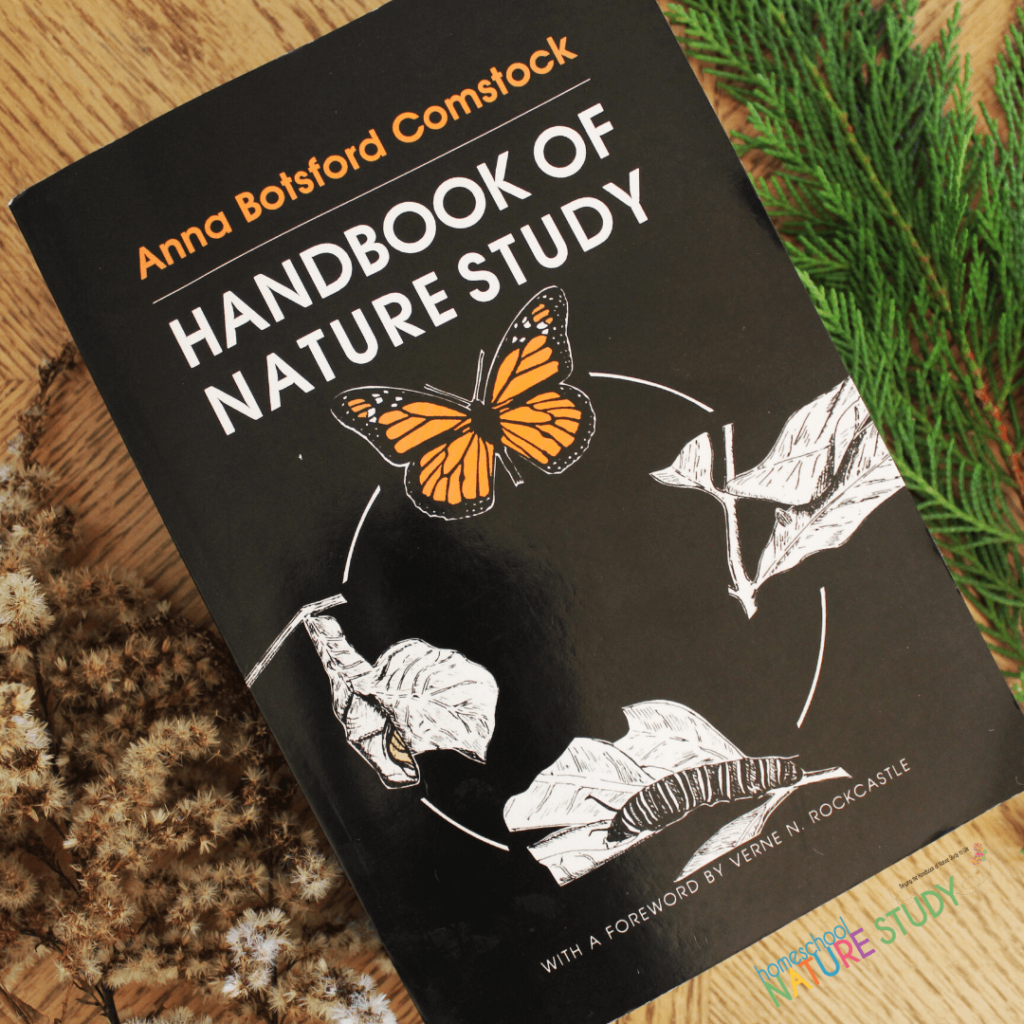
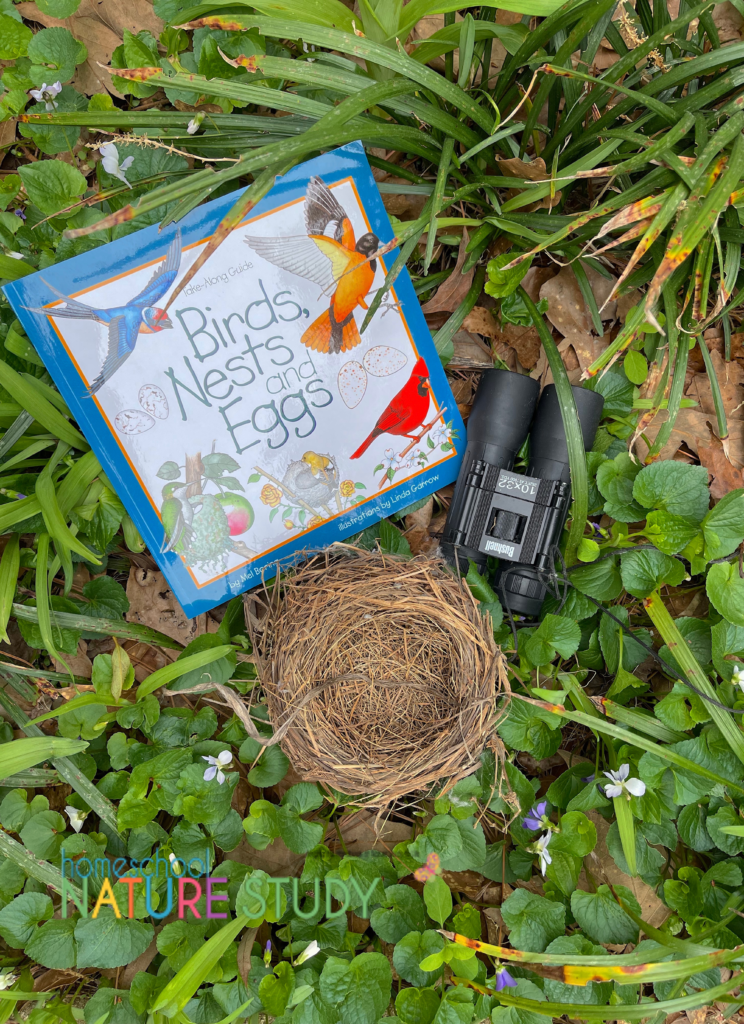
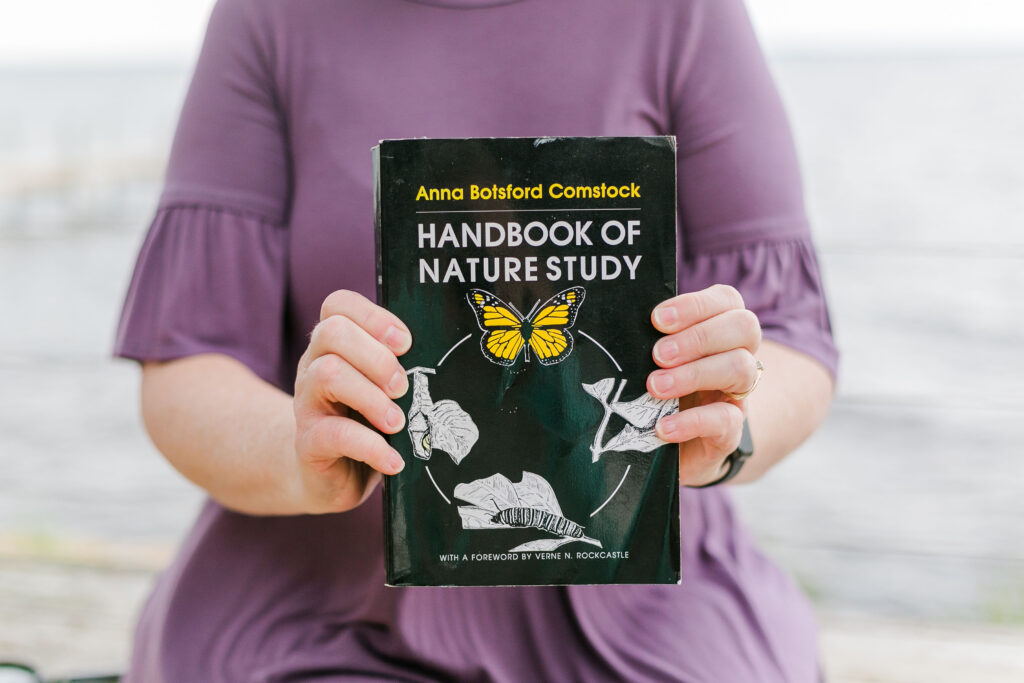
When we want to go more in-depth, we usually turn to field guides and The Handbook of Nature Study for more information. In order to help my children delve deeper, I will gather various resources and set up a book basket on that topic. This basket is accessible at all times to encourage independent learning and exploration. I might also put in items relating to the study and tools to help them observe on their own (such as binoculars and magnifying glasses.)

A List of Preschool-Age Picture Books To Introduce and Supplement Seasonal Nature Studies:

Preschool Nature Study Books For Any Time of Year:

Summer Preschool Nature Books:

Preschool Nature Study Books for Fall

More: Fall Nature Study Ideas for Preschoolers

Winter Preschool Nature Study

spring preschool nature study books

Spring Preschool Nature Books

MORE: Spring Nature Study: Activities, Books and More For Your Homeschool

More Preschool Nature Study Activities

Enjoy these fun ideas for learning!

Even MORE Favorite Nature Books for Your Homeschool Nature Studies

Toddler and Preschool Nature Study Printables

Do you like the idea of involving young children in nature study but not sure how to start? Do you need a little help being intentional with your nature studies? Nature Study Printables is full of printable tools for you to use to get young children observing and talking about nature!

Preschool Nature Study with Homeschool Nature Study Membership!

Enjoy ALL of our preschool nature studies plus access to the Outdoor Hour Challenges curriculum for the whole family in Homeschool Nature Study Membership. Find out more about our Delightful Preschool Nature Study Plans for Your Homeschool.

Be inspired. Be encouraged. Get outdoors!

By Maureen Spell, a long-time contributor to the Outdoor Hour Challenges. Maureen helps Christian mompreneurs operate their business from a place of joy, purpose, and excellence because they are clear on how their business is serving their family and others. As a homeschool mom, she believes success at home AND business without the mom-guilt, stress and burn-out is possible! Outside of work, she loves having good conversations over a hot chai or GT Gingerberry kombucha and spending time with her husband and seven children. Visit her at MaureenSpell.com

Posted on 6 Comments

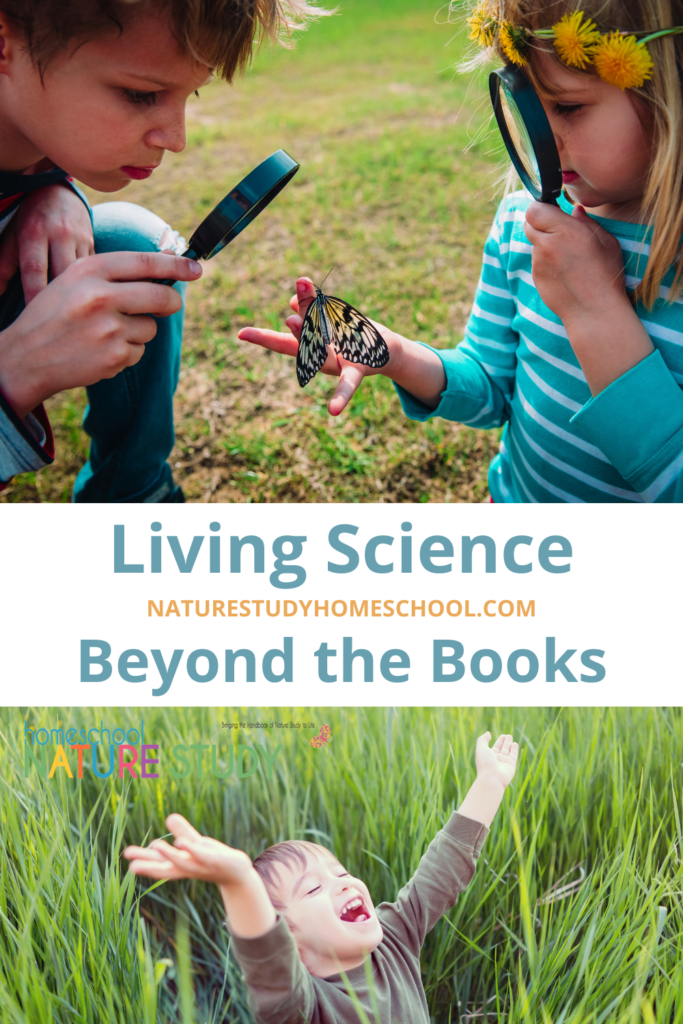
Living Science Beyond the Books

Every parent hopes their child receives a solid science education. This is the case whether our children are homeschooled or attending a traditional school. Many parents, including myself, know we received very little “real” science education growing up and when it comes time to teaching or supporting science learning in our children, we tend to feel slightly inadequate. This doesn’t need to be the case!

Homeschool moms do not have to fear teaching science class! Try a Living Science Beyond the Books approach to enjoy hands-on learning.

Jeannie Fulbright, Apologia Science Writer, inspired me to think about a living science beyond the books type of education and hands-on experience. To stop putting a time slot on the schedule for “science learning” and to start exploring the world with curiosity. To invite opportunities of discovery regardless of where we are or when it is during the day.

Homeschool moms do not have to fear teaching science class! Try a Living Science Beyond the Books approach to enjoy hands-on learning.

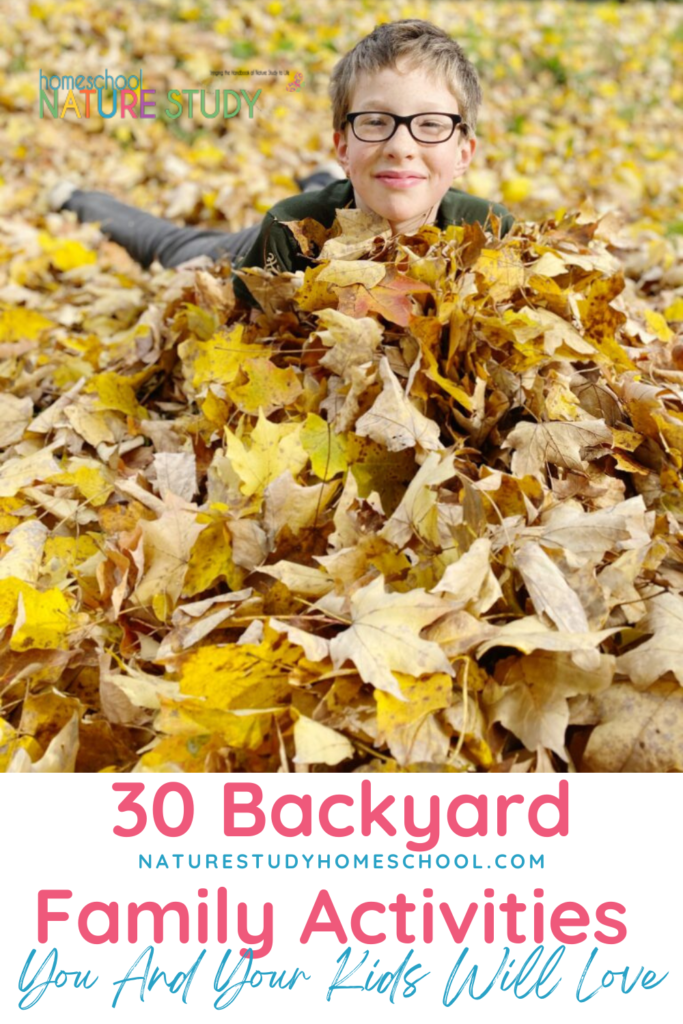
For our family, providing the opportunities for science as part of our every day life has been as easy as opening our back door and doing some exploring together.  Books are a wonderful window to the world but true heartfelt science learning takes place when you learn about things you can see, touch, smell, and hear. You might enjoy some tips from our post: 30 Backyard Family Activities.

Living Science Beyond the Books

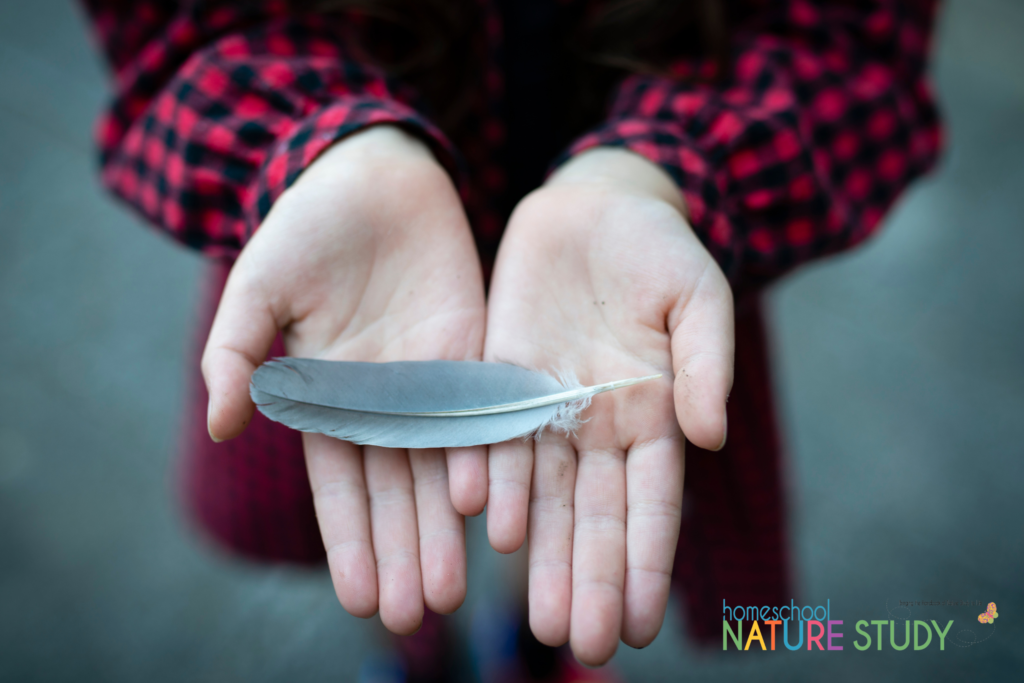
Birds in a book are great but birds in your very own feeder are a living and breathing example to learn from. We have found what works best is observation first and then facts. For example, we learned more by trying to identify these feathers…using a feather identification key for the first time, reasoning on which birds we see in our backyard, and then narrowing it down to a few bird choices. We had to learn the different kinds of bird feathers and make careful observations about color and pattern. So much to build on from just this simple feather find from our backyard.


Homeschool Nature Study Members can print this Feather Coloring Page to try and replicate feather patterns. Or find more Bird Activities and Learn About Birds for Preschoolers.

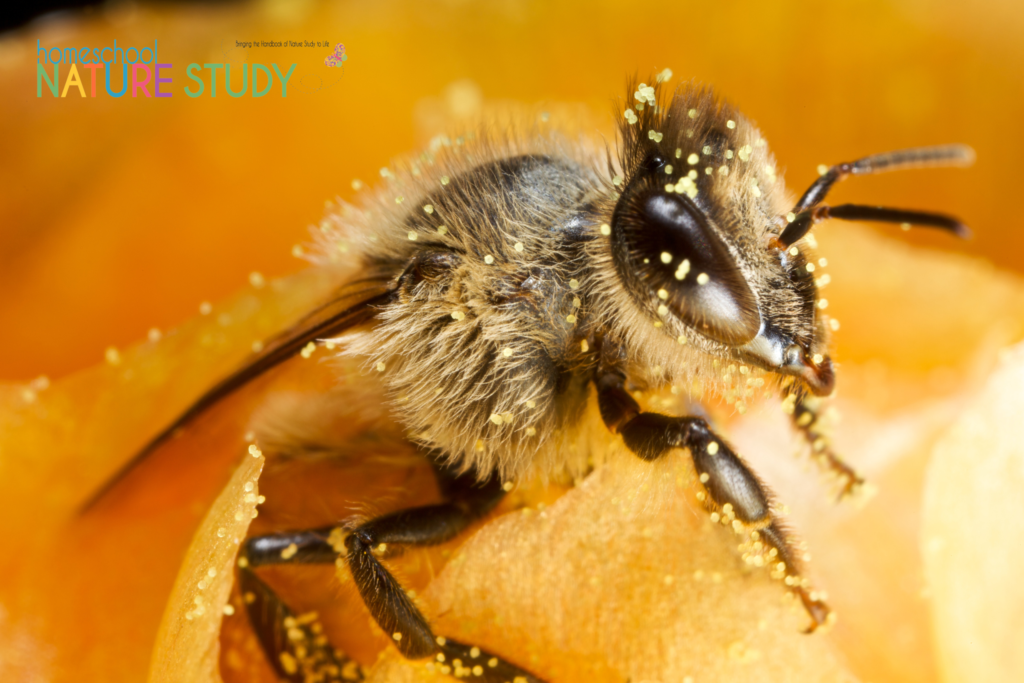
Learning about pollen in a book is interesting but seeing it on a flower, watching a bee covered in it, and then perhaps looking at the flower pollen with a hand lens takes the lesson on pollen to a whole new dimension. Suddenly you care about the pollen…it means something. My son noticed the little yellow specks on flowers in our yard, so we brought them inside for closer inspection…pollen! No wonder the bees are swarming around this plant in our yard!

Fearful of Nature?

Homeschool moms do not have to fear teaching science class! Try a Living Science Beyond the Books approach to enjoy hands-on learning.

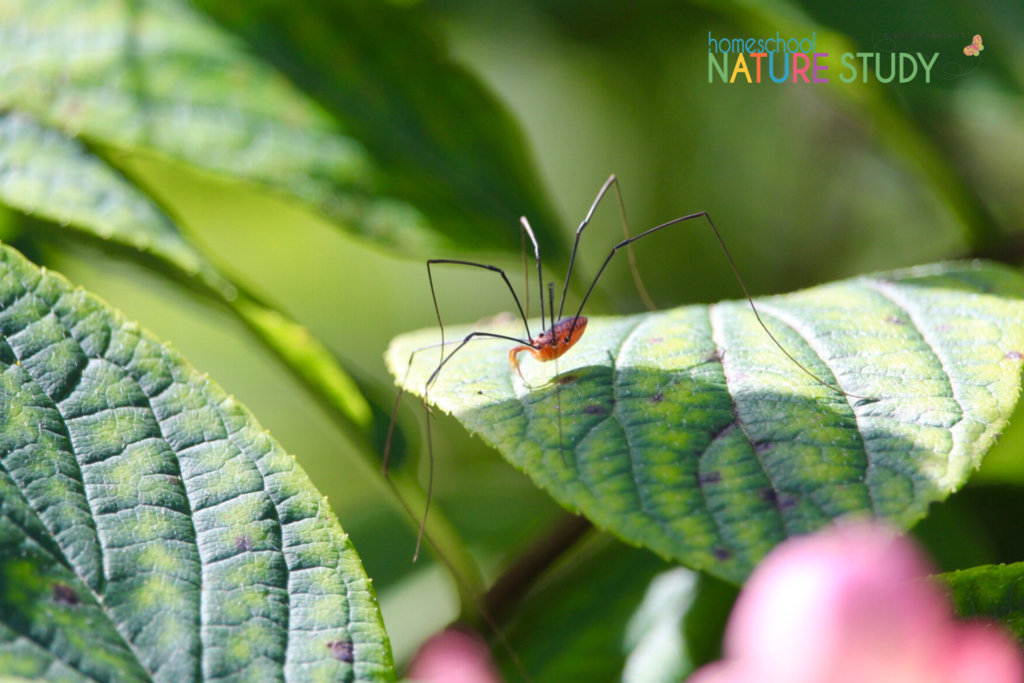
My youngest son hates spiders. He found a spider on a leaf and we spent some time watching it together. Direct observation of a spider takes the fear away and allows the awe to settle in for such an amazing living creature. Living science beyond the books is the best kind of learning for science. Books are there to support and generate interest! But remember to get outside to observe it.

“Nature study, as far as it goes, is just as large as is science for “grown-ups”. It may deal with the same subject matter and should be characterized by the same accuracy. It simply does not go so far.”
Anna Botsford Comstock, Handbook of Nature Study

She supports the idea that beginning with nature study and observation we can build on those ideas and experiences and go farther with more formal science. For a complete picture of how she outlines nature study for families, read the introductory pages of the Handbook of Nature Study (pages 1-24).

“Adults should realize that the most valuable thing children can learn is what they discover themselves about the world they live in. Once they experience first-hand the wonder of nature, they will want to make nature observation a life-long habit. All people are supposed to be observers of nature and there’s no excuse for living in a world so full of amazing plants and animals and not be interested in them.”
Charlotte Mason, Volume 1

So, I think we are in good company. We can provide or support science education in our homes if we remember to take advantage of opportunities that present themselves. Open eyes, open hearts, and then open minds to enjoy living science.

Homeschool Nature Study Membership

Join us for even more homeschool nature studies for all the seasons! With a nature study each week, you will have joyful learning leading all the way through the homeschool year for all your ages!

Not yet a Homeschool Nature Study Member? We’d love for you to join us and take advantage of the numerous studies – already planned out for you, craft ideas, free worksheets, and #outdoorhourchallenge fun! Become a member and bring the love of learning nature and science easily into your home.

Be inspired. Be encouraged. Get outdoors!

Written by Barb McCoy. Updated and new resources created by Stef Layton.

Posted on Leave a comment

7 Tips for a Successful Outdoor Hour Challenge

These 7 tips for a successful outdoor hour challenge will help you and your family establish an easy and fun nature study routine.

These 7 tips for a successful outdoor hour challenge will help you and your family establish an easy and fun nature study routine.

What Is The Outdoor Hour Challenge?

This is a great question! And there is a simple answer. Basically there are three parts:

  • Inside preparation of a nature topic
  • Outdoor time (even 10-15 minutes!) looking for and learning about one or two topics (or whatever you find!)
  • Follow up time nature journaling about your topic

Just how do you get started in homeschool nature study? How do families participate in the Outdoor Hour Challenges? It is so simple to get started and we will show you how. Grab this free Homeschool Nature Study Guide and discover the joys of nature study in your homeschool.

7 Tips For A Successful Outdoor Hour Challenge

We spent a little while observing the weather in our own backyard this week! Summer weather always has something interesting going on for sure!

  1. The night before, or the morning of, I check to see what we’ll be studying. I love that I can access everything in the member section by computer or on the go on my phone!
  1. I pre-read the suggested pages in The Handbook of Nature Study. This book was not written to be read aloud word for word; so I try to get an idea of she’s saying before I go over it with my kids. Both of these steps take maybe 5 minutes altogether.
  2. Quickly gather supplies. We try to keep our supplies together in convenient places; so we don’t have to search all over the house for them.
  3. Sit down and go through the assigned pages in The Handbook of Nature Study together. There are usually other activities, such as watching a video, to do as well.
  4. Go outside and do the Outdoor Hour Challenge! This week it was observing the weather! We had beautiful weather to observe, using our senses! This can be as simple as spending 15 minutes in your own backyard, which we did today!
  5. Then, we come back inside and do our nature journaling. . .drawing/making observations on what we saw.
  6. Time for clean up!

Yes, it’s just that simple. 😉

More Tips For Nature Study In Your Homeschool

Here are some practical tips for you to use to get started!

How to Use the Outdoor Hour Challenges for Your Homeschool Family Nature Study – Here are some things to consider for your homeschool family nature study. Every family is different so use these tips to get started with simple and joyful Outdoor Hour Challenges.

5 Getting Started Tips for Your Homeschool Nature Study – What a delight nature study learning is and what joys you will discover outside your back door. We will help you with simple encouragement along the way.

30 Backyard Family Activities You Will Love! These 30 backyard family activities help you have fun outdoors with your children in a way that is easy and fun!

These 7 tips for a successful outdoor hour challenge will help you and your family establish an easy and fun nature study routine.

Support For Your Homeschool Nature Study

We’ve heard from families that they were reluctant to start a nature study plan, but, they found that having a focus each week actually helped them to stay regular at getting outside. It also helped them be better at taking a few minutes to learn about an object they encountered, even if it wasn’t the original aim for getting outdoors.

We make it easy with resources you can use at your own pace and on your own schedule. Or, you may choose to follow our annual nature study plans closely and have everything at your fingertips.

Amy Law is wife to Jeremy, and mom to three. They homeschool using Charlotte Mason’s principles, and love to spend lots of time in nature! You can often find them hiking the beautiful trails of their beloved Tennessee hills, while Amy attempts to capture the beauty of it all with her camera lens.

Posted on Leave a comment

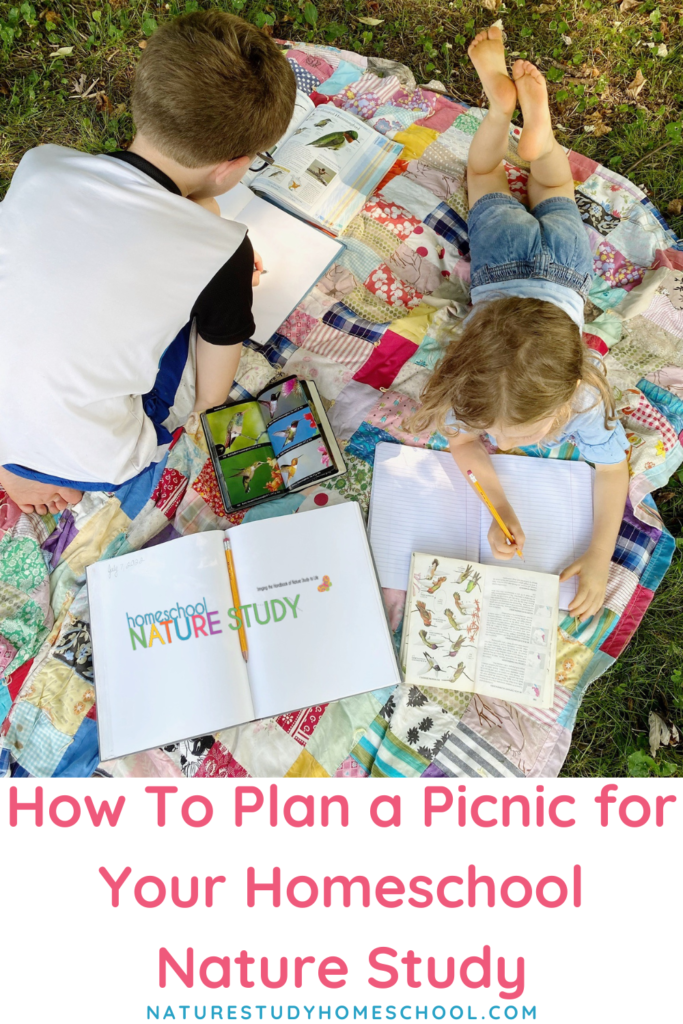
How To Plan a Picnic for Your Homeschool Nature Study

You can plan a simple outdoor picnic with the benefit of homeschool nature study! Even a snack in your backyard will make for a fun time together outdoors. You will be surprised at all you notice while you are outside.

“..by beginning with the child in nature-study we take him to the laboratory of the wood or garden, the roadside or the field, and his materials are the wild flowers or the weeds, or the insects that visit the goldenrod or the bird that sings in the maple tree, or the woodchuck whistling in the pasture.”

Handbook of Nature Study, page 21
You can plan a simple outdoor picnic for your homeschool nature study! Even a snack in your backyard will make for a fun time together.
Image by Amy Law

Ideas for How to Plan an Outdoor Picnic

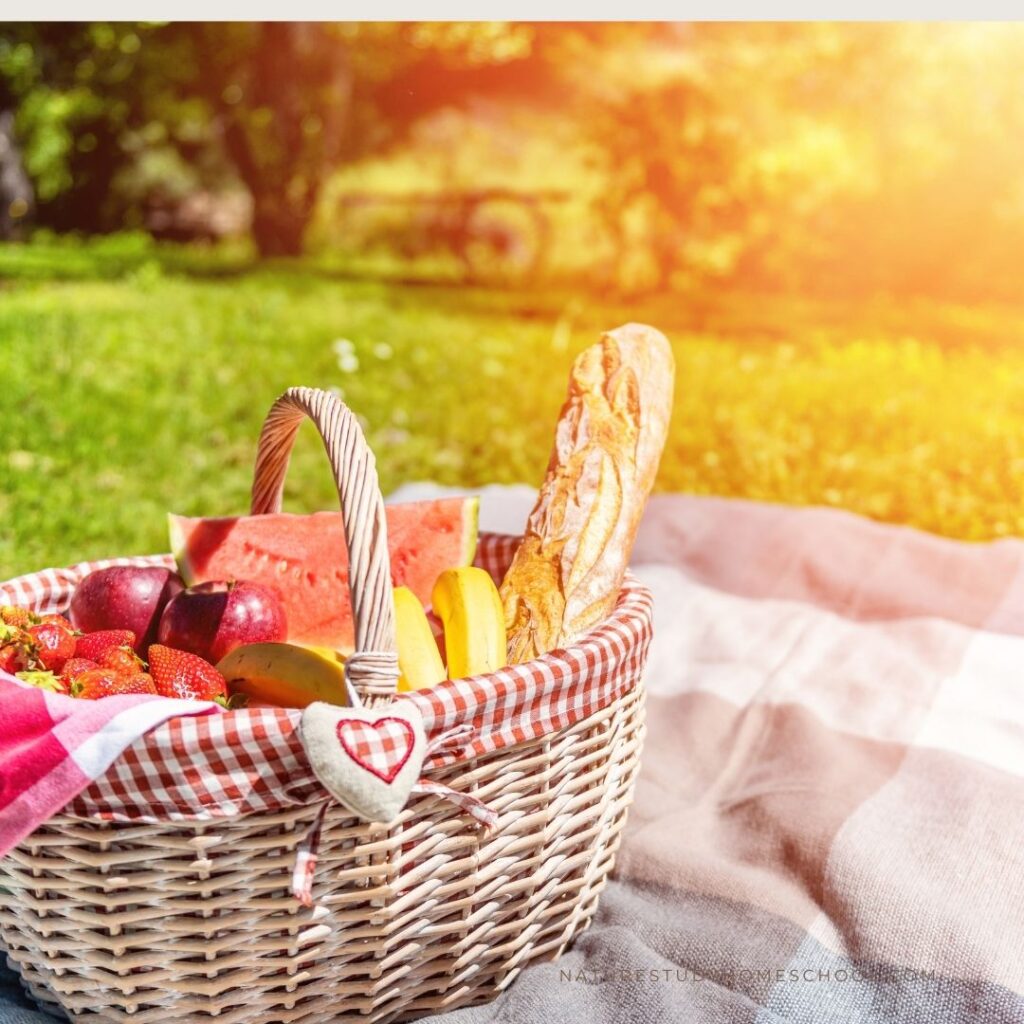
Picnics don’t need to be fancy. Wrap up a sandwich in a cloth napkin, grab a piece of fruit, and some water and you are set. Venture outside even if it is only to your own yard to sit on a blanket and enjoy your lunch. Afterwards you can make time for a short period of nature study.

I love eating outside with my family, especially in the summertime. This week’s Outdoor Hour Challenge encourages you to share a meal outside with your children. Keep it simple as far as food selections and location. Even if all you do is put a few things in a bag, grab a blanket, and then spread it all out on your own backyard lawn, I’m sure you and your children will enjoy the fresh air and the time spent outdoors sharing a meal.

Our family looks back fondly on the meals we shared outside in the summertime on our back deck. It made us slow down a bit and take notice of the things that happen outside like clouds floating by, birds chirping, and trees swaying in the breeze. We watched loads of sunsets and I remember a few times being sprinkled on by a passing late afternoon thunderstorm.

Our family eats dinner outside every night from June to September….longer if the weather allows. We have arranged our patio table under a canopy and the citronella candles are always kept nearby. We have a tree that the hummingbirds sip nectar from in the dusk hours and after our meal we sit and observe their dinnertime.

“…When the weather is warm, why not eat breakfast and lunch outside?…Besides the benefit of an added hour or two of fresh air, meals eaten outside are often delightful, and there’s nothing like happiness to convert food and drink into healthy blood and bodies.“

Charlotte Mason, Outdoor Life pg 43

Summer Nature Study Tip

Purchase some inexpensive, unbreakable dinnerware and reusable utensils. Make sure you have a small ice chest and some cooler packs to pop into your freezer. Gather a blanket or camping chairs to leave in your garage for those last minute excursions to the park for a picnic. Make sure to bring your nature journal and some pencils so you can create a nature journal page if the opportunity arises during or after your picnic.

Outdoor Hour Challenge Picnic

1. The challenge is to have a picnic. No need to go far or to even have a picnic table. Food always tastes better outside and if you don’t want to commit to a whole lunch, why not just a snack?

After you eat, sit and listen to the sounds of the spring.

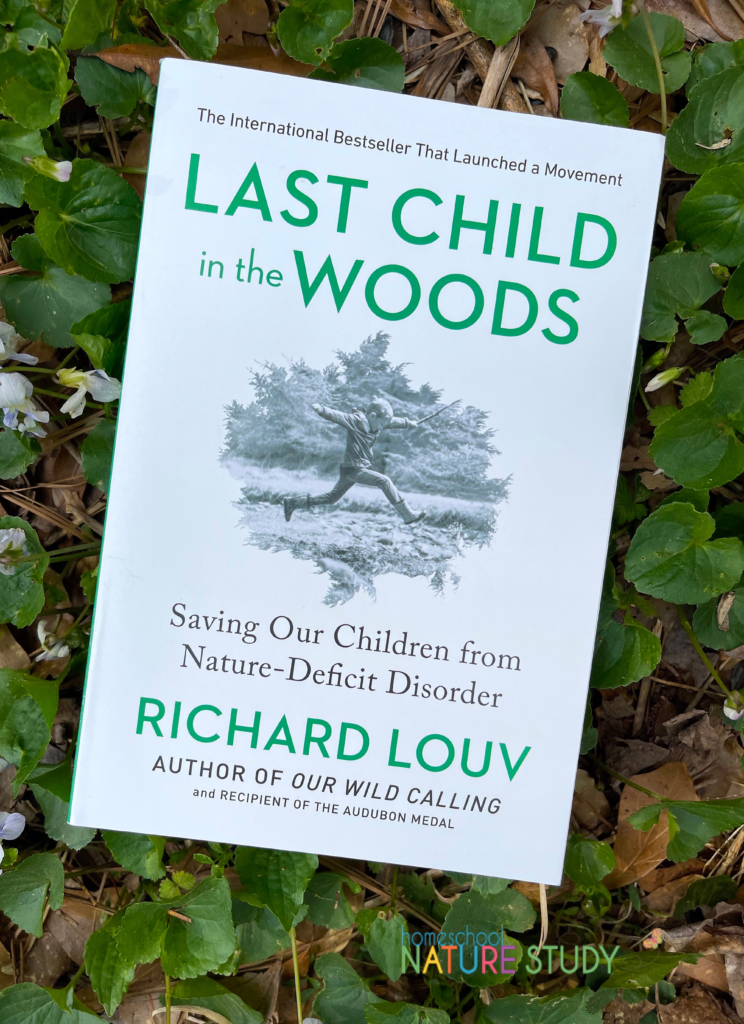
“Given the power of nature to calm and soothe us in our hurried lives, it also would be interesting to study how a family’s connection to nature influences the general quality of family relationships. Speaking from personal experience, my own family’s relationships have been nourished over the years through shared experiences in nature-from sharing our toddler’s wonder upon turning over a rock and discovering a magnificent bug the size of a mouse, to paddling our old canoe down a nearby creek during the children’s school years, to hiking the mountains.”

Last Child in the Woods by Richard Louv

2. After your picnic, spend 10-15 minutes observing your surroundings. Add anything new to your list of items observed in your focus area that you are keeping in your nature journal. Make note of any additional research that needs to be done for things your child is interested in. Make a journal entry if you wish.

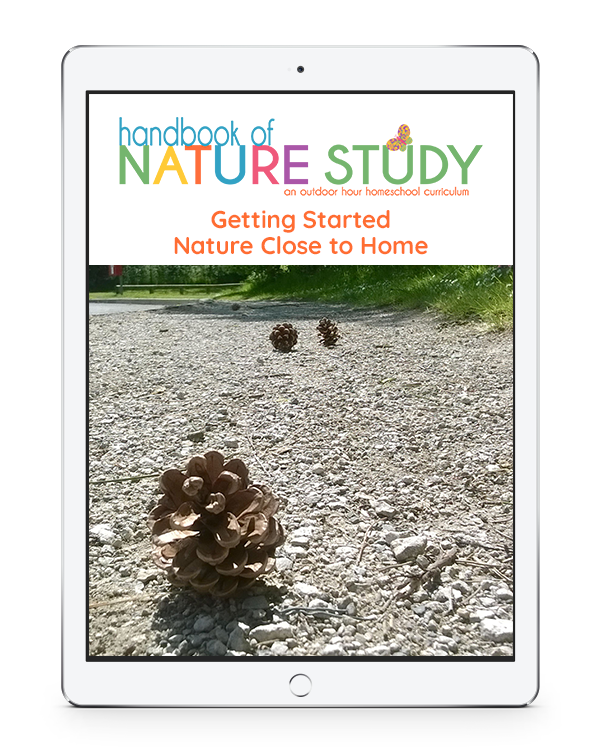
This challenge is found in the Getting Started ebook which is included in Homeschool Nature Study membership. The ebook provides the challenge as shown above as well as custom notebook pages for your follow up nature journal if desired.

Homeschool Nature Study Members Have Great Resources at Your Fingertips

Consider working through the first three Outdoor Hour Challenges in the Getting Started ebook. These three challenges can help build your nature study habit. I highly recommend following the suggestions for reading in the Handbook of Nature Study that go along with those challenges. The words expressed in those readings include timeless advice to parents about the value of regular nature study close to home. Make sure to have the printable nature journal pages bookmarked in case your child is ready to create a record of their Outdoor Hour Challenge.

#1 Let’s Get Started
#2 Using Your Words
#3 Now Is The Time To Draw

Get your FREE Getting Started: Nature Study Close to Home (includes these challenges!)

Look for the Outdoor Hour Challenge Planning Pages printable in the Planning Resources course. Use these pages to make a rough plan for your nature study.

If you’re not a member here at Homeschool Nature Study yet, please consider joining to gain the benefit of having a nature study library at your fingertips. There are numerous resources available for you to help create the habit of nature study within your family.

by Barbara McCoy, Outdoor Hour Challenges founder

You can plan a simple outdoor picnic for your homeschool nature study! Even a snack in your backyard will make for a fun time together.
Posted on Leave a comment

Insect Nature Study For Kids: How to Identify an Insect

Even if you or your children are squirmy about insects, there is so much to discover and learn! In this insect nature study, learn how to identify an insect with simple steps!

This engaging insect nature study for kids includes step by step instructions on how to simply identify an insect.

“Insects are among the most interesting and available of all living creatures for nature study. The lives of many of them afford more interesting stories than are found in fairy lore; many of them show exquisite colors; and, most important of all, they are small and are, therefore, easily confined for observation.”

Handbook of Nature Study, page 294
This engaging insect nature study for kids includes step by step instructions on how to simply identify an insect.

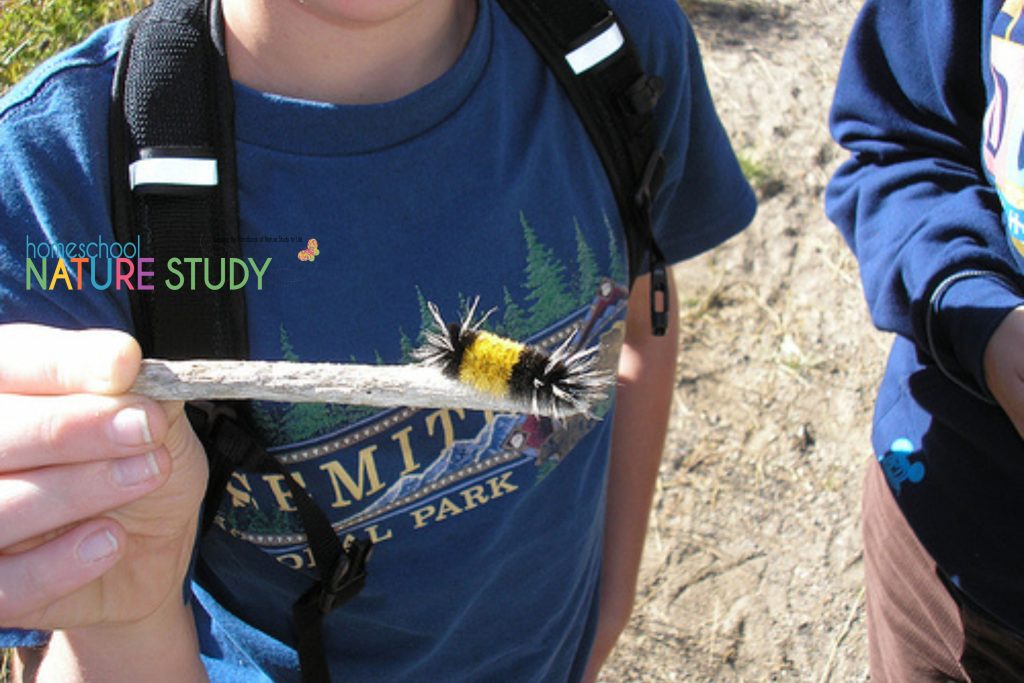
I am finding this to be the case in our everyday life…there are insects everywhere. The caterpillar above we found on our hike yesterday. The more we looked, the more we found.

This engaging insect nature study for kids includes step by step instructions on how to simply identify an insect.

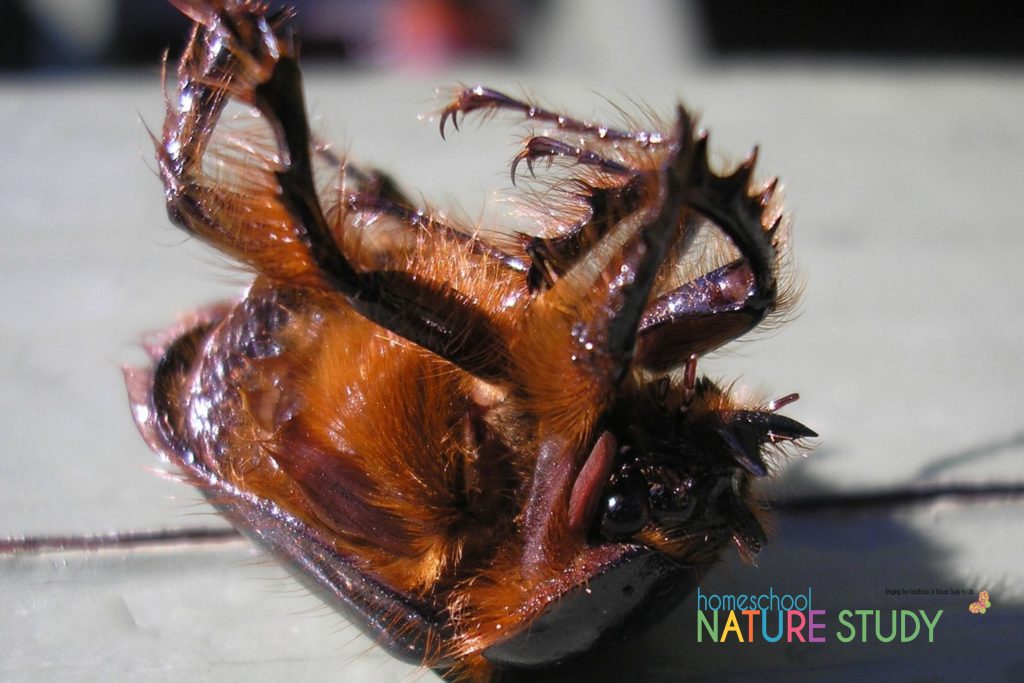
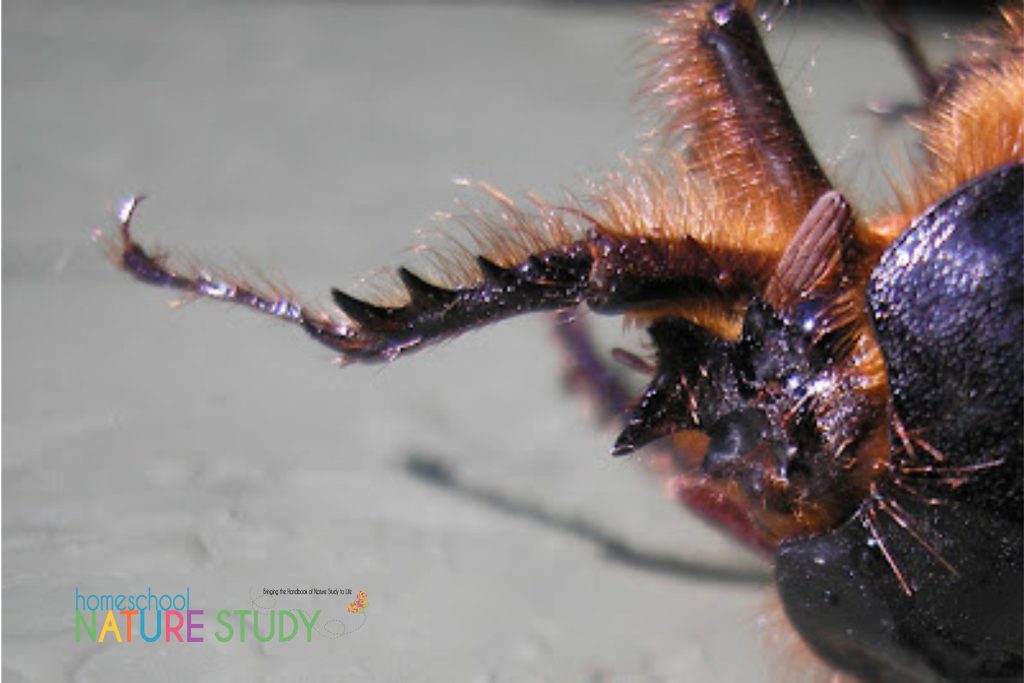
Rain beetle: Although she looks dead, she really wasn’t. She kept flipping over on her back and wiggling and stretching her legs. Today was a first. I actually looked closely at a very ugly beetle. Yes, I am becoming an insect gal. I know this for sure because my daughter and her friend Shyloh brought me home a very large, very alive beetle creature. I had asked all my family to bring home any interesting insects they find and had even given them each a ziploc sandwich bag to bring them home in. Yesterday was the first time someone brought me an insect treasure. They said they couldn’t bear to put it into a baggie so they used a small plastic container from my daughter’s lunch box. She said there were hundreds of the beetles so she felt like she could bring one to us to study

How to Identify an Insect

At first I was disgusted by this creature but after taking her out of the container and looking carefully, I once again found the beauty in the design of the Creator. Now all that was left to do was to discover what sort of beetle this insect was.

This engaging insect nature study for kids includes step by step instructions on how to simply identify an insect.


Steps To Identify An Insect


1. I pulled out my field guide but could not see any beetles that looked like this one.

2.So it was off to the internet and we started by looking up “beetle, california” on Google. I am finding that if I Google something and then look at the images it takes me far less time to identify a creature.

3.Once you find an image that looks like your insect, click on the link associated with that image. The majority of the time this is enough to get you pointed in the right direction.

Insect Nature Study For Kids

Here’s what I learned about this little female insect: Rain beetle or P. puncticollis (more on classification at BugGuide.net)and can be found in California woodlands. The male is approximately 1″ and the female can be slightly larger at 1 3/4″. The males have wings but the females do not. They range in color from reddish-brown to black. The underside is covered in hairy bristles.

The interesting thing about this beetle is that it makes a sudden appearance after a soaking rain….hence the name Rain beetle. We had a really good rain all the night before so I think this is probably why we were able to see this amazing creature. The life cycle of the Rain beetle is very long. The larvae, who feed on roots of live trees and bushes of oaks and conifers, take up to as much as 10-12 years to mature but once they become adults the males wait for the first rains to bring them out for their mating flight and the females dig a tunnel to the surface to wait for the males to find them. Here is the fascinating part:The conditions that trigger the males and females to emerge are so stringent that this may only happen in a population for a single day in a given year. This made the finding of this insect all the more precious since it is a rare event.

This engaging insect nature study for kids includes step by step instructions on how to simply identify an insect.

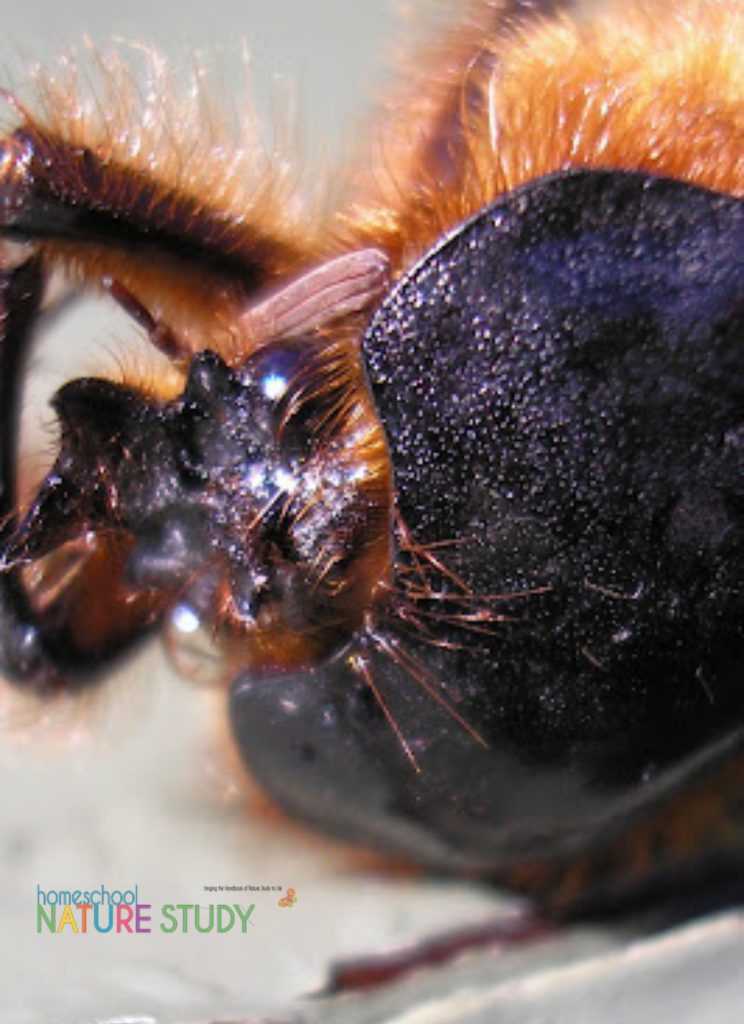
This is the head of the beetle and if you look closely you can see her little “horns”. The males fly slowly over the area, low to the ground, looking for the females who although rarely leave their underground burrow, wait at the burrow’s entrance for the arrival of the males. She puts off a pheromone that attracts the males. After mating the female closes off the entrance to her burrow and lays her eggs. These mature the following spring.

rain beetle up close

I love this photo that shows her leg parts.

Wow, so much to learn. I have a new appreciation for the study of insects after learning that this was not just an ugly bug. It has a whole life story to learn and now I can share it with others.

“When it is properly taught, the child is unconscious of mental effort or that he is suffering the act of teaching.”

Handbook of Nature Study, page 6

I did all this research and it hardly felt like any effort at all. I will be striving to make our nature study so that it is interesting and feels not like work but like refreshment.


Get your FREE Getting Started: Nature Study Close to Home (includes three challenges!)

If you’re not a member here at Homeschool Nature Study yet, please consider joining to gain the benefit of having a nature study library at your fingertips. There are numerous resources available for you to help create the habit of nature study within your family.

Handbook of Nature Study for your homeschool

by Barb McCoy, founder of the Outdoor Hour Challenges

Posted on Leave a comment

Summer Nature Study: Learn And Have Fun When It’s Hot Outside

Here are some tips for enjoying summer nature study when it’s hot outside. I live where it gets really hot outside in the summer. We have had just a taste of the heat so far this year but it has been enough to remind me just how hot it can be in the sun in the afternoon.

I want to encourage those that have emailed me lately telling me that it is too hot to participate in the Outdoor Hour Challenges right now in their part of the world. I sat and thought about how we can accomplish the Outdoor Hour even when the temperatures and humidity get up to the point where staying outdoors is unpleasant and potentially dangerous.

Homeschool Family Tips for Enjoying Summer Nature Study

Here are homeschool family tips for enjoying summer nature study (what we do in our family).

We try to get outside early in the day when there is still a little shade. We take a few minutes first thing to take a walk around the garden to pull a few weeds, make sure the watering system is working, harvest any goodies that are ripe, and enjoy the progress of the garden.

This gives us an opportunity to watch birds, look for worms, see butterflies, look at spider’s webs, watch ants, pick up some acorns, feel the cool breeze, look at signs of nocturnal visitors, and so many other everyday sorts of nature study.

Other than working in the garden, we many times take a short walk just around the perimeter of our property just looking for anything interesting. Ten or fifteen minutes is usually all that takes. Do we sometimes get hot? Yes we do but then we come inside and get something to drink and take a little time looking up anything we found interesting online or in a book while it is fresh in our minds. It might be a feather we found or an interesting rock. It could be a new flower blooming or a spider we don’t know the name of. Here is a quote from a newer participant in the Outdoor Hour and what she wrote on her blog.

“I have noticed in our studies that if we wait, nature will come to us.”

Paula, from Wakefield Academy

I love that and it is so true. It is the little things that come your way during your everyday business and travels that enrich your nature study.

It really isn’t about the big field trips or the nature study classes, it is the day to day, ho-hum stuff that is fascinating. The house fly that you look at with the hand lens, the ants crawling on your front step, the bird gathering twigs for a nest outside your window, the things we so many times fail to notice.

Nature Study When It’s Hot Outside

Here are some simple tips for summer nature study:

Have a Focus for Your Nature Study

I think in the heat of summer you just need to plan and have a focus for your nature study. You may want to focus your Outdoor Hour Challenges on garden flowers. Each challenge can literally be completed by taking a ten to fifteen minute period of time outside. You do not need to travel to a nature study area or spend a half-day or a whole day outside. For instance, challenge #17 was to look at leaves. My son and I went out and found about ten different leaves to look at and we were only outside about five minutes. We brought the leaves inside and we looked at them and then he drew them in his nature journal in the comfort of the cool indoors. You really only needed to find one leaf and bring it in to look at….tops outdoor time would be five minutes and that is still doable in hot weather.

Involve Water in Your Nature Study

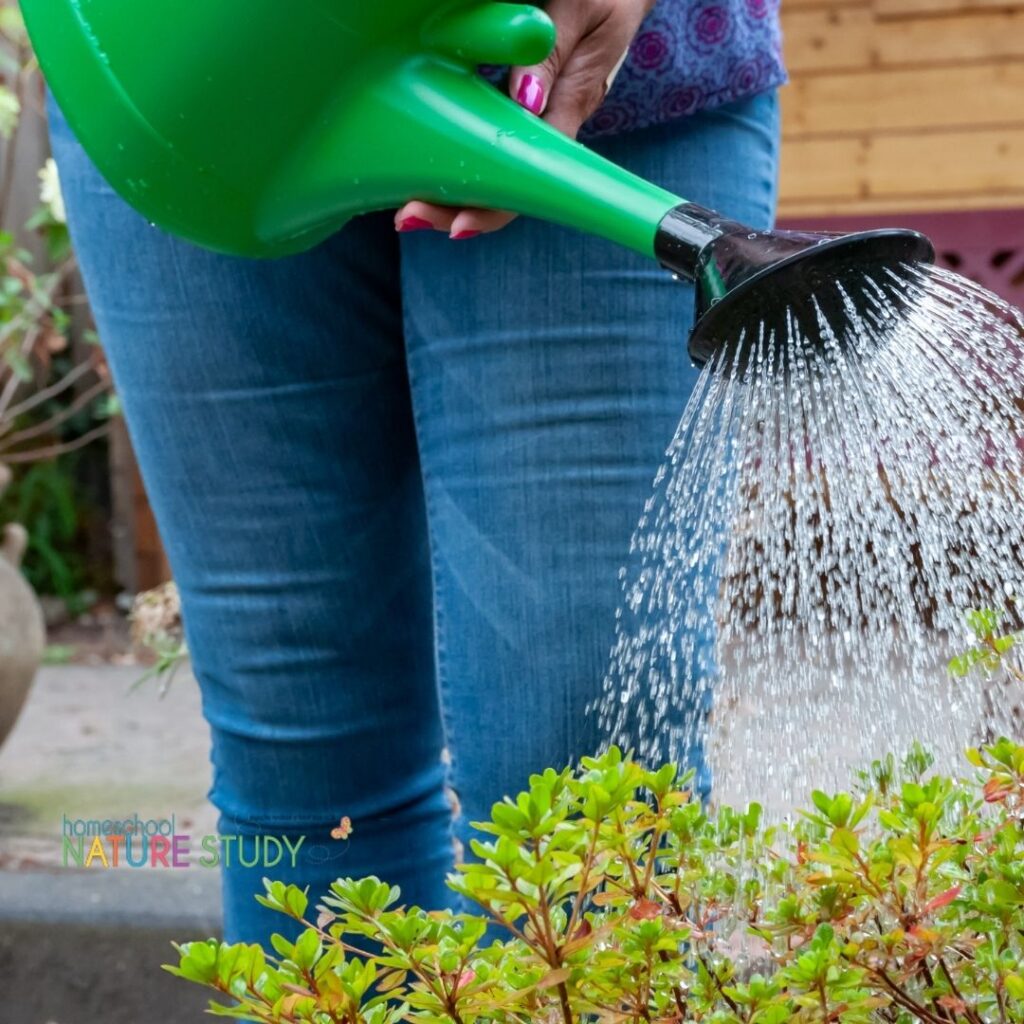
I find that if I involve water in some aspect of our outdoor time the children and I enjoy it more. Watering the grass or watering with a watering can can provide just the touch of coolness to our time even if the temperatures are soaring. How about a squirt bottle to cool off with as you take a few minutes in your yard or neighborhood exploring?

Have a Cool Snack

The promise of a cool snack at the end of a short period outside is always a great way to keep spirits up as you have your outdoor time. We keep popsicles and Go-Gurts in the freezer for a refreshing snack in the shade after we have made our observations.

Remember That Your Children Are Developing Their Senses

The other aspect of nature study is that we are really training our children to see the differences in their world in each season. So many children today are raised in houses heated and cooled to a comfortable temperature year round. Our cars and the grocery stores are temperature controlled as well. Our kids need to feel the hot air of summer and the cold air of winter. It is part of growing up and experiencing our world and developing their senses.

I think that until we recognize that our children need outdoor time in nature close to their own homes, we do not make it a priority or think that it is worth while. Richard Louv in his book, Last Child in The Woods has a chapter titled “A Life of Senses: Nature vs. the Know-It-All State of Mind”. He makes some excellent points. Here is just one quote.

“Children need nature for the healthy development of their senses, and, therefore,
for learning and creativity.”

More Ideas for Your Summer Homeschool

You might also like these fun ways to enjoy summer homeschool nature study:

Do you think this will help those that are hesitant to have nature study in the summer? I hope everyone that has a willingness to try will now not use the heat (or cold) as a reason to procrastinate nature study and participating in the Outdoor Hour Challenges any longer.

The best tips for enjoying summer nature study, even when it's hot outside.

By Outdoor Hour Challenges founder, Barbara McCoy

Posted on Leave a comment

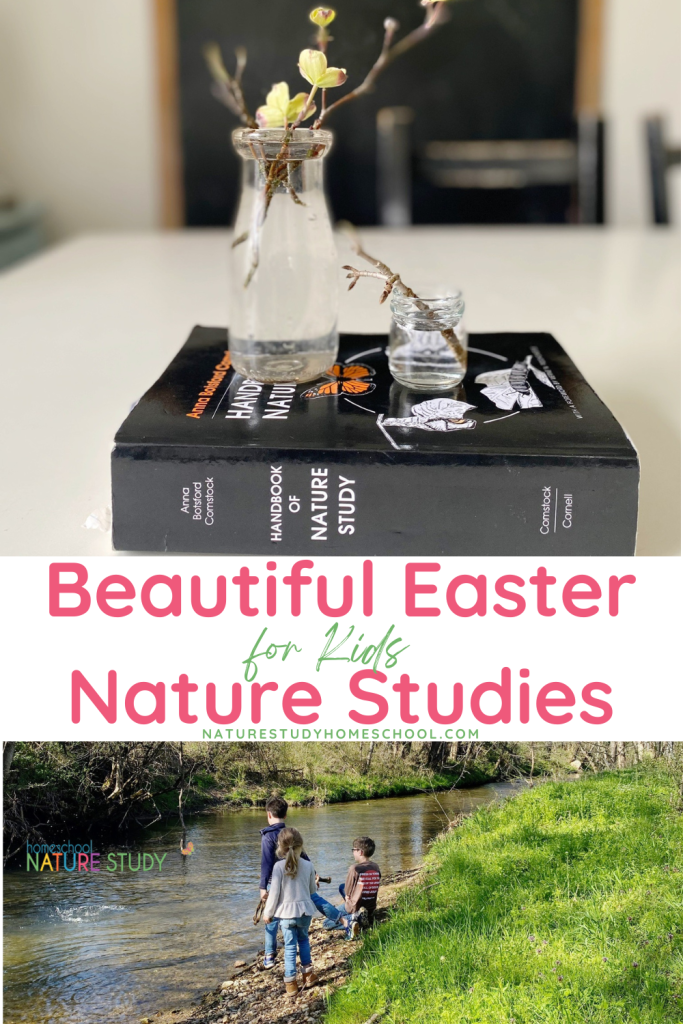
Beautiful Easter Nature Studies For Kids

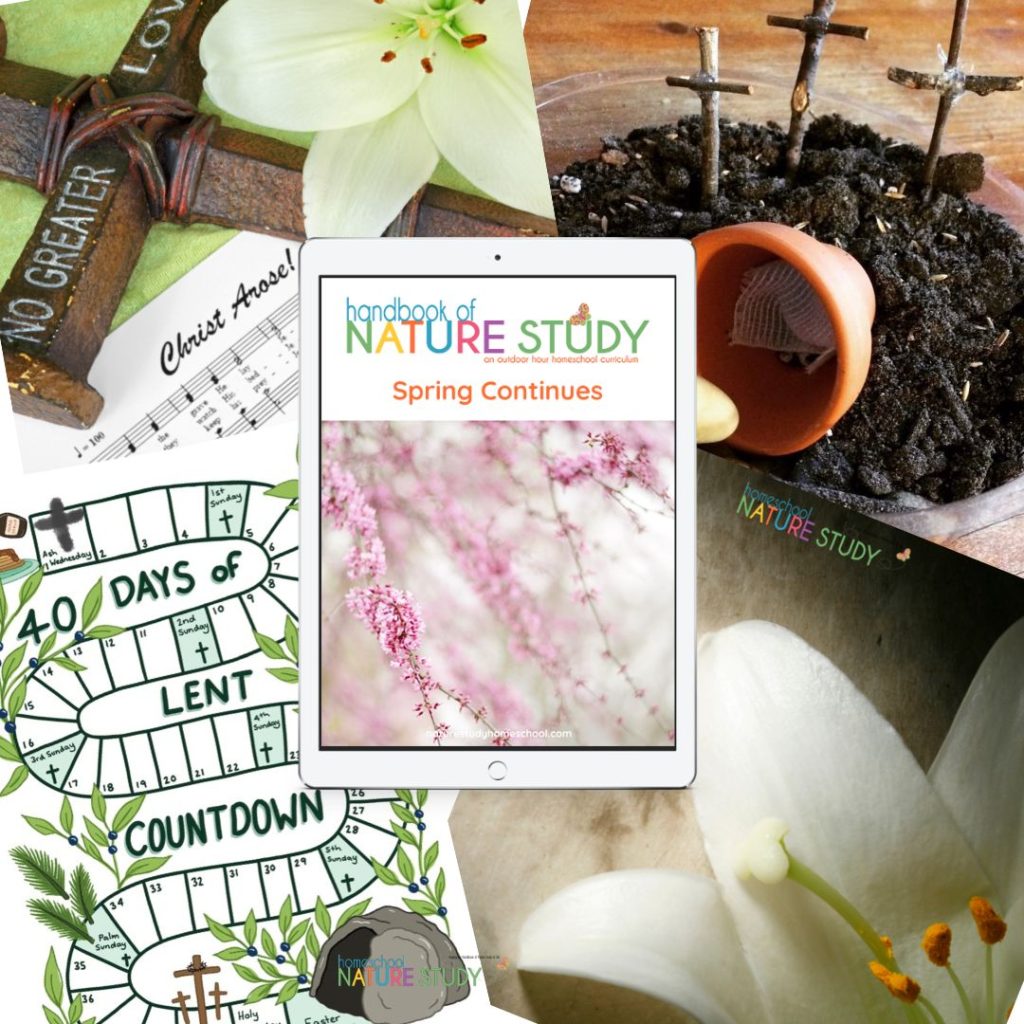
With signs of spring upon us, enjoy these beautiful Easter nature studies for kids. A fun and hands-on way to celebrate the resurrection story.

With signs of spring upon us, enjoy these beautiful Easter nature studies for kids. A fun and hands-on way to celebrate the resurrection story.
Photo by Amy Law

Beautiful Easter Nature Studies For Kids

Why not spend these weeks leading up to Easter with some joyful activities which point to The Savior?

With signs of spring upon us, enjoy these beautiful Easter nature studies for kids. A fun and hands-on way to celebrate the resurrection story.
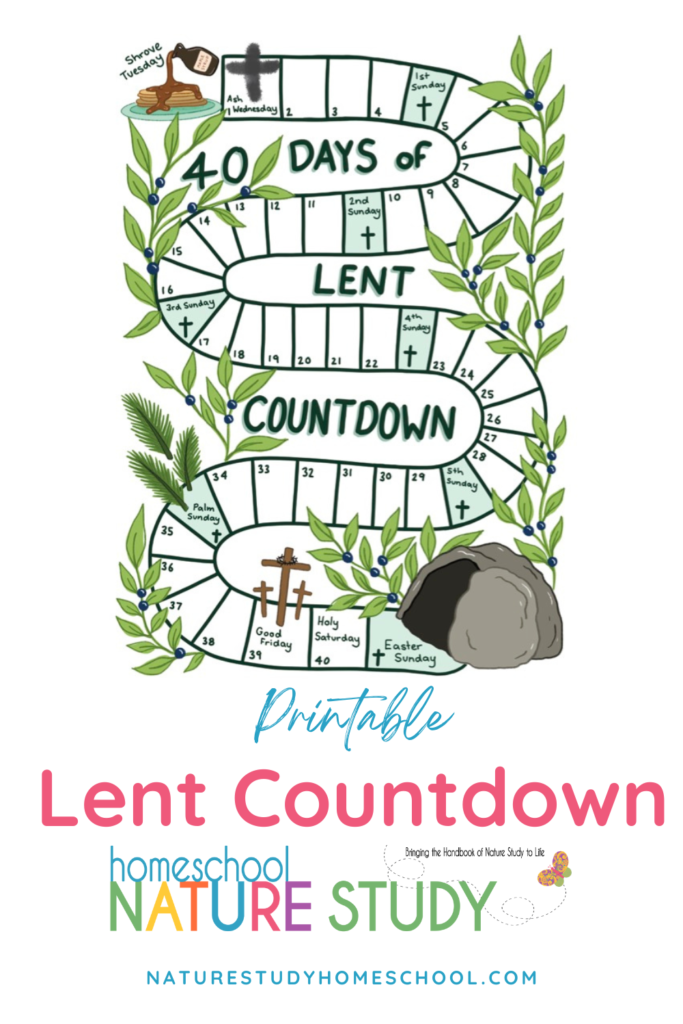
Lenten Countdown Calendar by Nature Illustrator, Victoria Vels

Lovely Lent Countdown Printable

Begin with a lovely reminder of the Lenten season. Countdown to Resurrection morning with this member printable calendar complete with nature prompts by our Nature Illustrator and Crafts Editor, Victoria Vels.

With signs of spring upon us, enjoy these beautiful Easter nature studies for kids. A fun and hands-on way to celebrate the resurrection story.
Photo by Amy Law

Easter Lily Nature Study for Your Outdoor Hour Challenge

Outdoor Hour hostess, Shirley Vels, shares, “during the Easter season, churches and homes are adorned with gorgeous, fragrant Easter lilies. But why? Why have these flowers become synonymous with Easter?”

Consider the lilies, how they grow: they neither toil nor spin; but I tell you, not even Solomon in all his glory clothed himself like one of these.

Luke 12: 27

Also grow a mini egg shell garden and learn about seed germination! Make an edible Easter lily dessert and make paper lilies too. All available now in your Spring Course in Homeschool Nature Study membership.

Make a Resurrection Terrarium - Homeschool Nature Study Nature Crafts

Easter Craft – Make a Resurrection Garden

Just some simple supplies but plenty of discussion can happen while making it. Victoria is leading our members in creating your very own Resurrection Garden for her continuing Nature Crafts series.

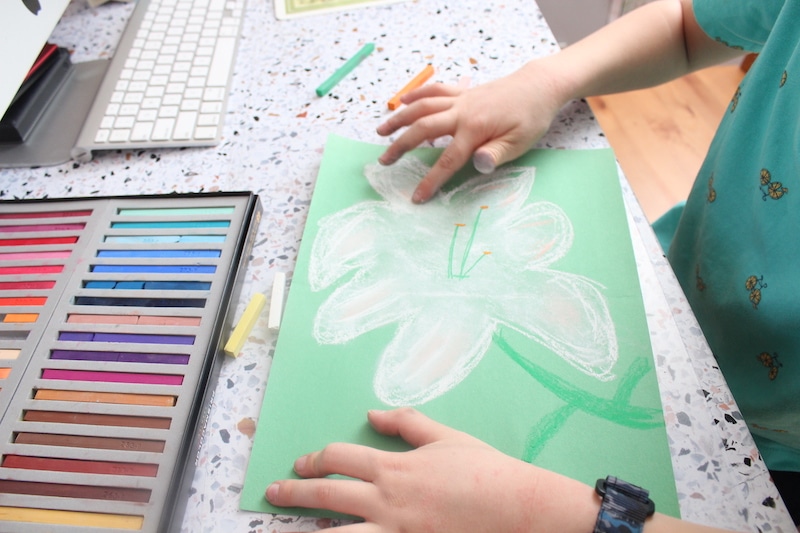
Easter Lily Art Lesson

What a beautiful symbol of the Easter season – the lily! Enjoy this art lesson from our sister site, You ARE an ARTiST, included in the Easter Lily Nature Study in membership.

Julie shares, “Easter seems to come up suddenly. Maybe it’s because Easter weekend moves around the calendar, or maybe because it is preceded by Lent which is more solemn.

I decided I wanted to spend as much time anticipating the Resurrection with my children as we did the Incarnation. Both are beautiful events in our faith. Both bring a sense of wonder and awe. The Resurrection is special because it shows “God with us,” and God victorious for us!” Draw Your Way Through the Resurrection Story

Begin with a lovely reminder of the Lenten season. Countdown to Resurrection morning with this member printable calendar complete with nature prompts by our Nature Illustrator and Crafts Editor, Victoria Vels.

More Spring and Easter Activities for Your Homeschool

Here are even more spring and Easter activities for your homeschool:

Easter and Spring Nature Studies in Homeschool Nature Study Membership

Join us for even more homeschool nature studies this spring! With a new nature study each week plus a nature study calendar with daily prompts, you will have joyful learning leading all the way to summer!

With signs of spring upon us, enjoy these beautiful Easter nature studies for kids. A fun and hands-on way to celebrate the resurrection story.

Tricia and her family fell in love with the Handbook of Nature Study and the accompanying Outdoor Hour Challenges early in their homeschooling. The simplicity and ease of the weekly outdoor hour challenges brought joy to their homeschool and opened their eyes to the world right out their own back door! She shares the art and heart of homeschooling at You ARE an ARTiST and Your Best Homeschool plus her favorite curricula at The Curriculum Choice.
Posted on Leave a comment

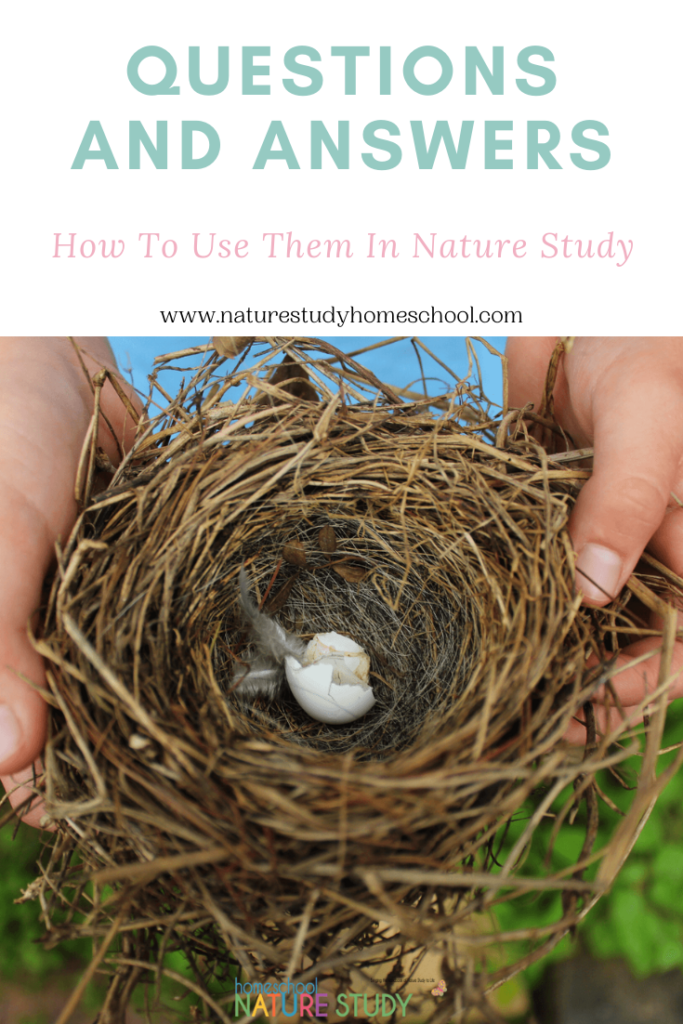
The Purpose of Nature Study: How to Use Questions and Answers in Your Homeschool

Just what is the purpose of nature study? Use these examples for how to use questions and answers in your homeschool as a jumping off place for even more discoveries and further adventures! Learn together and make memories as a family.

Photo by Amy Law

The Purpose of Nature Study: How to Use Questions and Answers in Your Homeschool

Nature study is more about asking questions than it is about finding answers. I always enjoy a good question because it means that my children are taking something they see or hear and are internalizing it and then coming up with a good question. Many times just asking the question helps solidify what they already know.

“Nature study does not start out with the classification given in books, but in the end it builds up in the child’s mind a classification which is based on fundamental knowledge; it is a classification like that evolved by the first naturalists, because it is built on careful personal observations of both form and life.”

Handbook of Nature Study, page 6

For instance, if they see a little creeping creature and wonder what it is, they will need to look a little closer. On examining the creature, they see that it has six legs. Six legs equals an insect and not a spider.

So already before asking me what it is, they have decided it must be some sort of insect and we can then pull out the proper field guide to see if we can identify it by habitat, color, shape, and size.

Using Field Guides and References in Your Nature Study

If we never positively identify a particular insect, we still have taken some time to investigate it further both in the field with our eyes and afterwards in the house with the field guide. The important work was done. We could be finished there if we felt satisfied or we could dig further, checking on the internet or at the library if we were inspired to know more.

Other than the Handbook of Nature Study, a science reference shelf with a collection of field guides are the best tools for research. The process of going through identifying a subject leads you through a series of questions…good questions.

questions and answers in nature study

Nature Journaling in Your Homeschool

Some families are making the next step and trying to keep a record of their time in nature with a nature journal. Our family finds this activity very rewarding but we don’t always draw in our journals after every outdoor time.

Honestly, when we do take the time to try to draw what we see during our nature time, we get a lot more out of it. There is something about the process of taking your experiences and putting them down on paper that creates a special bond between you and the subject whether it is a leaf, a spider, a flower, or anything else you choose to draw.

questions and answers in nature study

Maybe you have a collection of items from a picnic nature study last summer….the process of collecting the items can be more fun than spending time identifying them. Just enjoy them and then leave them there at the beach. Maybe next time you will have some questions ready to ask and the proper field guide on hand and will get down to the business of knowing the particular rock and tree.

So don’t be afraid of questions….questions are a great tool. You don’t need to know all the answers to the questions that your children have about nature study. Consider it a good thing when you find something you need to research because you will learn right alongside your child.

More Ways to Spark Interesting Questions and Answers in Your Homeschool

Here are a few more ideas you might enjoy:

questions and answers in nature study

Be inspired. Be encouraged. Get outdoors!

by Barb McCoy, Outdoor Hour Challenges founder, September 2008

Posted on Leave a comment

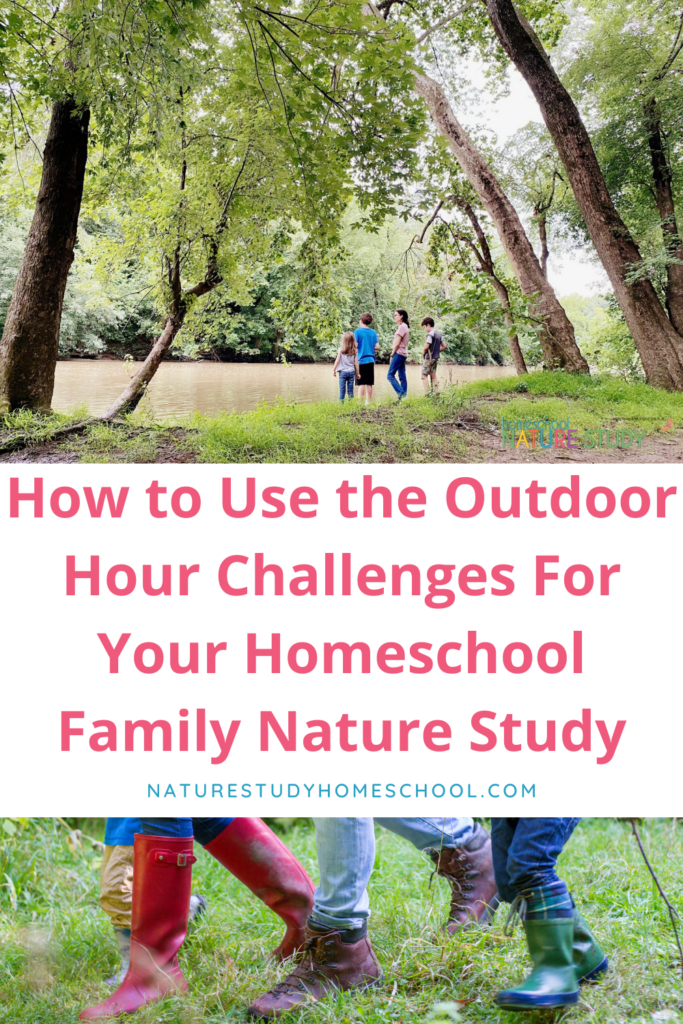
How to Use the Outdoor Hour Challenges For Your Homeschool Family Nature Study

Here are some things to consider for your homeschool family nature study. Every family is different so use these tips to get started with simple and joyful Outdoor Hour Challenges.

Here are some things to consider for your homeschool family nature study. Every family is different so use these tips to get started with simple and joyful Outdoor Hour Challenges.
Photo by Amy Law

How to Use the Outdoor Hour Challenges For Your Homeschool Family Nature Study

When getting started in homeschool nature study, here are some simple ideas to consider for your outdoor time.

Age of Your Children

  • Younger children-try to create exposure and have lots of time in free exploration outdoors
  • Older children-provide some structure to the preparation for your outdoor time, allow increased time outdoors, offer short follow up activities if they are interested

Your Particular Backyard Habitat

  • Suburban-Assess available trees, shrubs, and garden space. Focus on areas like birds, trees, insects, clouds or other subjects that you can find outside your back door. Container gardening is a great opportunity to create a natural area in even the smallest of backyards or on porches and decks.
  • Rural-Opportunity for longer walks each week and increased subjects to study. Perhaps planting a garden or just some child friendly plants like marigolds, sunflowers, beans, or morning glories.

Your Homeschool Family’s Interests

  • Follow your child’s interest as much as possible. Observe them as you go about your week and learn what interests them…insects? birds? lizards? mammals?
  • Do you have a pet that you can use as the center of your nature study? Cats, dogs, fish, lizards, hamsters all have their place in nature study.
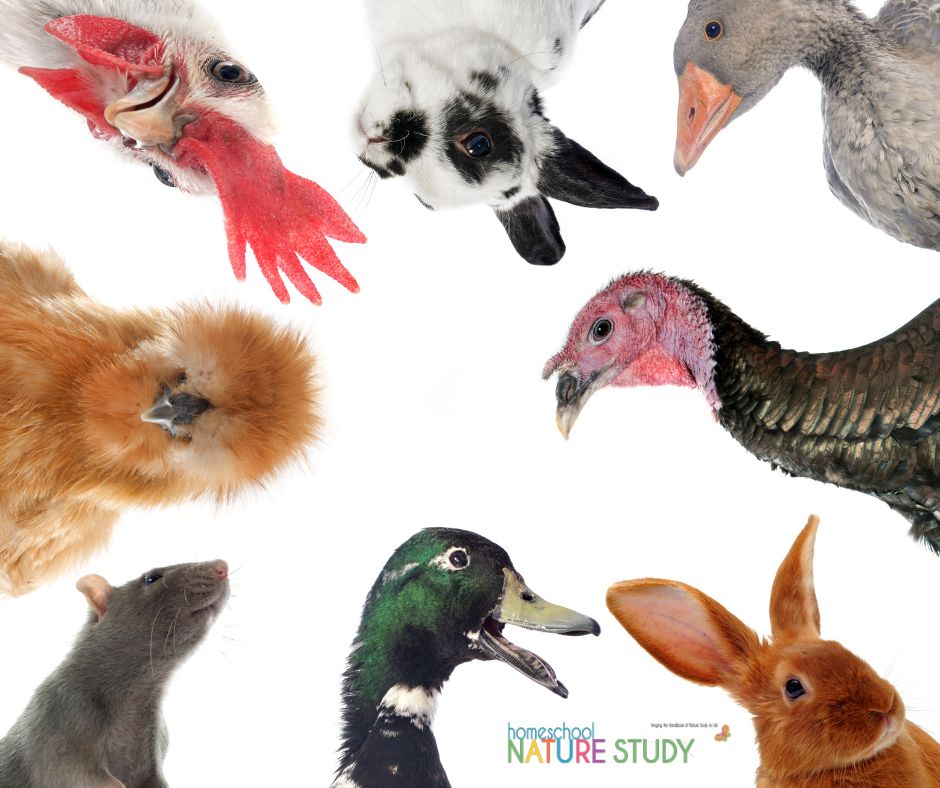
  • Do you have access to larger farm animals? Horses, cows, goats, chickens, ducks? Take advantage of what you have at hand.

How much time do you have in your homeschool each week?

  • Ideally, you should be able to give an opportunity for outdoor time each day but realistically, you can pencil in one afternoon or part of an afternoon each week for nature study if you make it a priority.
  • Many families fit their nature study in as part of other activities. When you are on the way to another activity, can plan on stopping for a short period of time at the park for some nature study?

An Example Homeschool Nature Study with The Outdoor Hour Challenges

Let’s say that your family has preschool or young grammar age children. You have a suburban backyard. You have one afternoon a week that you can devote to nature study. You are beginners in the focus area of birds. How will you use the Outdoor Hour Challenges?

  • First of all, I suggest that you complete the few pages of reading for the challenge early in the week. Highlight any points you feel would be of interest to your children. I would pick only one or two points to share with young children.
  • If there are additional resources available, view those and print out any materials you would like to share with your children after your outdoor time.
  • Make the priority of your week’s nature study your outdoor time and make the most of it.
  • Prepare the children as much as you can in a way that is appropriate for their ages. If the lesson for the week is to learn about bird’s beaks, you might mention a few facts (check your notes) about bird beaks before you head out the door.
  • I might start off our outdoor time with a walk around the yard to see if we find anything new or interesting. If a bird happens along at the feeder or anywhere we can observe it, stop and quietly observe the bird, making special note of the bird’s beak.
  • After the birds flies away, take a minute to ask if your child was able to observe anything about the bird’s beak. Was it long, short, pointed, round, black, yellow, bigger than the head, and how did the bird use the beak?

Enjoy your time outdoors together and don’t spend your time lecturing or even talking very much at all.

” there should be as little talking from her (mother) as possible, and what little there is should have a definite purpose.”

Charlotte Mason, volume 1, page 45

With very young children, that would be all that I would expect for a beginning nature study session. There will certainly be something that they are interested in if you are actively walking and searching and listening and experiencing your backyard. You are the key by modeling how interesting things are right there in your own space.

Ideas for Simple Nature Study In Your Homeschool

In our family, when the children were young, we would work and play in the yard together during our outdoor time. Pulling weeds, cutting flowers to bring inside, sitting on the grass and watching the birds in the feeders, sweeping the walk, swinging on the rope swing, tidying the garden, listening to the bees buzz, turning the compost, watering the deck plants, and so on.

Most of these everyday activities led to questions about nature which we would investigate later on either with books we had on hand or during our next trip to the library. Again, be diligent about observing what your child is interested in during your outdoor time. Build on that interest by perhaps reading up on the subject yourself and sharing with them a few facts to get them started. Look up the topic at the library the next time you visit and show your child the section of books on that topic and let them pick one or two to bring home to look at and read together. This makes the nature study lesson not so much like a lesson.

I hope this helps illustrate how you can take the Outdoor Hour Challenges and tailor them to your particular family and habitat. You should feel free to make adaptations to make each challenge special in your family.

Here are some things to consider for your homeschool family nature study. Every family is different so use these tips to get started with simple and joyful Outdoor Hour Challenges.

Homeschool Nature Study Membership for Your Family

In Homeschool Nature Study membership, each challenge gives you step by step instructions to get started with simple weekly nature study ideas whatever season you are in! This may just be what your homeschool week needs.

Each challenge is written for you to complete in your own neighborhood or backyard and you can adapt each challenge to fit your local area with suggestions I offer with each topic.

You will be able to use these studies with your whole family and pull it out from year to year and have a nature study resource for all levels.

Be inspired. Be encouraged. Get outdoors!

Tricia and her family fell in love with the Handbook of Nature Study and the accompanying Outdoor Hour Challenges early in their homeschooling. The simplicity and ease of the weekly outdoor hour challenges brought joy to their homeschool and opened their eyes to the world right out their own back door! She shares the art and heart of homeschooling at You ARE an ARTiST and Your Best Homeschool plus her favorite curricula at The Curriculum Choice.
Posted on Leave a comment

How to Build a Habit of Nature Study in Your Homeschool

Here is how to build a habit of nature study in your homeschool if you struggling with where to start. And if you have wanted to ease into a study of nature that is meaningful, but you get overwhelmed with all the programs and methods, we have the simple answer. Have fun and make memories together with these ideas.

Here is how to build a habit of nature study in your homeschool if you struggling with where to start and are overwhelmed with all the programs and methods.

Take it One Thing at a Time – Slowly Build a Habit of Nature Study in Your Homeschool

Adults should realize that the most valuable thing children can learn is what they discover themselves about the world they live in. Once they experience first-hand the wonder of nature, they will want to make nature observation a life-long habit.”

Charlotte Mason in Modern English, volume 1, page 61

Here is a simple suggestion that has worked for many families over the years. Study:

  • one tree
  • one bird
  • and one flower

per homeschool school year

Slowly, gradually, gently….it works. This way of structuring a bare bones nature study keeps the pressure off families just starting out with a pursuit of regular nature study. Working through the study of one subject at a time will help build your confidence and knowledge in a way that is not overwhelming.

It is sustainable over the years. In my family, I have seen the study of nature that is closest at hand build a love of things that seem common but on closer inspection, they are rather remarkable. Dandelions and oak trees spring to mind as examples of studies we did and gained a new appreciation for their design and beauty.
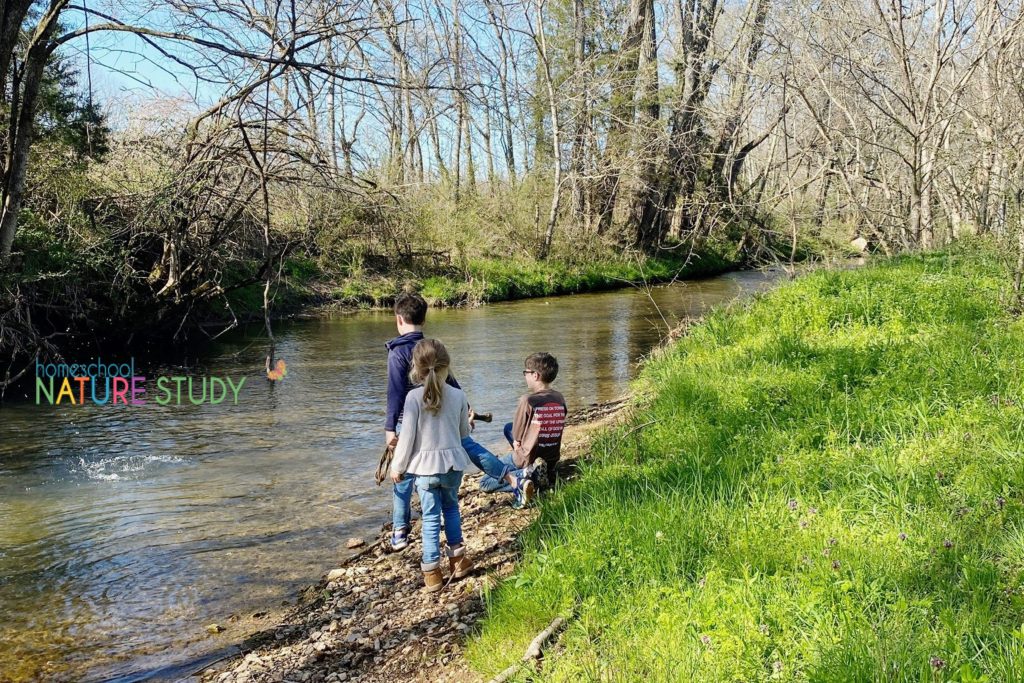
You can apply this idea to any areas of nature study that you wish. You could add an insect or a mammal each year. Or you can try a reptile or a fungus or a constellation. The beauty of this method of easing into nature study with your children is that you can follow their interests.

As a way of introduction to this method, I will share some ideas for a tree, a bird, and a wildflower.

Here is how to build a habit of nature study in your homeschool if you struggling with where to start and are overwhelmed with all the programs and methods.

Your Homeschool Nature Study Tree Project

Take it slowly.

Find one tree in your yard that you can study for a whole term to build the habit of nature study. If you observe and identify one tree per year, over the course of your child’s education, you will have learned about 12 different trees…I don’t know about you but I have a hard time just listing 12 trees by name so if your child becomes acquainted with 12 trees, they are far better off than many of us.

If you have built the habit of getting outside with your children, you’ve no doubt encountered a tree of interest. Start there! No matter the time of year, you will have plenty to observe.

Trees outdoor hour homeschool curriculum
  • Pine Trees and Their Cones
  • Members: enjoy a 4 Seasons Tree Study with a project with the included printable: 4 Seasons Tree Photo Project.

Learning About Birds in Your Homeschool

Now try the same thing with birds for your habit of nature study.

“If we are teaching the science of ornithology (study of birds), we take first the [robin], then the swimming and scratching birds, and finally reach the songbirds, studying each as a part of the whole. Nature study begins with the robin because the child sees it and is interested in it, and notes the things about the habits and appearance of the robin that may be perceived by intimate observation……the next bird studied may be the turkey in the barnyard, or the duck on the pond, or the screech owl in the spruces, if any of these happen to impinge upon his notice and interest.”

Handbook of Nature Study, page 5

The particular bird that you start with in your nature study should be the one that you have noticed and is common in your neighborhood or yard. Anna Botsford Comstock was a promoter of the idea that children should be able to directly observe their nature study subjects.

Learning about birds in your homeschool

So, for your family habit of nature study, start with the most common bird you see. Look it up in the Handbook of Nature Study, look for the Outdoor Hour Challenge that corresponds with that bird, or simply use your field guide.

You can move on to the next bird when you are satisfied with your study.

More bird nature studies:

How to Pick a Wildflower for Your Nature Study

“They should be able to describe the shape, size and placements of their leaves and whether the flowers have a single blossom or a head of them. When they know the flower so well that they could recognize it anywhere, they should take a look at the area it grew in so they’ll know what kind of terrain to look for it again in the future…If any mother lacks a knowledge of plants, a good field guide will be indispensable, especially if she can find one that includes little facts and fun things about the plants.”

Charlotte Mason in Plain English, Volume 1, page 52

Learning the names of wildflowers is a lifelong activity that brings such joy. Children love learning the common names of flowers and I found that once my kids knew a name of a flower, they respected it more for its special uses for all living creatures. You can keep it very simple or you can use the suggestions below to go a little deeper with each wildflower you observe.

Here is how to build a habit of nature study in your homeschool if you struggling with where to start and are overwhelmed with all the programs and methods.

Elements of a Grand Study of Wildflowers

Your child should be able to:

  1. Describe the shape, size, and placement of the leaves.
  2. Note whether there is a single blossom or a head of flowers.
  3. Observe the flower and its habitat so well that it can be recognized in any location in the future.
  4. Use a field guide to learn about the wildflower (with help from a parent if needed).
  5. Collect, press, and make a record of the flower’s habitat and location.
  6. Optional: Make a watercolor of the flower or the whole plant.
Handbook of nature Study quote

Homeschool Nature Study Members

Look in your membership for these resources:

  • Outdoor Hour Challenge Planning Pages: Use the term planning page to pencil out your topics for the year.
  • Deciduous Trees in My Yard and Evergreen Trees in My Yard notebook pages
  • There are courses in Homeschool Nature Study membership for wildflowers and birds.

If you are not a Homeschool Nature Study membership yet, please consider joining to gain the benefit of having a nature study library at your fingertips. There are numerous resources available for you to help create the habit of nature study within your family.

Homeschool Nature Study membership

Be inspired. Be encouraged. Get outdoors!

Written by Outdoor Hour Challenges founder, Barb McCoy and updated by Tricia

Here is how to build a habit of nature study in your homeschool if you struggling with where to start. And if you have wanted to ease into a study of nature that is meaningful, but you get overwhelmed with all the programs and methods, we have the simple answer. Have fun and make memories together with these ideas.

Tricia and her family fell in love with the Handbook of Nature Study and the accompanying Outdoor Hour Challenges early in their homeschooling. The simplicity and ease of the weekly outdoor hour challenges brought joy to their homeschool and opened their eyes to the world right out their own back door! She shares the art and heart of homeschooling at You ARE an ARTiST and Your Best Homeschool plus her favorite curricula at The Curriculum Choice.