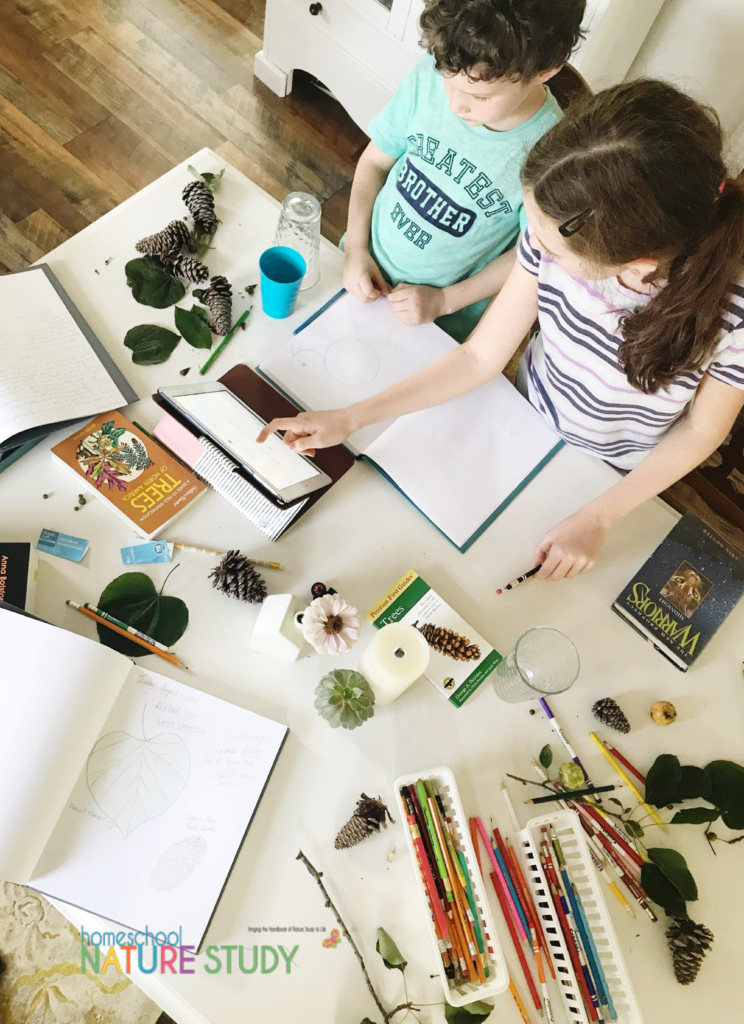
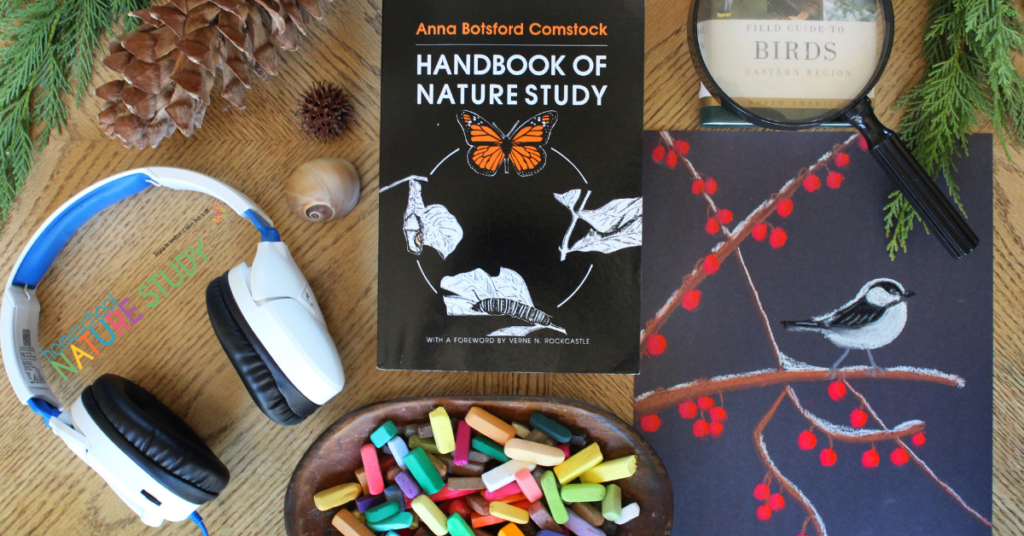
Enjoy January nature studies perfect for winter homeschooling! Make plans to get outside for a brisk nature walk and then to follow up with a nature journal page recording all of the interesting things you found while outside.
January Nature Studies Perfect for Winter Homeschooling
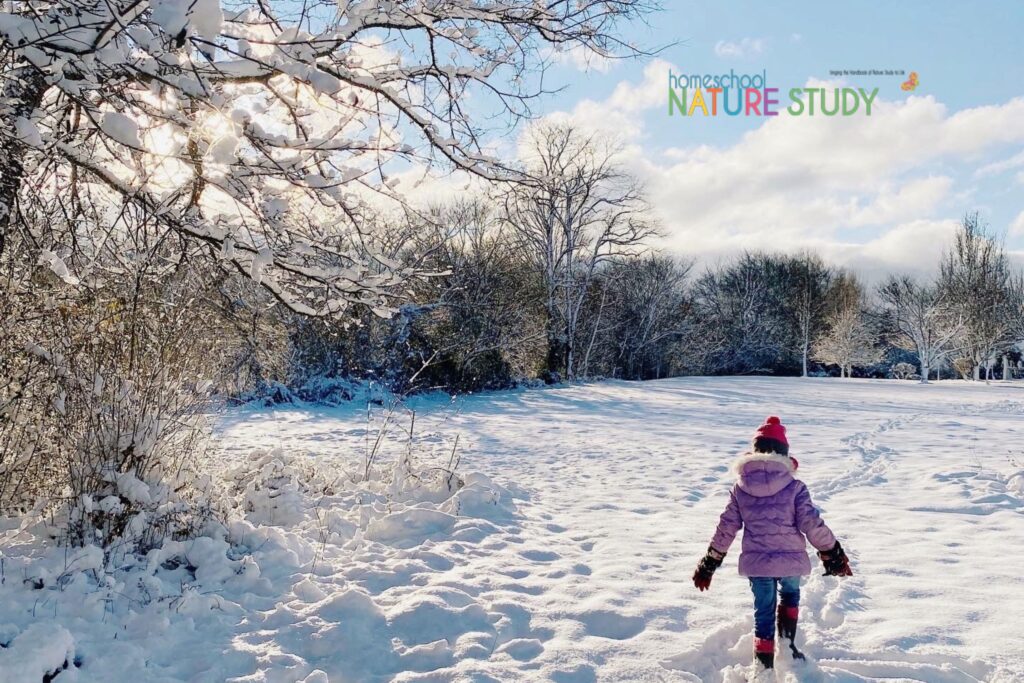
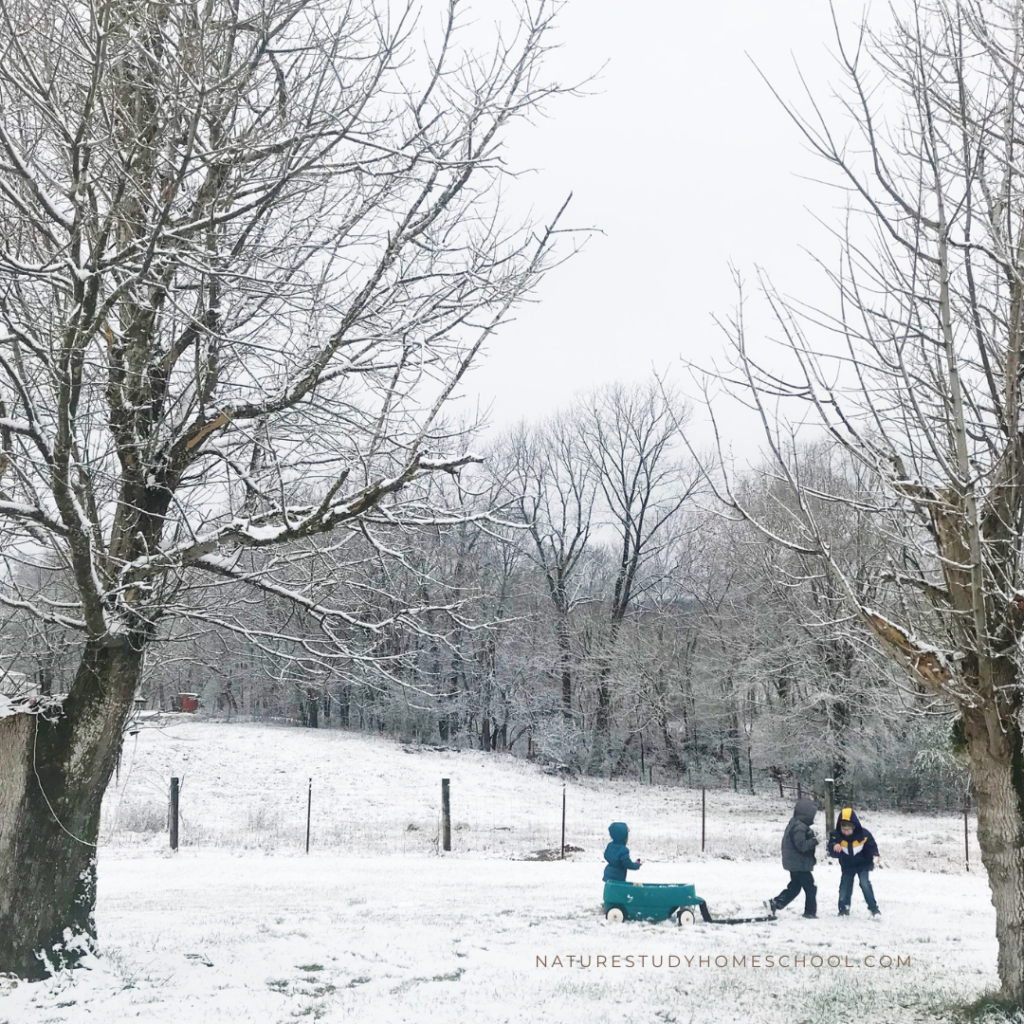
The best times I can remember with my children are the times we just took it slow and easy, looking for the little things that most people pass by. Turn over a rock and see what’s underneath. Look up in the branches of the trees and see if you can find any birds or other critters. Take a walk and listen to the crunch of the snow. Breathe the air and enjoy the day.
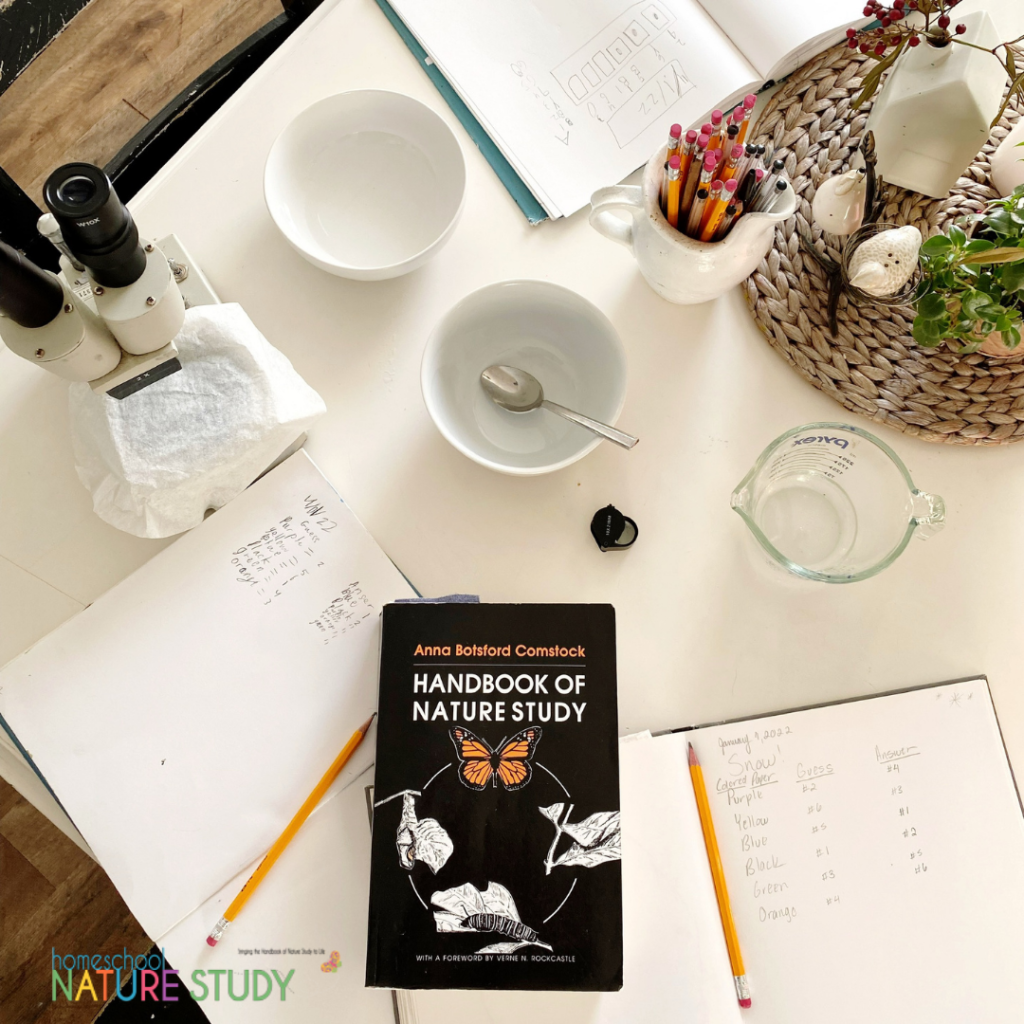
In this homeschool snow study there is so much to discover! Included is a field guide to snow, experiments like filtering, guidance from the Handbook of Nature Study and more!
Study Insects In Your January Homeschool
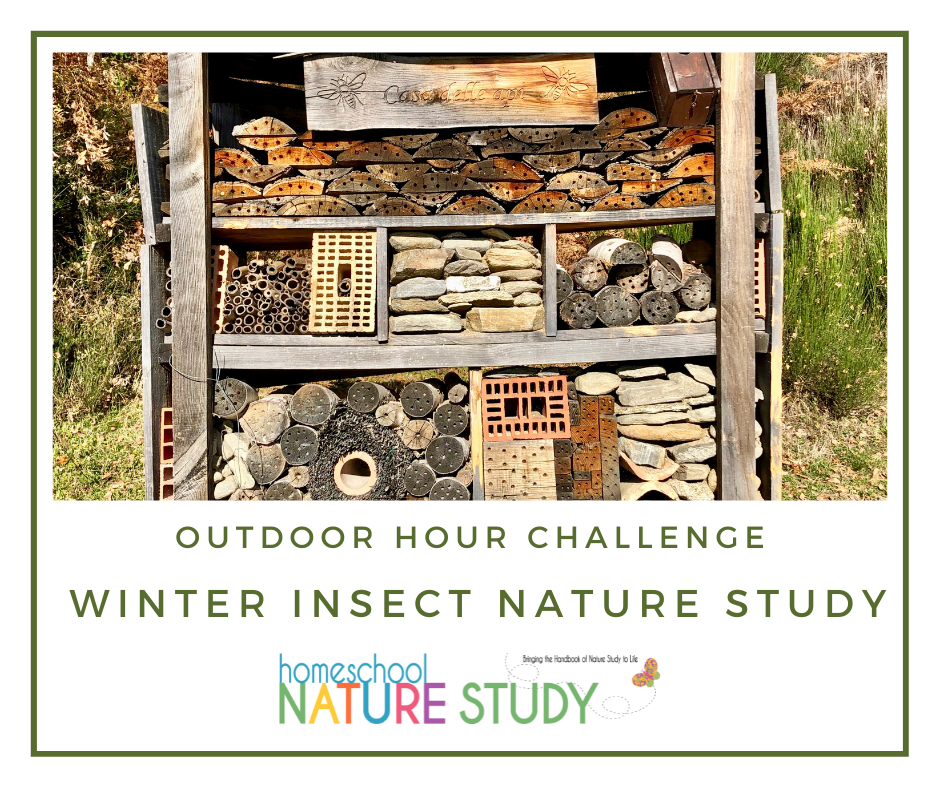
We are focusing on winter insects in our homeschool nature study outdoor hour challenges. We are using the Winter Wednesday course and Handbook of Nature Study curriculum with our members. You can join our membership at any time. You will find a button at the end of this post that will take you to the signup page.
When Winter Weather Drives Your Homeschool Nature Studies Indoors
Taking your winter nature studies indoors when the weather outdoors is proving to be a challenge may be just the thing you need every once in a while. We have a lovely post from the archives to inspire your homeschool nature studies indoors for those days that you can’t face getting outdoors.
January Homeschool Bird Study
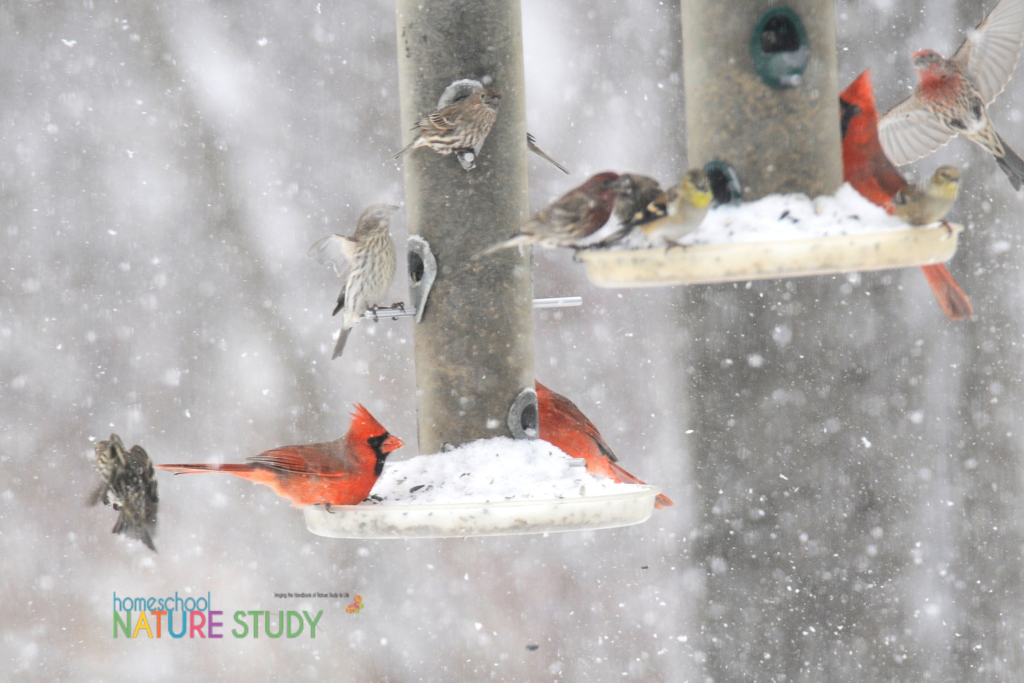
Winter Bird Study for Your Homeschool – Even when the landscape is covered in snow or ice or mud, there are always birds that will come to visit if you create a little bird-friendly habitat with some seeds, suet, and freshwater. You can observe birds right from your window if the weather isn’t friendly. Or, if you have the right conditions, take a bird walk in a nearby wood. Winter is an amazing time to stroll your neighborhood looking for resident or visiting birds.
January Stopping By the Woods Study and More
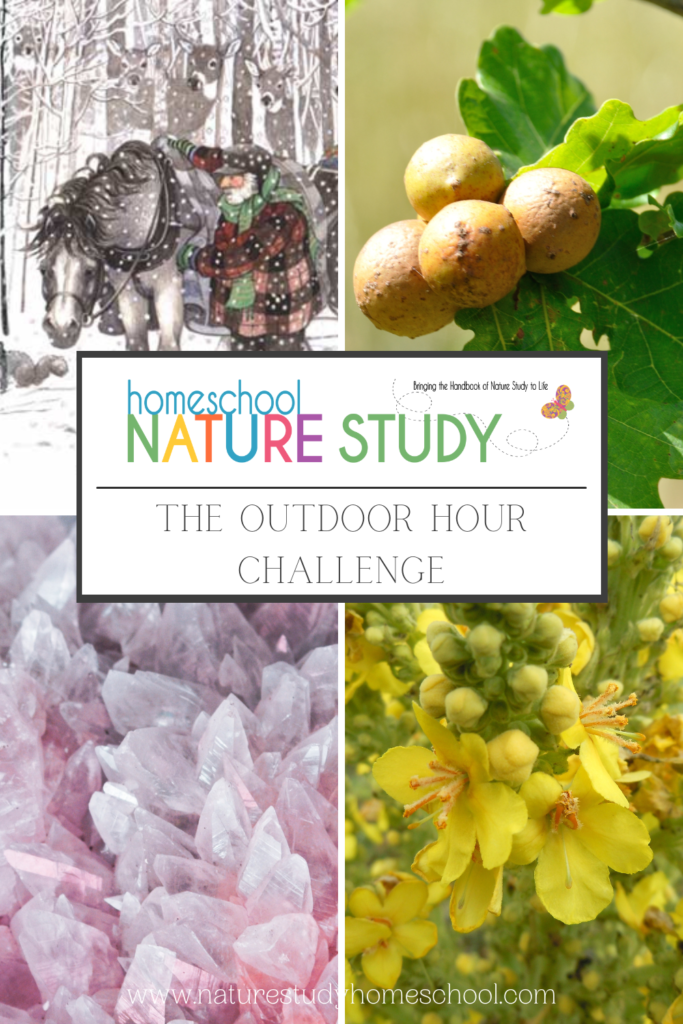
January always brings with it new hope and promises of a fresh start. We are going to kick off our January homeschool nature studies by using Robert Frost’s beautiful poem, “Stopping by Woods on a Snowy Evening” as a springboard. Explore them here.
As we move through the month we will be on the hunt for gall dwellers, looking at quartz and learning all about mullein.
Winter Nature Study Crafts for Kids
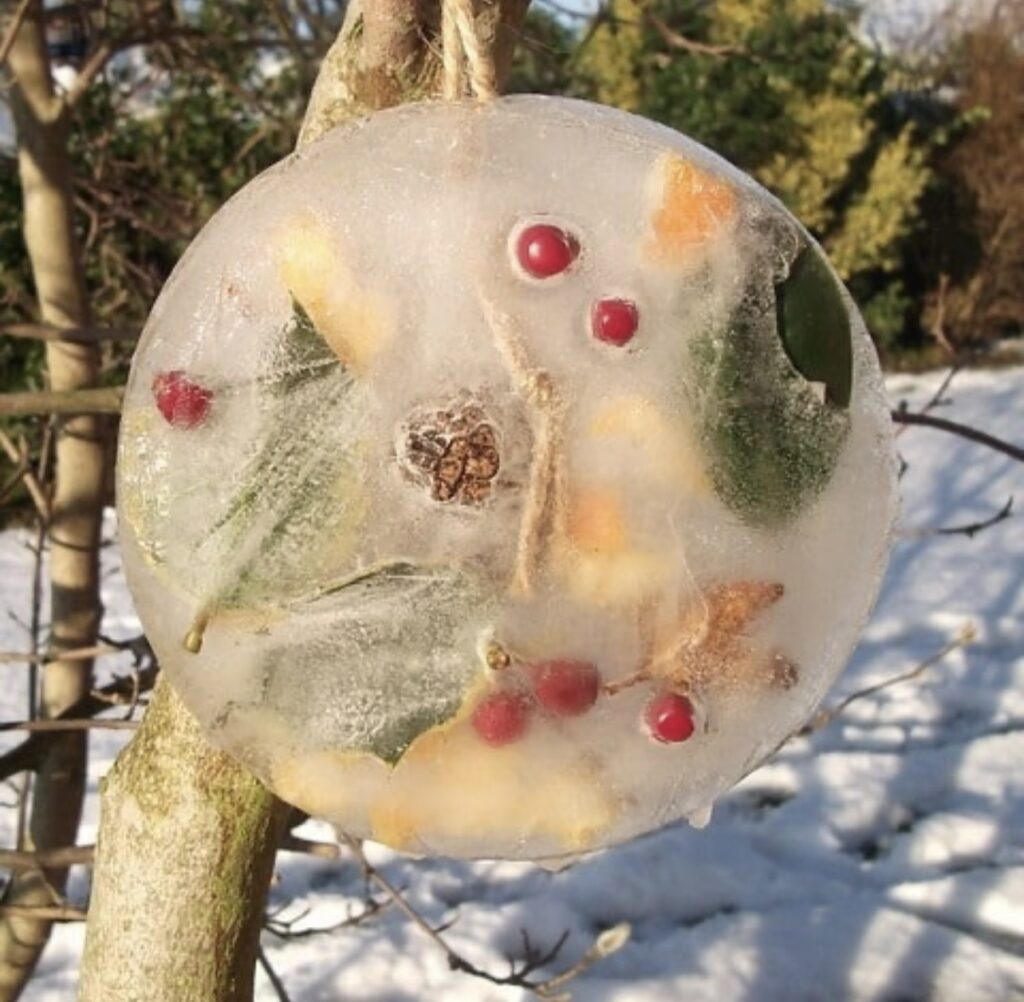
Winter is in full swing so with the plummeting temperatures looming on the horizon let’s take advantage and make these beautiful ice sun catchers! Victoria shares how in the Nature Crafts in our Homeschool Nature Study membership. Find out more about our nature study crafts for kids!
Winter Homeschool Nature Study with Art and Music Appreciation
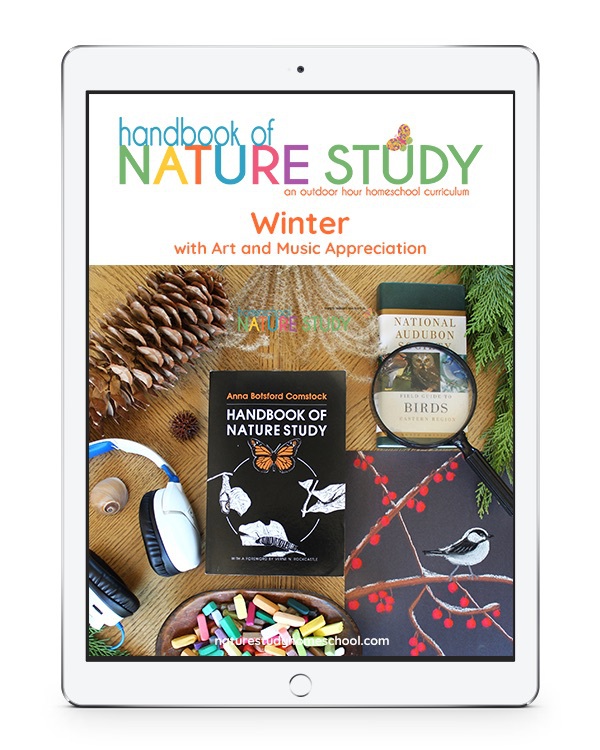
This winter homeschool nature study curriculum contains all the nature study Outdoor Hour Challenges, custom notebook pages for nature study as well as art and music appreciation, and three months’ worth of art and music appreciation.
Writing this winter homeschool nature study curriculum has helped us appreciate the winter season more than we ever have before. Part of our enthusiasm has come from spending more time outdoors bundled up with our families exploring the winter landscape.
Outdoor Hour Challenge Winter Tree Silhouettes
More Winter Homeschool Nature Study Resources
Here are even more winter nature studies for you to enjoy together:
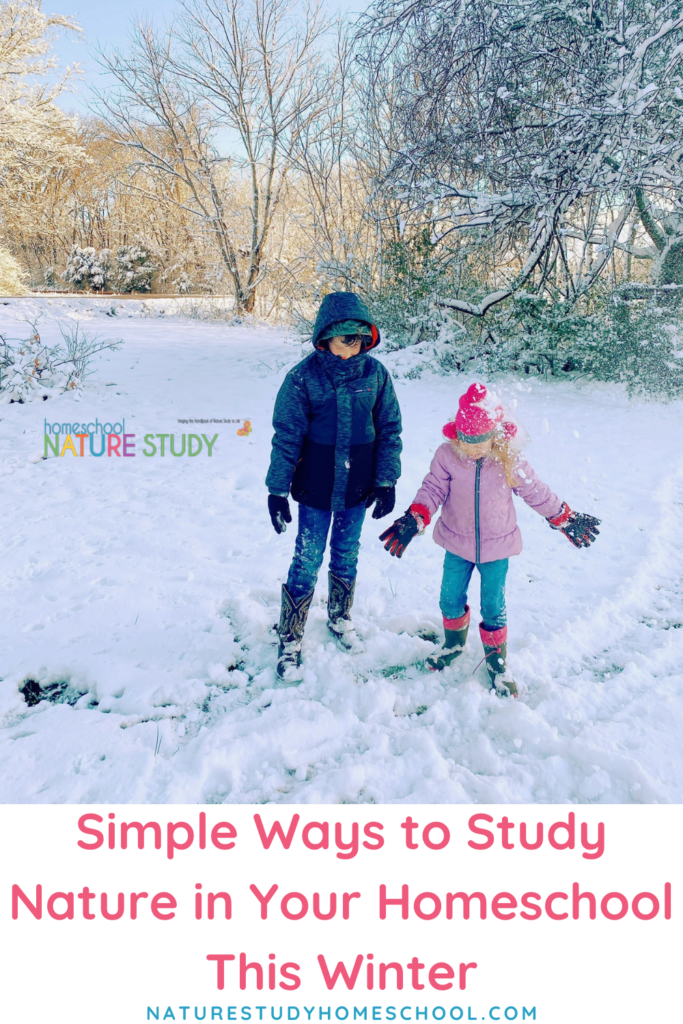
There are so many simple ways to study nature in your homeschool this winter! From nature walks to indoor studies, use this guide as a starting point for making memories together.
Simple Ways to Study Nature in Your Homeschool This Winter
Getting outside for a walk on the first day of winter may be one of the most refreshing activities you could do with your children. The temperatures drop and we huddle inside more and more, especially on the shortest day of the year!
“The most obvious work of nature has been the preparation for winter. A wide range of observation should be used to impress the truth: the trees and shrubs have lost their leaves, and stored the provisions for spring in the buds and branches; many softer plants die down to the ground, storing the food in roots, others in bulbs, and still others in tubers. The question may be asked for each plant that comes up for observation – How did it get ready for winter?”
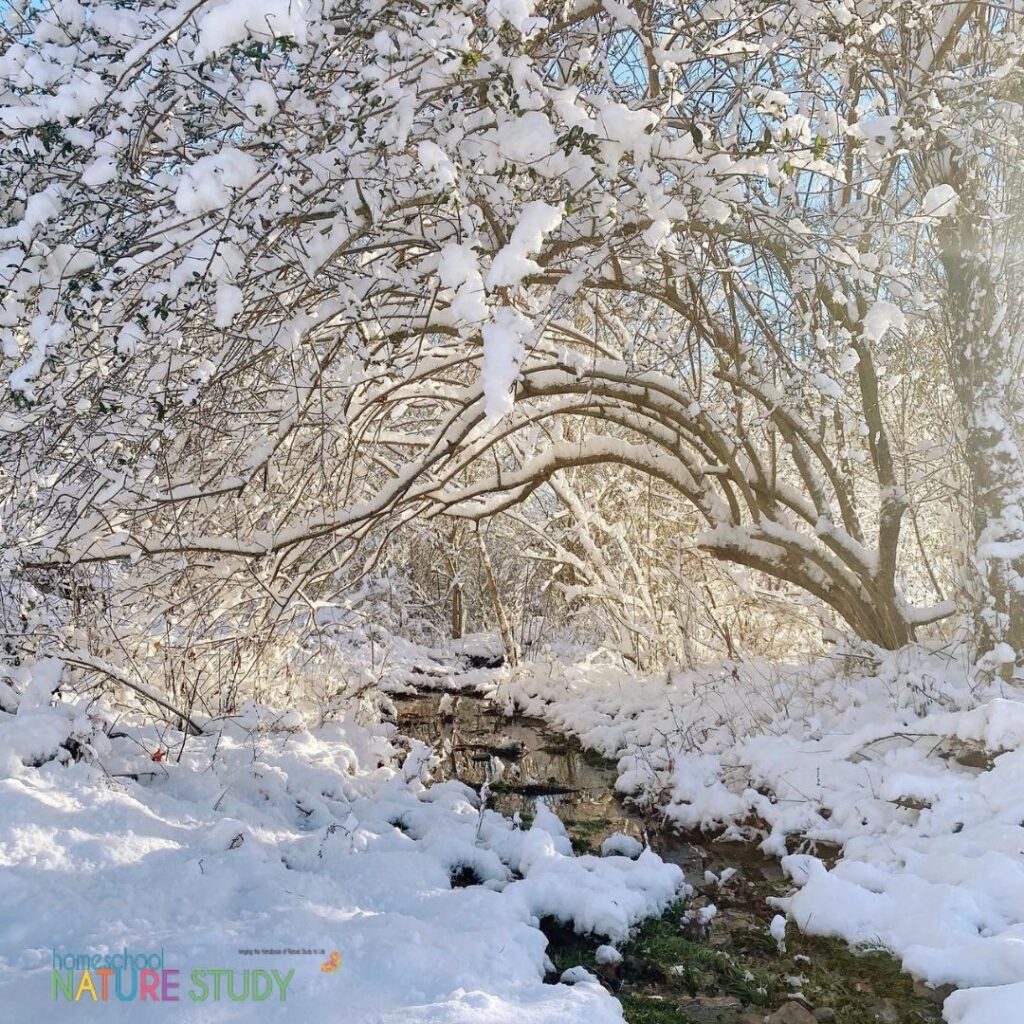
1. Take a walk this week and spend a few minutes looking at the plants in your yard and neighborhood. Look for bushes and trees without leaves, stopping to note that these plants are many times not dead but just waiting for spring to begin a new growth cycle. Don’t go into too much detail but allow time for quiet observation.
2. After your outdoor time, spend a few minutes discussing how plants get ready for winter. You can bring out the following points:
Some plants (Annuals) have seeds that survive the winter even when the plant does not.
Other plants (Perennials) have roots that survive the winter and start to grow again in the spring.
Deciduous trees shed their leaves, conserve food, and have buds that are waiting until spring to open and grow.
3. Make a nature journal entry recording anything of interest from your outdoor time.
Alternately, make plans to get outside for a brisk nature walk and then to follow up with a nature journal page recording all of the interesting things you found while outside.
Animals in Winter Homeschool Nature Study
“The same thought should be applied to the animals. Most of the birds have gone south because of the cold, and also because their food is gone; the frogs, turtles, and toads are going to sleep all winter down in the mud or earth below the frost; the caterpillars are waiting in their cocoons for the warm spring sunshine; most of the other insects have laid their eggs for the next season, while a few of them have crawled into warm places to wait; the squirrels have gathered a store of nuts, and will soon be asleep in the old tree-trunks; the cats dogs, horses, and cows have grown a fresh coat of hair and fur. Nothing is forgotten; each is ready in its own best way.”
This will be another easy week of nature study that will blend easily with other Outdoor Hour Challenges. Take the opportunity to spend some time outdoors noticing the way that animals prepare for winter. Make this one an investigation!
You might prepare with a little discussion about the various animals and birds that live in your local area. Some ideas to get you started:
migrating or visiting birds
squirrels gathering nuts
insects in cocoons
changes in color of various animals as they prepare for the white of the snow time
Bundle up and spend fifteen minutes outdoors enjoying the December world. A good nature walk is pleasurable for everyone and allows you and your children to appreciate God’s beautiful creation. The best times I can remember with my children are the times we just took it slow and easy, looking for the little things that most people pass by.
Look for signs of animals and think about ways they prepare for winter. You can also make bird and animal observations, noting their behavior. How are they staying warm? finding food? sheltering from the weather?
Encourage everyone to use all of their senses on this walk:
Did they see something colorful or unusual?
How does the air feel on your skin?
Is there a particular fragrance to the air?
Can you listen carefully for a minute or two to distinguish any particular sounds?
Another idea is to ask your children to find differences in the landscape, comparing your neighborhood habitat on this winter day to what they remember about the first day of summer. This is a little harder and you may need to help them get started with a few of your own observations.
More Outdoor Hour Challenge Ideas:
Turn over a rock and see what’s underneath.
Look up in the branches of the trees and see if you can find any birds or other critters.
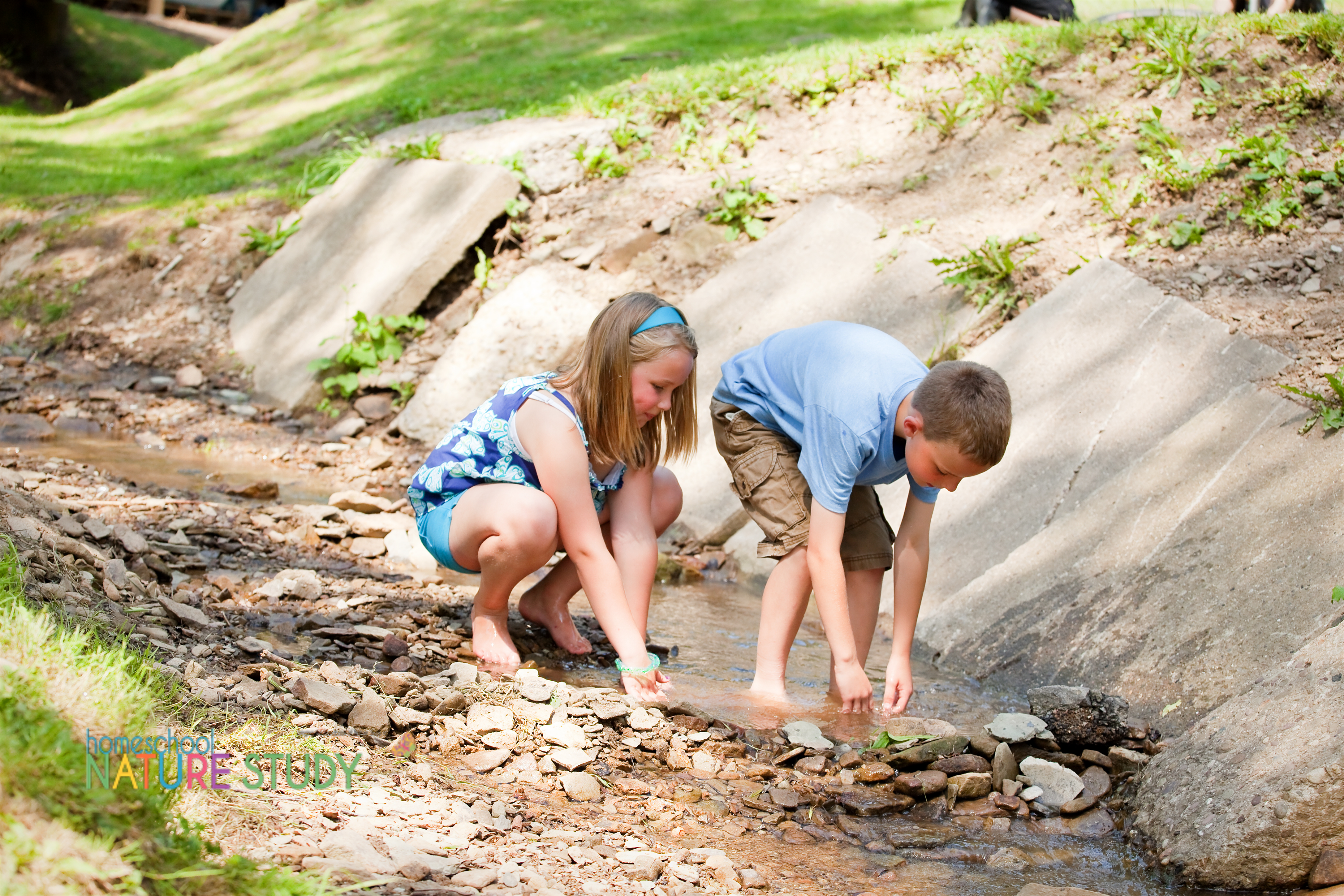
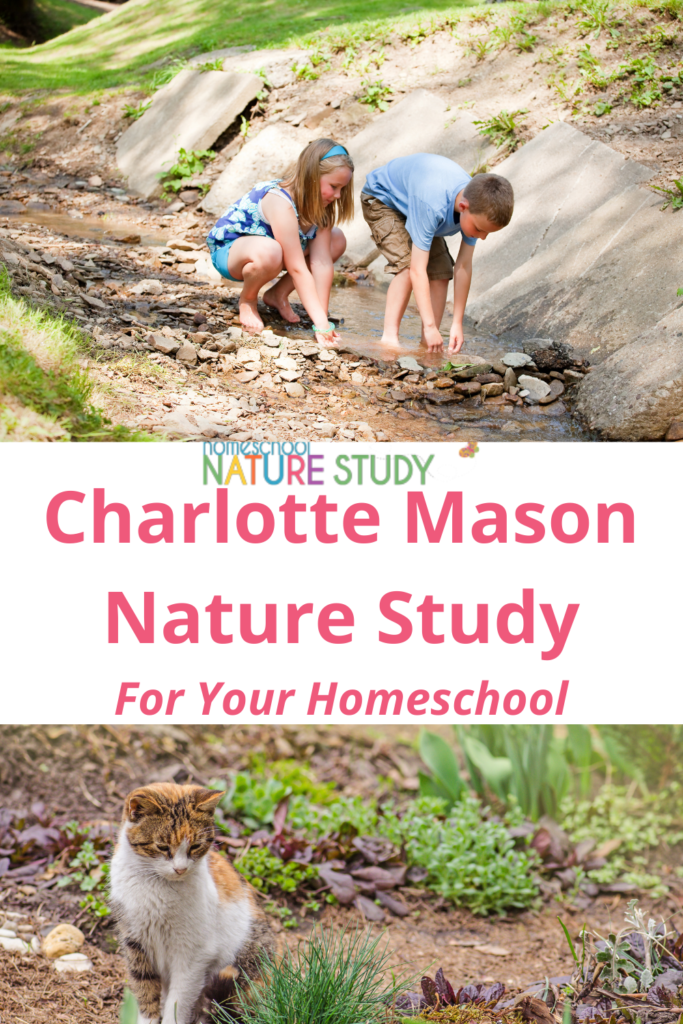
Sit quietly by the edge of a pond or stream and see what comes along.
Breathe the air and enjoy the day.
Follow Up Indoor Winter Nature Study Activities:
After your outdoor time allow time for a nature journal entry. Use the notebook page or the journal idea from the December Newsletter to record your observations of anything that your child finds interesting. I also have a December World Notebook Page included Homechool Nature Study Membership or you can use one of the journaling pages included in the free membership sample, below.
Maybe this week you could use a different art medium in your journal…many of us get stuck in a rut. Offer colored pencils, thin markers, watercolors, or pastels.
You could also try offering modeling clay as an alternative to drawing the subject this week and then take a photo of the finished product to include in the nature journal.
In Homeschool Nature Study membership, each challenge gives you step by step instructions to get started with simple weekly nature study ideas…even in the middle of winter! This may just be what your homeschool week needs to get you through the cold winter days of January, February, and March.
Each challenge is written for you to complete in your own neighborhood or backyard and you can adapt each challenge to fit your local area with suggestions I offer with each topic. Don’t be discouraged if you look at the list of topics and think you don’t have that particular subject close at hand. I will guide you through finding a replacement to still offer you a weekly dose of nature study.
The winter homeschool nature study challenges were written for families with children of all ages. In addition to the regular challenge, I have bumped up the nature study for older or more experienced children, complete with their own set of notebooking pages. You will be able to use these studies with your whole family and pull it out from year to year and have a nature study resource for all levels.
Outdoor Hour Challenges for Winter – Bring the Handbook of Nature Study to Life in Your Homeschool!
Membership includes all you need for using the Handbook of Nature Study and enjoying learning together as a family. See a sample membership Winter Homeschool Nature Study by signing up with the form, below.
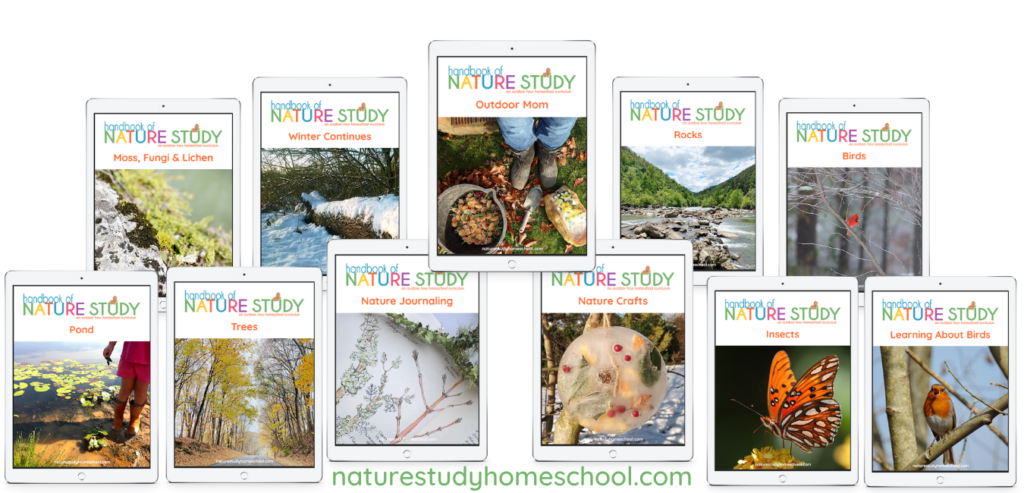
Membership includes all of this plus MORE!
notebook pages and coloring pages
Upper Level notebook pages for advanced or experienced students
Charlotte Mason style exam questions
Complete list of supplies needed
Detailed instructions for each challenge, including links and printables
Nature journal suggestions
Alternate ideas to adapt the challenges to your local area
Members also enjoy:
Bird in Snow video art lesson
First Day of Winter Walk and Observations Page
December World Notebook Page
Winter Weather Observations Journal Page
Window Observations Journal Page
December Words and Poem Journal Page
Special Outdoor Hour Challenges
Snow Study!
Red and Green Outdoor Hour Challenge
Moon and Moon Names
Study on Magnets and the Compass
And more challenges from all of the courses pictured above!
Get Your Free Sample Of Membership: Winter Homeschool Nature Study Download
Most importantly, when you get outside for your winter homeschool nature study, take along a good attitude and leave yourself open to whatever the experience brings. Allow your children to direct you to things they find interesting and then share in their excitement.
Nature study crafts for kids are a hands on way to learn. What beautiful and easy activities for learning and FUN! Let us show you how.
Nature Study For Kids
There is such value in adding nature study! Getting outside for a walk may be one of the most refreshing activities you could do with your children. Not only will you be learning about the beautiful creation in your very own backyard but you will be building lasting memories together.
And, gathering supplies from your yard makes doing a nature craft together even more fun! Spend a little bit of time outdoors then come inside and create. You could even stay outdoors and be crafty on a nice day.
Nature Study Craft Activities For Learning and Fun
Using our nature craft activities makes nature study easy on mom because our craft artist, Victoria, leads you and your students, step by step. Victoria grew up participating in the Outdoor Hour Challenges with her family. Nature has always inspired her work, right from when she was young. She, along with her sister, would go on weekly nature walks following lessons from the Handbook of Nature Study to learn about the beauty of our natural world. She has found through years of nature study that the slow and simple process of painting and being surrounded by nature has become her form of escapism from such a fast paced and material world.
Each craft activity is seasonal and matches what you are already studying in your homeschool. Plus, nature crafts are just so much fun!
Ice art incorporating foraged berries, leaves, cones or whatever else you find in nature makes for a beautiful garden decoration…even of it only lasts a few hours.
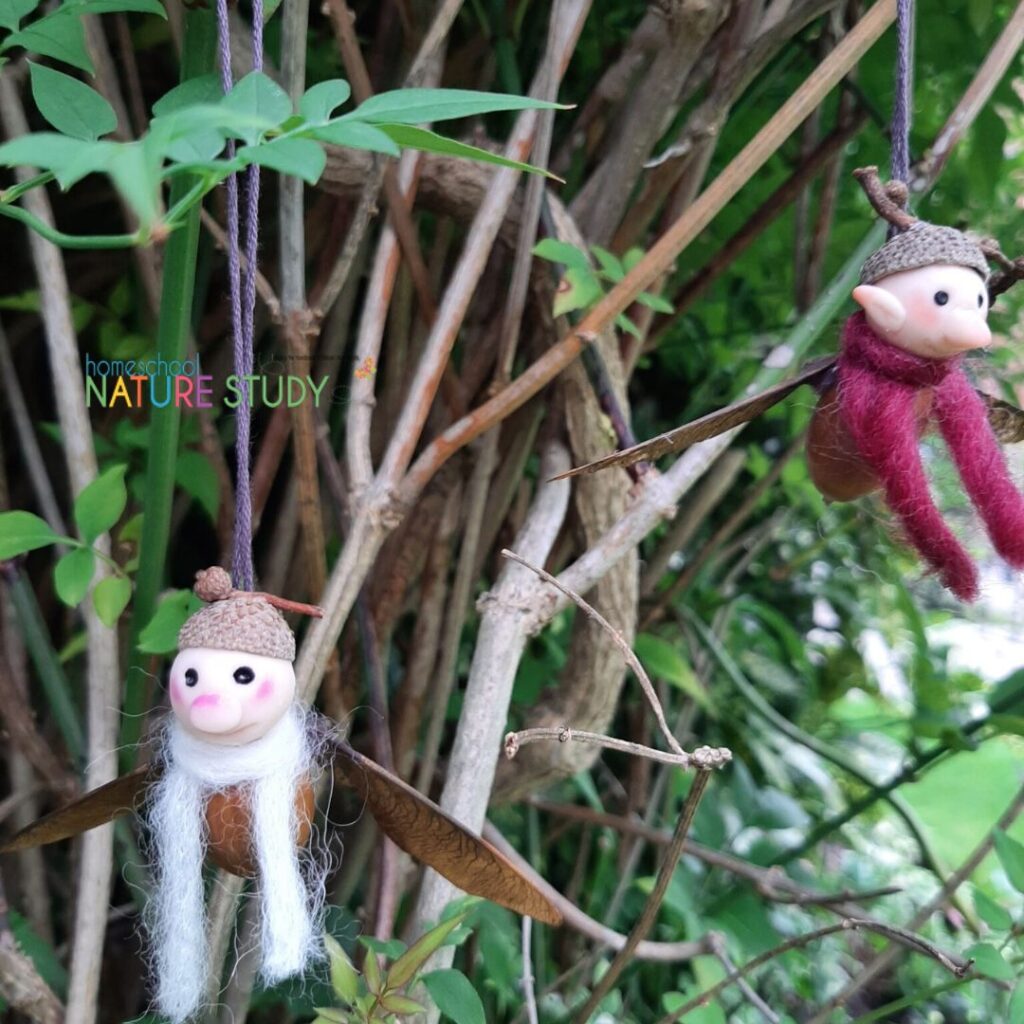
How to Make Forage Fairies
This homeschool nature craft makes it so much fun to get outdoors and forage for your supplies.
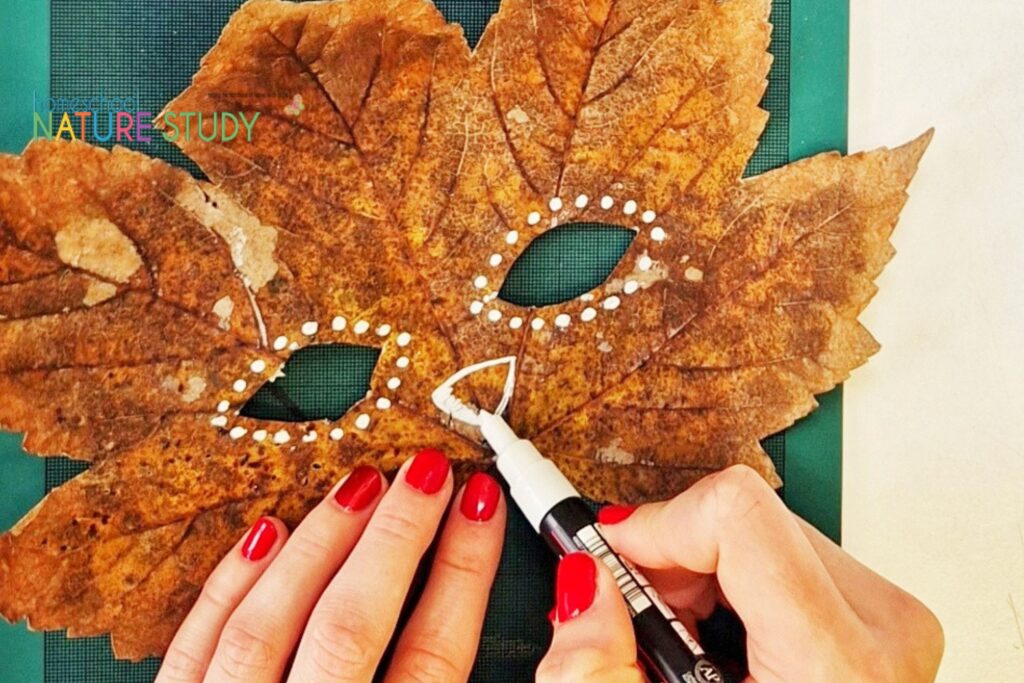
How to Make a Leaf Mask
You will love making a nature craft with leaves! We will be making these gorgeous leaf masks with only a handful of supplies. Let your creativity go wild with these masks!
More Resources For Nature Study In Your Homeschool
We love the nature crafts Victoria shares! And, did you know that Victoria’s mother, Shirley Vels, is your Outdoor Hour Challenge hostess? Not only does Shirley share your weekly Outdoor Hour Challenge, she also encourages fellow homeschool moms with her monthly Outdoor Mom lessons in membership as well!
If you are not a Homeschool Nature Study membership yet, please consider joining to gain the benefit of having a nature study library at your fingertips. There are numerous resources available for you to help create the habit of nature study within your family.
Members also enjoy access to:
Weekly Outdoor Hour Challenges to bring the Handbook of Nature Study to life in your homeschool!
the annual nature study plans
matching courses with materials and journaling pages
interactive calendar with daily nature study prompts
Nature Journaling course
and MUCH more!
Members of Homeschool Nature Study enjoy access to both the Nature Crafts course AND Outdoor Mom plus more exclusive courses and content.
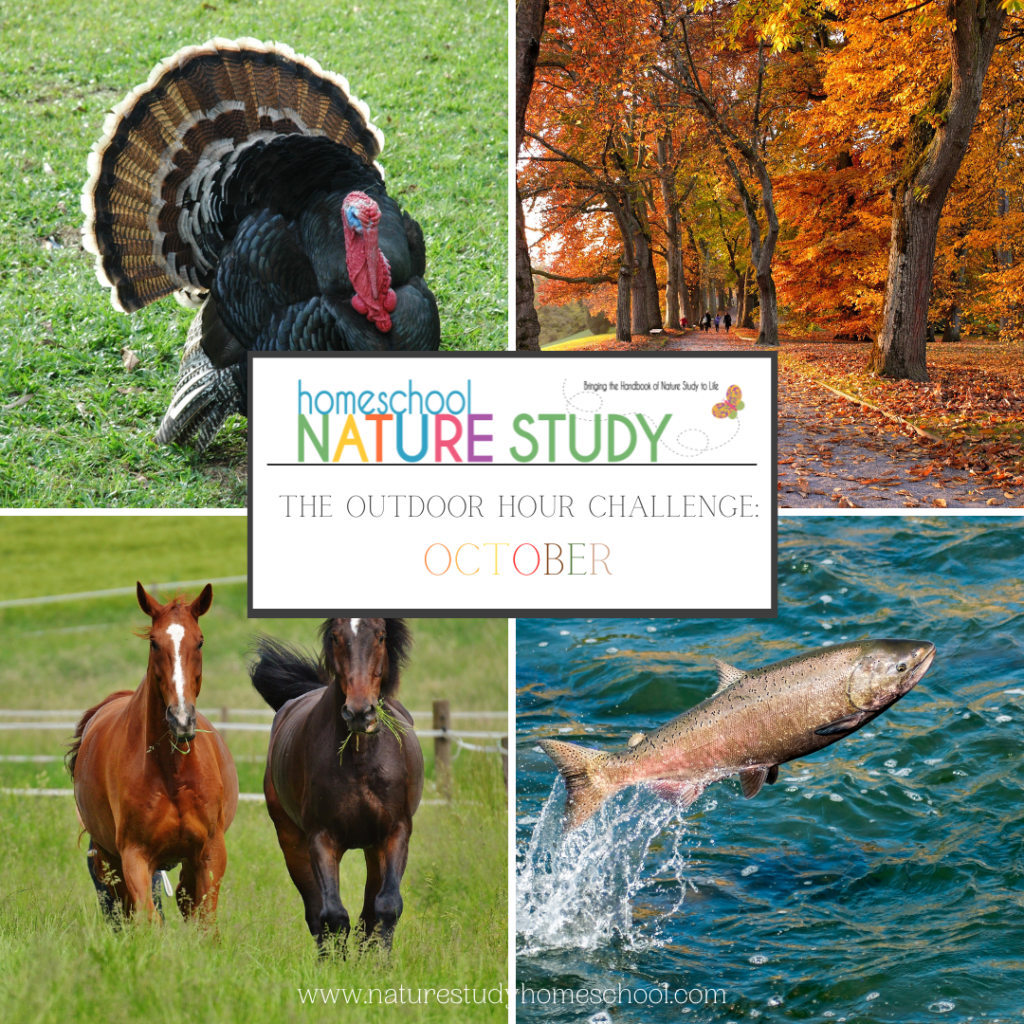
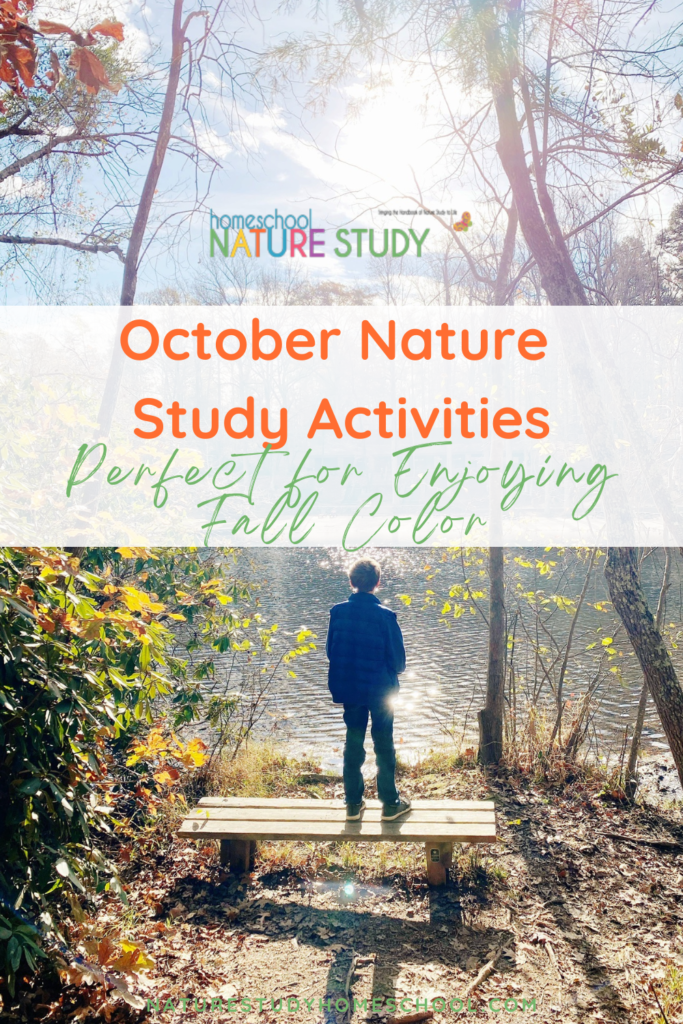
October can often be the most mild and inviting time to be outdoors! The mornings are cool, the sunshine abundant, and the afternoons offer the perfect invitation to take a walk crunching the leaves under the foot. I hope your month is full of sunshine and outdoor walks too with these engaging October nature studies.
Swallows and swifts and learning about bird migration
Goose
Turkeys
Horses
Salmon and trout
Seasonal tree study
Apples and how they grow
How to start a field notebook
Autumn weather and changes in your own backyard
The October Outdoor Mom
Anne reveled in the world of color about her. What is this? “Oh Marilla”, she exclaimed one Saturday morning, coming dancing in with her arms full of gorgeous boughs, “I’m so glad I live in a world where there are Octobers. It would be terrible if we just skipped from September to November, wouldn’t it”?
Anne of Green Gables
Your Outdoor Hour Challenge hostess, Shirley Vels, shares lovely prompts just for mom in The Outdoor Mom course for annual members: I’m sure most of us resonate with Anne and her love for October. There is no doubt in my mind that October is my favourite time of the year!
The smell of woodsmoke in the air, the gentle mists that gather each morning as the sun pops its face over the horizon, the chill that makes soft clouds form as you speak, the splendour of the autumnal trees and the golden light that seems unique to this time of the year filtering through the golden tree tops and painting beautiful dappled shadows on the ground is all simply quite heavenly!
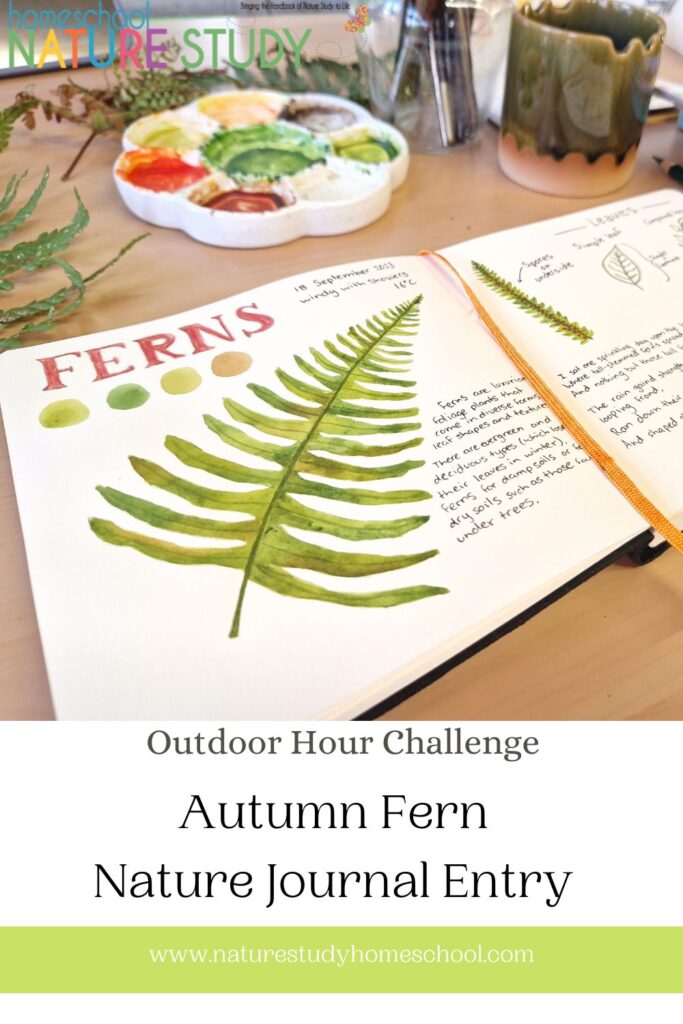
Nature Journaling Video on Ferns: Nature Crafts
Your nature illustrator, Victoria Vels, shares a beautiful fern nature journal entry. Follow along as she shares her process in a step-by-step video in the Nature Crafts course for annual Homeschool Nature Study members. Autumn is here with all its vibrant colour changes, so it’s time to document the beauty with this fern themed autumn nature journal entry. Follow along with me as I create this autumnal spread, experimenting with colours and painting techniques. Gather up your specimens, literature and facts and lets get started!
Nature Study Outdoor Hour Challenges for Pumpkins and Apples
A really great thing about fall is that it is a great time to get outdoors with the kids and explore nature. With that being said, here are some great fall nature study ideas for toddlers and preschoolers that I hope you (and your little ones) will enjoy.
The Outdoor Hour Challenges Bring The Handbook of Nature Study to Life in Your Homeschool!
For even more homeschool nature study ideas for all seasons, join us in Homeschool Nature Study membership! You’ll receive new ideas each and every week that require little or no prep – all bringing the Handbook of Nature Study to life in your homeschool!
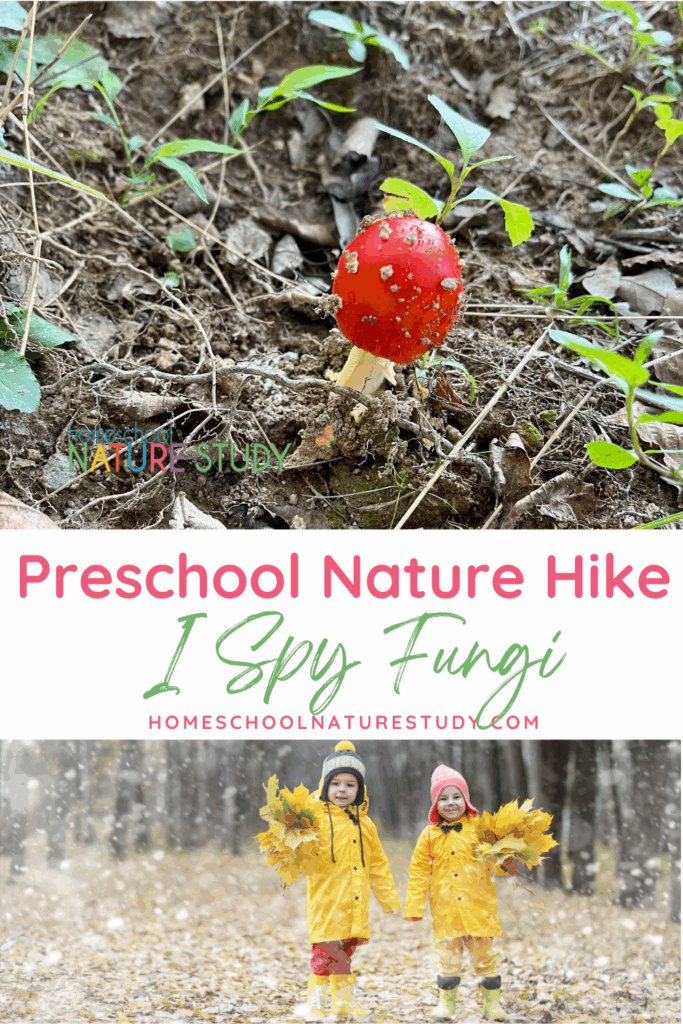
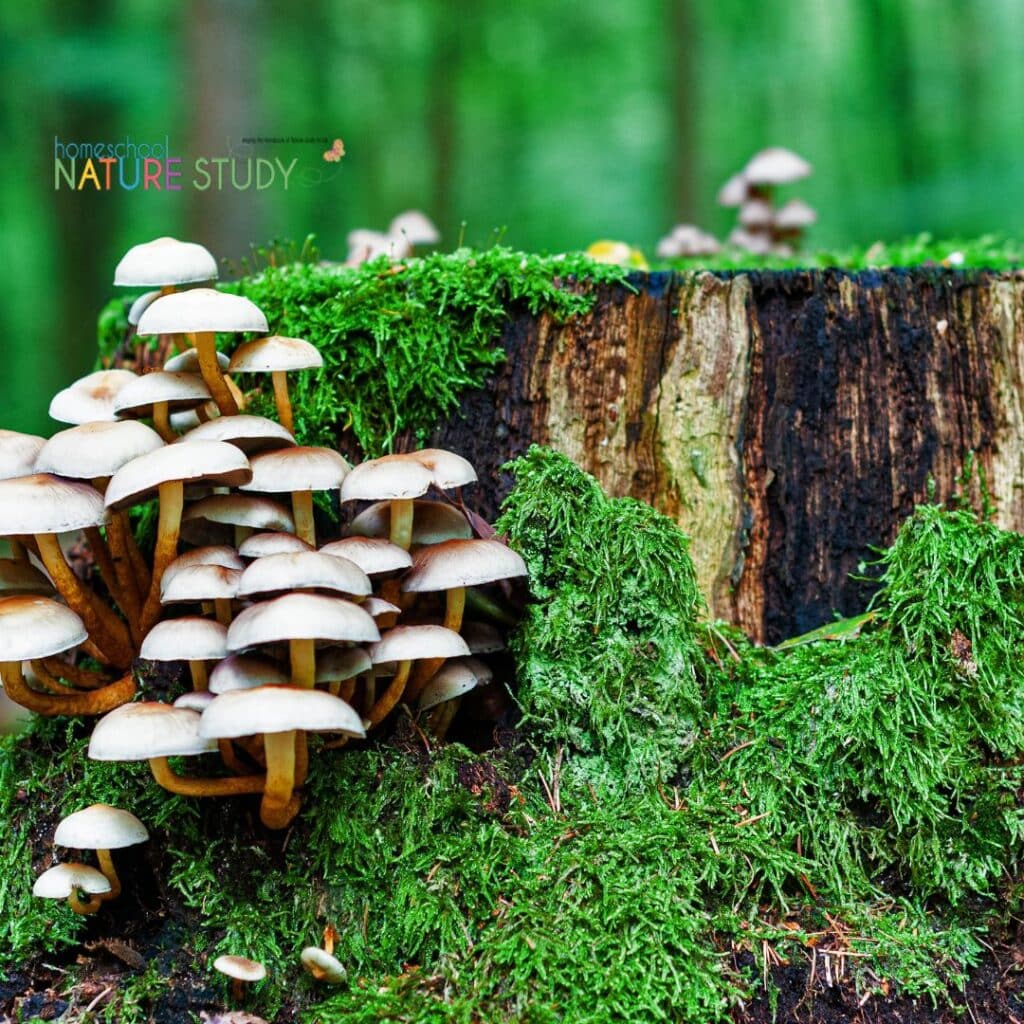
When we think of fall we often picture pumpkins, hay rides, apples, and changing leaves. But it is also the perfect time of year to go on a I Spy Fungi: Preschool Nature Hike.
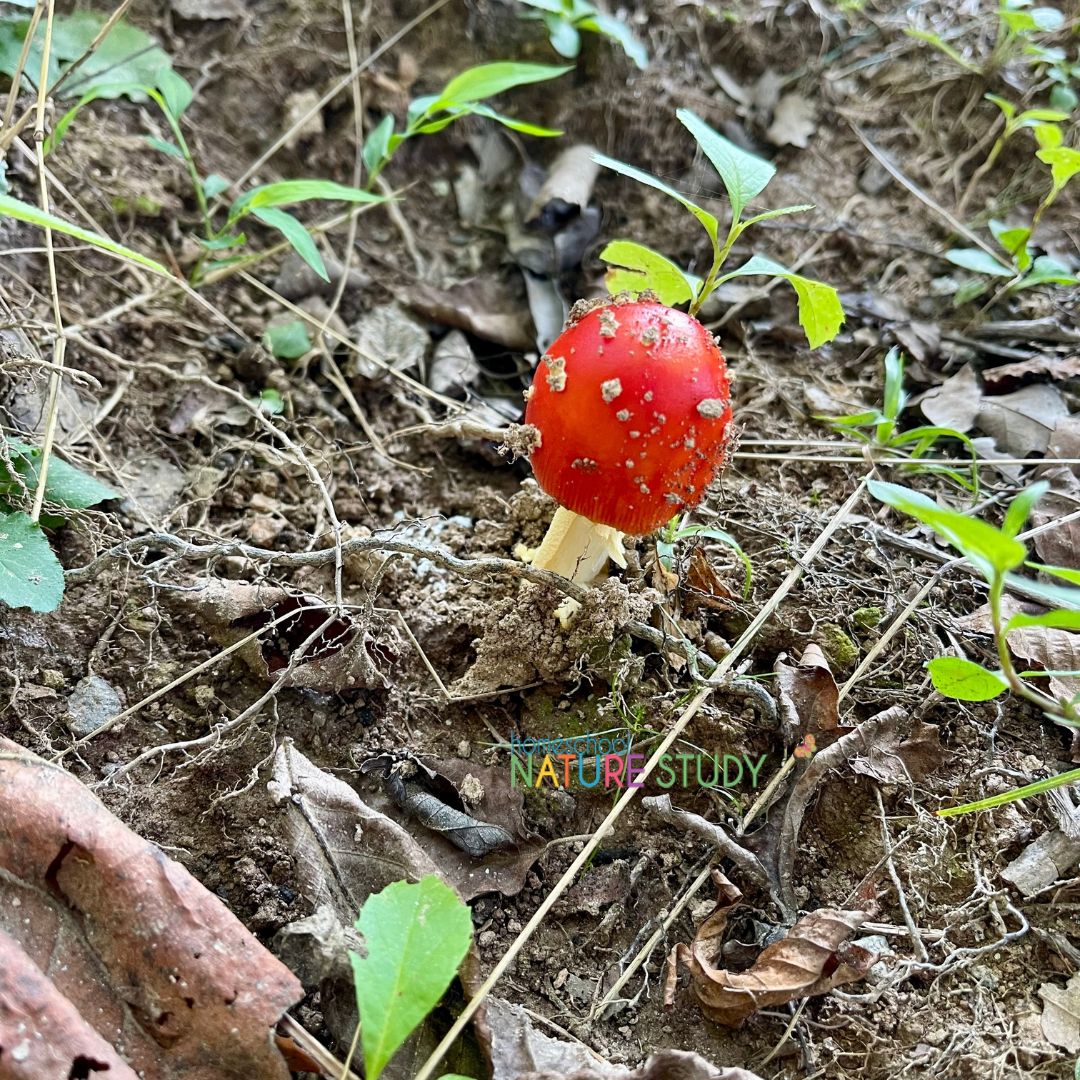
We didn’t set out to have a fungi nature hunt but it turned into that once we noticed how many different types of mushrooms we were seeing on our walk.
I Spy Fungi: Preschool Nature Hike
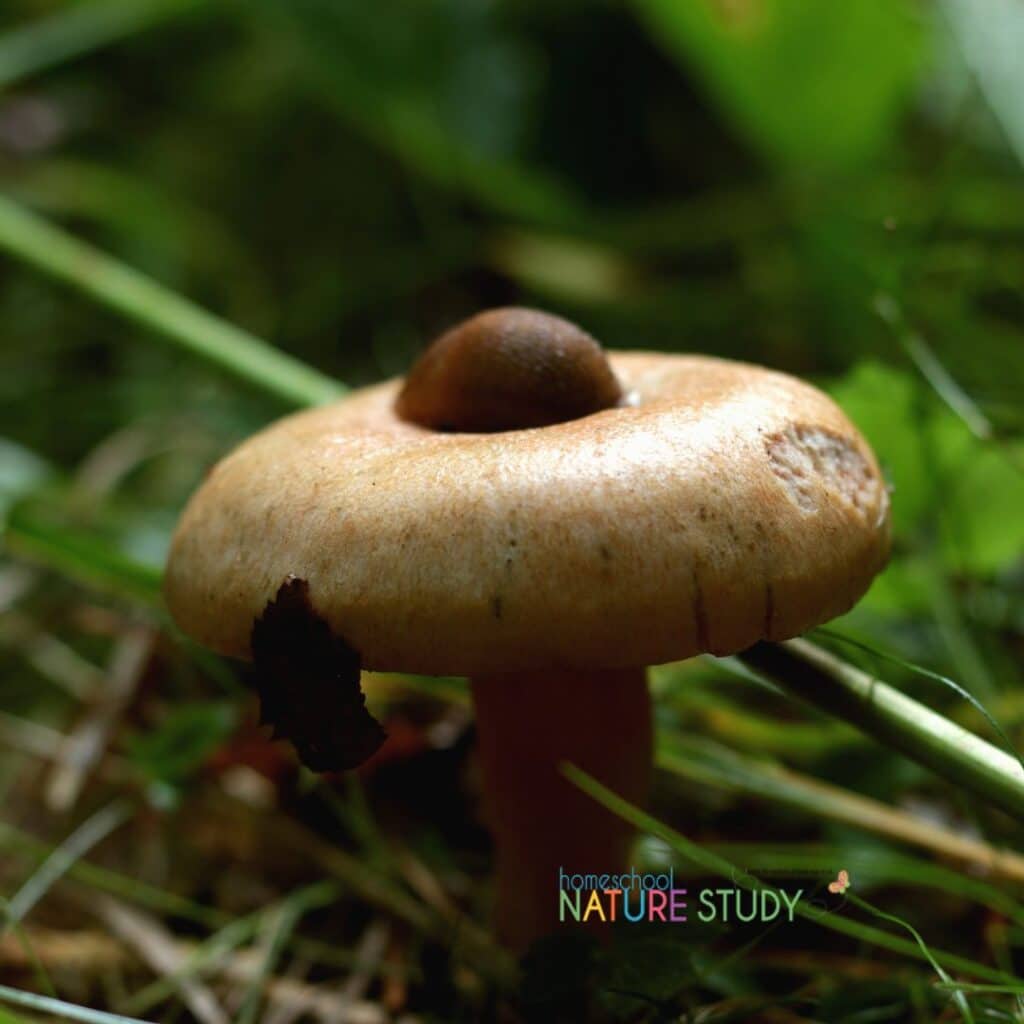
There’s something about fungi that is gross and cool at the same time! While we were walking through the woods, we came across several different types of fungi. With my preschool children, we observed the different colors, shapes, and locations of fungi.
We even found a slug on fungi. That got us thinking– why would a slug want to be on fungi? (Moisture was our guess.)
Slime and mushrooms– what was the connection? Was it part of the mushroom or was it left from an animal? Those were some of the “I Wonders” that we came up with while on our hike.
We also talked about how some mushrooms are safe to eat but others are not — and we just observe mushrooms with our eyes not our hands.
We observed a variety of fungi on our nature walk and had some great discussions about what we saw.
So head out on your own I Spy Fungi hunt! Bring a camera or sketchbook and capture what you find. I’d love to see your photos! Be sure to tag us on Instagram or Facebook.
There are 25+ continuing courses with matching Outdoor Hour curriculum that will bring the Handbook of Nature Study to life in your homeschool! In addition, there is an interactive monthly calendar with daily nature study prompt – all at your fingertips!
Join us for even more homeschool nature studies for all the seasons! With a new nature study each week, you will have joyful learning leading all the way through the homeschool year for all your ages!
Be inspired. Be encouraged. Get outdoors!
By Maureen Spell, a long-time contributor to the Outdoor Hour Challenges.Maureen helps Christian mompreneurs operate their business from a place of joy, purpose, and excellence because they are clear on how their business is serving their family and others. As a homeschool mom, she believes success at home AND business without the mom-guilt, stress and burn-out is possible! Outside of work, she loves having good conversations over a hot chai or GT Gingerberry kombucha and spending time with her husband and seven children. Visit her at MaureenSpell.com
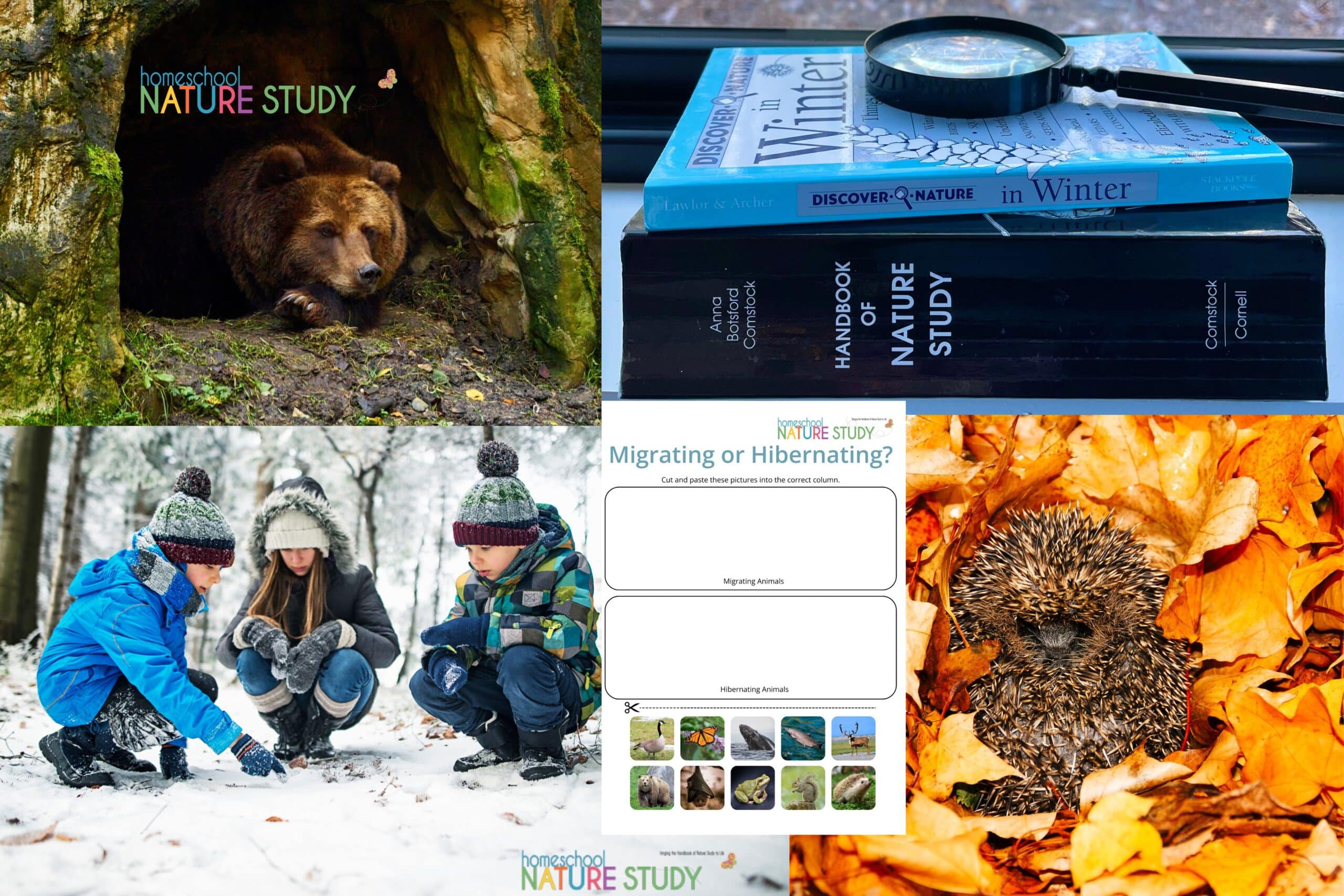
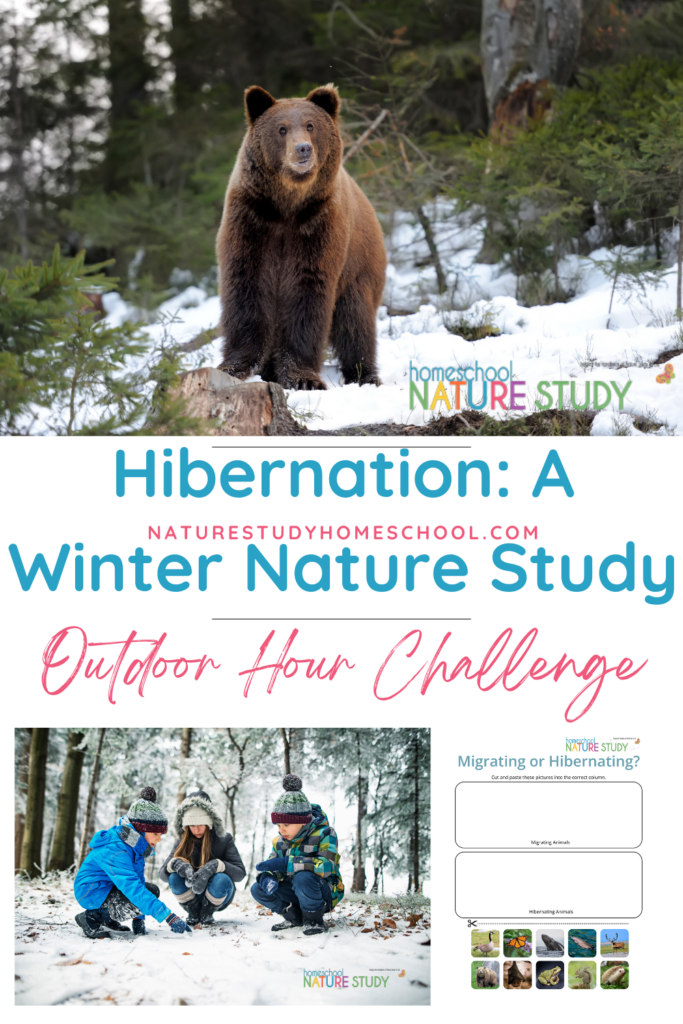
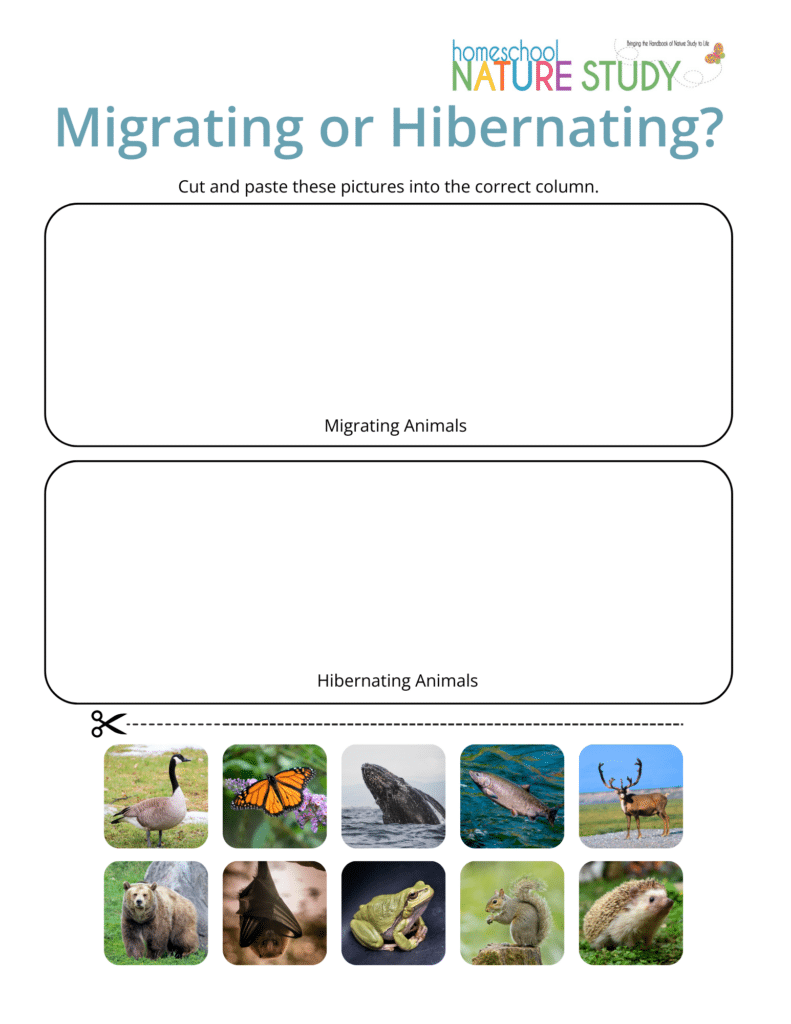
Do you wonder what animals, birds and insects do in the winter? This hibernation winter nature study helps answer those questions and features a hibernating or migrating printable!
Mammals in general tend to be shy of humans. In the winter, it is even more difficult to observe mammals. Outdoor Hour Challenge founder, Barb McCoy, suggests the following:
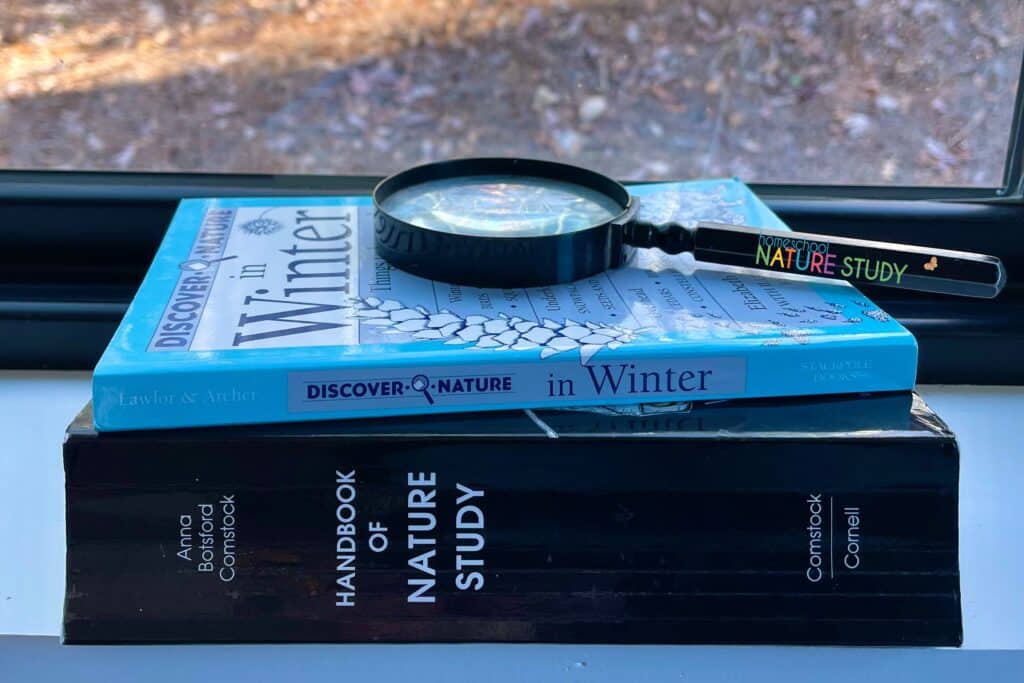
1. Read chapter nine in Discover Nature in Winter. The chapter suggests looking for signs of mammals instead like tracks and scat. Highlight ideas for your family to try this week while you are outdoors and looking for mammals.
2. Our family is going to review the chart showing different animal tracks on page 182 and 183. We might try sketching some of the tracks into our nature journal as a reference for future outdoor time. In our area, we often come across animal scat as we hike and we are going to familiarize ourselves with the various kinds of scat by studying the illustrations in this chapter.
For families wanting to participate that do not have the Discover Winter in Nature book, I will list a few simple nature study ideas that you can try with your family.
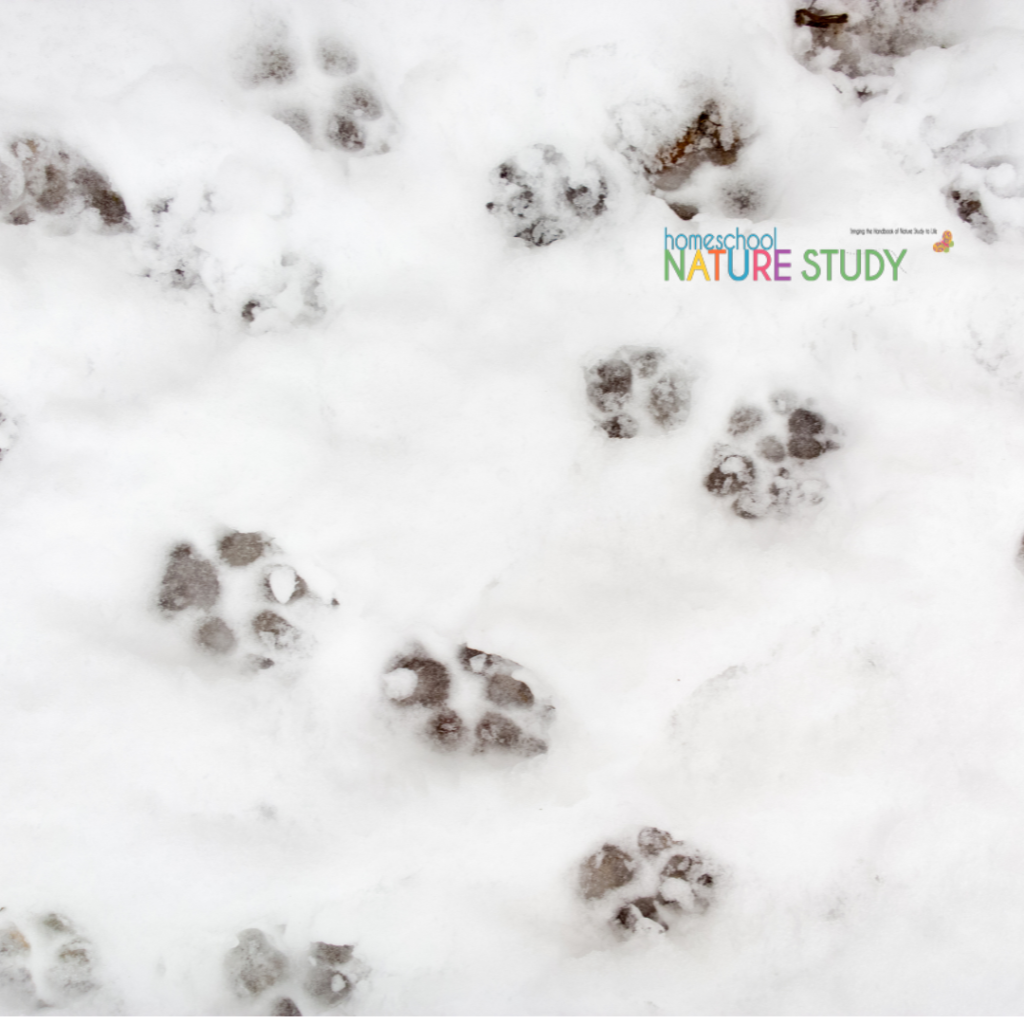
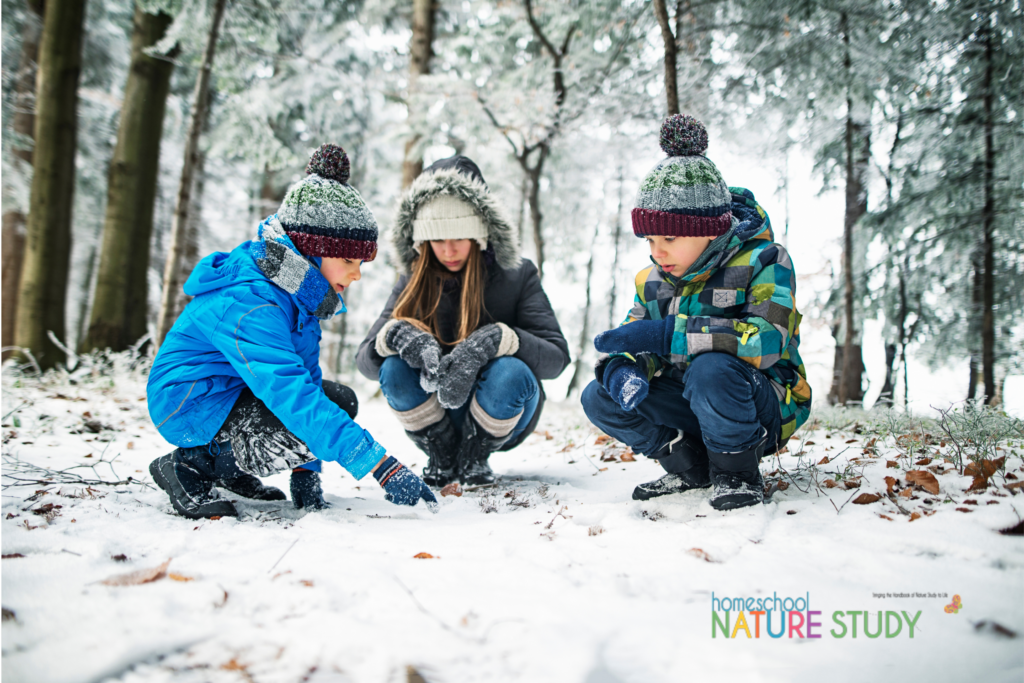
Keep a record of animal tracks you have observed in the snow or mud. Record your findings in your nature journal along with a drawing, the date, the weather, the time of day, and the type of animal if you have identified it at this time.
Compare a dog’s and a cat’s footprints in the snow or mud.
Research an animal that hibernates and record what you learn in your nature notebook. You can also sketch your animal and what its tracks look like.
More Winter Activities for Your Homeschool
There are still so many nature studies to enjoy in winter!
A fun Hibernating or Migrating sorting study and printable by Stef Layton!
…Most of the birds have gone south because of the cold, and also because their food is gone; the frogs, turtles, and toads are going to sleep all winter down in the mud or earth below the frost; the caterpillars are waiting in their cocoons for the warm spring sunshine; most of the other insects have laid their eggs for the next season, while a few of them have crawled into warm places to wait; the squirrels have gathered a store of nuts, and will soon be asleep in the old tree-trunks; the cats dogs, horses, and cows have grown a fresh coat of hair and fur. Nothing is forgotten; each is ready in its own best way.”Nature Study by Months
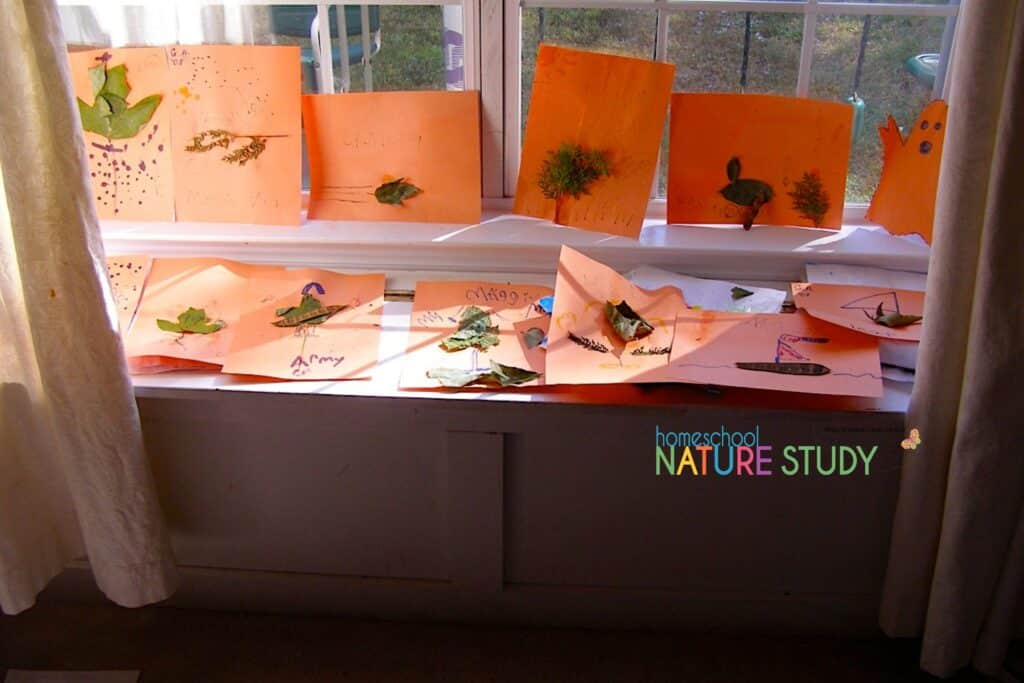
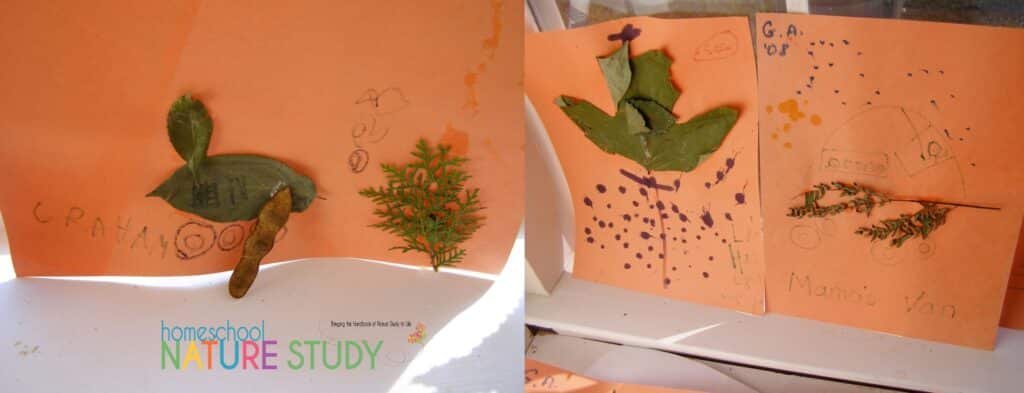
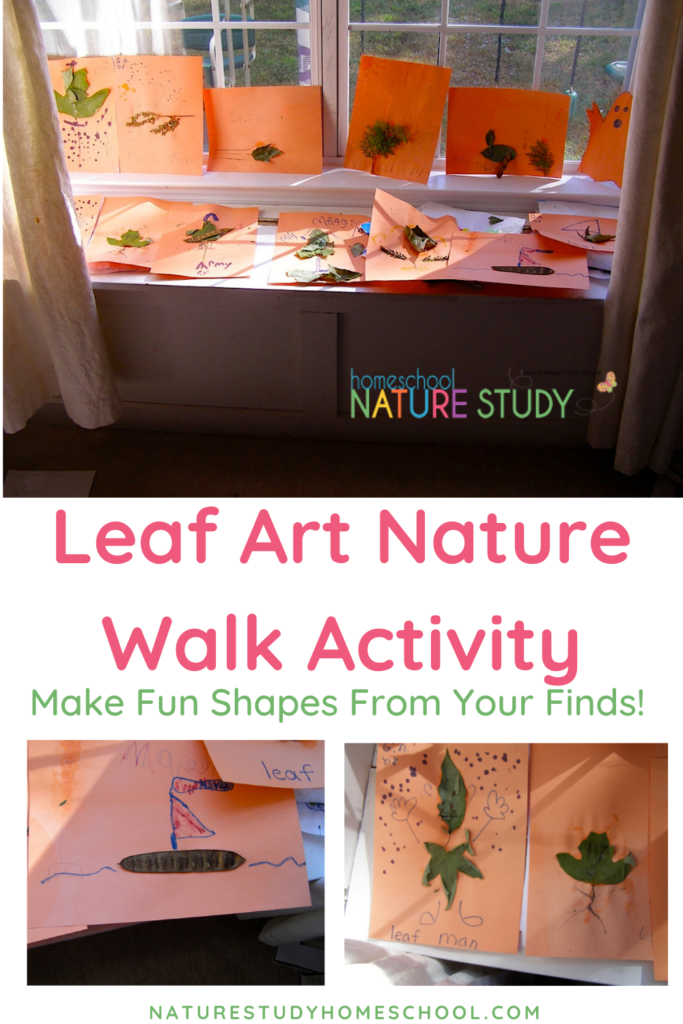
This is a super fun leaf art nature walk activity that you can do today! After a nature walk, create these fun shapes with the treasures you find.
Here is an example of leaf art the children created with Nana a few years back. It’s time to do it again!
Leaf Art Nature Walk Activity
Start by enjoying a simple nature walk in your yard on a beautiful fall day, encouraging the children to collect a variety of leaves, seeds and nature items.
Bring your discoveries inside and spread them out on the table. Or keep it all outdoors if you prefer – on a patio, back deck or blanket spread out in a shady spot.
Allow the children to create pictures with their items. You might encourage them by starting some artwork yourself, giving them an example.
Leaf Art Supplies Needed
You’ll need:
construction paper or printer paper
glue
markers or crayons
your nature items
With markers, crayons, or whatever you have on hand, let the children complete their pictures, then glue down their nature items. Making whatever they would like to make.
There’s no right or wrong way to make leaf art. Just have fun!
Fall Leaf Activities for Kids – These fall leaf activities for kids are a perfect way to study nature throughout the season. Easy to implement and enjoyable for the entire family, this study has options for all ages.
More Fall Homeschool Nature Study Fun!
Keep the apple and pumpkin nature study fun going with these resources for all ages:
These five tips will help you stay consistent with nature study in the new year – or any time of year!
5 Tips for Staying Consistent With Nature Study
Nature study can be a wonderful part of any education, providing connection to the world around us, real world scientific discovery, and a chance to connect as a family. Here are 5 ways to make it a consistent priority in your days.
Know Your Why!
Why ARE you doing nature study? Is it just to fill up a slot in the day, or do you have a specific purpose for it? We do nature study because it is a vital part of the way we study science! (The answer to: Does homeschool nature study count as science?)
Have a plan for a specific time for nature study.
This will look different for different people, and may change in different seasons. For us, it is late afternoon in the seasons of shorter days, and after dinner in the seasons of longer days. For those that have littles at home, the morning might work best. (Help with planning for nature study)
Don’t be in a rush!
Give plenty of time for what you are doing! Whether you’re in your backyard or out on a trail, if children are being rushed, they really can’t observe.
Keep notebooking supplies, nature study books, and field guides near at hand.
Not only are you learning, but you’re making memories that you’ll share with your children for a lifetime! (The 5 Best Outdoor Games for Kids)
Valuable Support For Your Homeschool Nature Study
We’ve heard from families that they were reluctant to start a nature study plan, but, they found that having a focus each week actually helped them to stay regular at getting outside. It also helped them be better at taking a few minutes to learn about an object they encountered, even if it wasn’t the original aim for getting outdoors.
We make it easy with resources you can use at your own pace and on your own schedule. Or, you may choose to follow our annual nature study plans closely and have everything at your fingertips.
Amy Law is wife to Jeremy, and mom to three. They homeschool using Charlotte Mason’s principles, and love to spend lots of time in nature! You can often find them hiking the beautiful trails of their beloved Tennessee hills, while Amy attempts to capture the beauty of it all with her camera lens.
Does the thought of doing nature studies intimidate you? Have any of these myths stopped you from studying nature with your kids? Here is how to overcome 3 nature study myths that get in the way for many homeschoolers.
Right now it is cold outside and I’ll admit— I’m a fair-weather nature walker! 🙂 But these solutions will help you overcome nature study myths.
3 Popular Nature Study Myths
1. You must be able to identify every leaf, animal track, songbird and seed.
I can identify the pumpkin!
Guess what? You do not need to be a nature expert in order to enjoy nature studies! Pick up a couple of nature handbooks and learn along with your children! Here is more on The Handbook of Nature Study.
2. You must go on a 5 mile hike uphill both ways to make it count as a nature walk.
If you are a mom of toddlers or preschoolers, the thought of taking them far from home (or a bathroom) can cause you to dread going on a nature hike. I’ll tell you one of my secrets— our backyard is one of our favorite nature adventurelands! We have a normal suburban backyard but if you look, there are many natural treasures out there to be discovered.
Our local museum also has several different types of gardens on its campus. I love to take my children there because it is close to home, close to a bathroom, and a do-able outing for me with several young children. Someday I would love to be able to take my kids on longer hikes, but for this season, close to home is where we will do our nature observations.
3. Your kids must love nature in order to do a nature study.
Honestly, I rarely tell my kids, “Hey, we’re going on a nature walk!” Usually we all just need to get out and burn off some energy. I just happen to take them to places where it is easy to find things to observe. While they are walking (or running) I often engage them in a game of I Spy or I’m thinking of something… red, up high etc. These simple games help teach my kids observation skills. Then when we are out and about, they are used to looking at their surroundings and often find critters, leaves, rocks, twigs and more on their own.
Resources For Nature Study in Your Homeschool
If you’ve been hesitant to start nature studies with your kids, the following resources offer great tips on how to get started:
The Outdoor Hour Challenges Bring The Handbook of Nature Study to Life in Your Homeschool!
For even more homeschool nature study ideas for all seasons, join us in Homeschool Nature Study membership! You’ll receive new ideas each and every week that require little or no prep – all bringing the Handbook of Nature Study to life in your homeschool!
Maureen helps Christian mompreneurs operate their business from a place of joy, purpose, and excellence because they are clear on how their business is serving their family and others. As a homeschool mom, she believes success at home AND business without the mom-guilt, stress and burn-out is possible! Outside of work, she loves having good conversations over a hot chai or GT Gingerberry kombucha and spending time with her husband and seven children. Visit her at MaureenSpell.com
It took me awhile to be ok with bringing nature inside. I mean, I was a little concerned about little critter hitch-hikers finding their way into my home. But after figuring out how to address that problem, I was all on board for creating a nature display for our nature treasures. And now we keep adding more around our home. Here’s a few things to think about when planning your nature display.
Types of Nature Display Containers
First you need to decide what kind of nature display container you would like to use. I’ve seen:
baskets
shadow boxes
old printer press drawers
miniature display case
trays
Find Treasures on a Nature Hike
Next, go find some nature treasures! Go on a nature hike! Many of our nature treasures were found in our own back yard or neighborhood. Things to remember:
Know the rules for keeping nature objects. If you’re at a state park, national forest or nature preserve, you can only look– not take anything you find.
If you reside in the U.S., there are some rules regarding collecting bird feathers. Because of this, we don’t pick up bird feathers. We did purchase some feathers at Hobby Lobby (which is where we got the peacock feathers.) See Is it Illegal to Pick up Bird Feathers
For objects such as pine cones, nuts and bark– you can put them on a cookie sheet and place in a 200 degree oven for about 20-30 min. Watch items carefully so they don’t burn. This will make sure you don’t have any unwanted critters.
For things like seashells, soak them in cold water. Change the water daily for a week. I did use a plant-base cleaner on the last day (adding a very small amount to the soaking water) but that isn’t necessary– especially if you are picking up empty shells.
How to Create a Nature Study Wall Display
We decided to create a wall display first. I found our display box at Hobby Lobby, but when I went back to get more, I couldn’t find them there. They might have been a seasonal item.
For bigger items, we placed them directly in the space. But I found that clean, glass spice bottles are awesome for holding smaller items. We have a bottle of sand, shark teeth, tiny shells, crab pinches, and tiny rocks.
Do you have a nature display or nature box? What tips would you add?
More on Nature Tables and Displays for Your Homeschool
Unsure of what a nature table is exactly? Here is simple definition with some ideas and tips. These will help you begin the habit of gathering things for your homeschool nature table during your Outdoor Hour Challenge time.
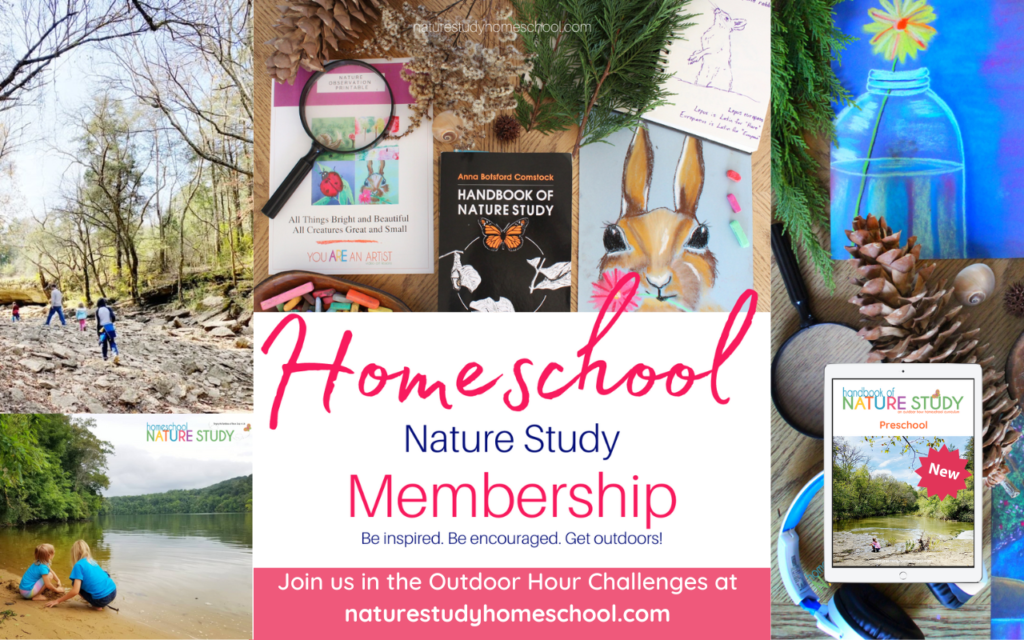
The Outdoor Hour Challenges Bring The Handbook of Nature Study to Life in Your Homeschool!
For even more homeschool nature study ideas for all seasons, join us in Homeschool Nature Study membership! You’ll receive new ideas each and every week that require little or no prep – all bringing the Handbook of Nature Study to life in your homeschool!
By Maureen Spell, a long-time contributor to the Outdoor Hour Challenges.Maureen helps Christian mompreneurs operate their business from a place of joy, purpose, and excellence because they are clear on how their business is serving their family and others. As a homeschool mom, she believes success at home AND business without the mom-guilt, stress and burn-out is possible! Outside of work, she loves having good conversations over a hot chai or GT Gingerberry kombucha and spending time with her husband and seven children. Visit her at MaureenSpell.com