Keeping a perpetual calendar of nature firsts is a wonderful long-term nature study project for families. It’s a simple way to learn the cycle of life in your world, noting the nature firsts that catch your attention each year. Comparing the dates of the firsts in nature will give you a more accurate telling of the passage of time.
Keeping a Calendar of Nature Firsts
Calendars: It’s a great idea to have children keep a calendar to record when and where they saw the first oak leaf, the first tadpole, the first primrose, the first ripe blackberries. Then next year they can pull out the calendar and know when to anticipate seeing these things again, and they can note new discoveries. Imagine how this will add enthusiasm for daily walks and nature hikes! A day won’t go by when something isn’t seen to excite them.
Charlotte Mason-in modern English
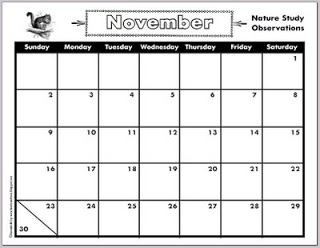
Download Your Free Calendar Page
(Note that members have this printable in your Planning Resources course in Homeschool Nature Study membership!)
You can use a calendar page for each month with the list of days down the side or a more traditional grid style calendar where you fill in the boxes as you go. Whichever way you choose will work if you just remember to weekly take a minute or two to note any nature firsts you observed. Make sure to record the date (including year), time, and or location of your observation.
Nature Study Items To Look For Each Year
First elk
First ground squirrels
First snow
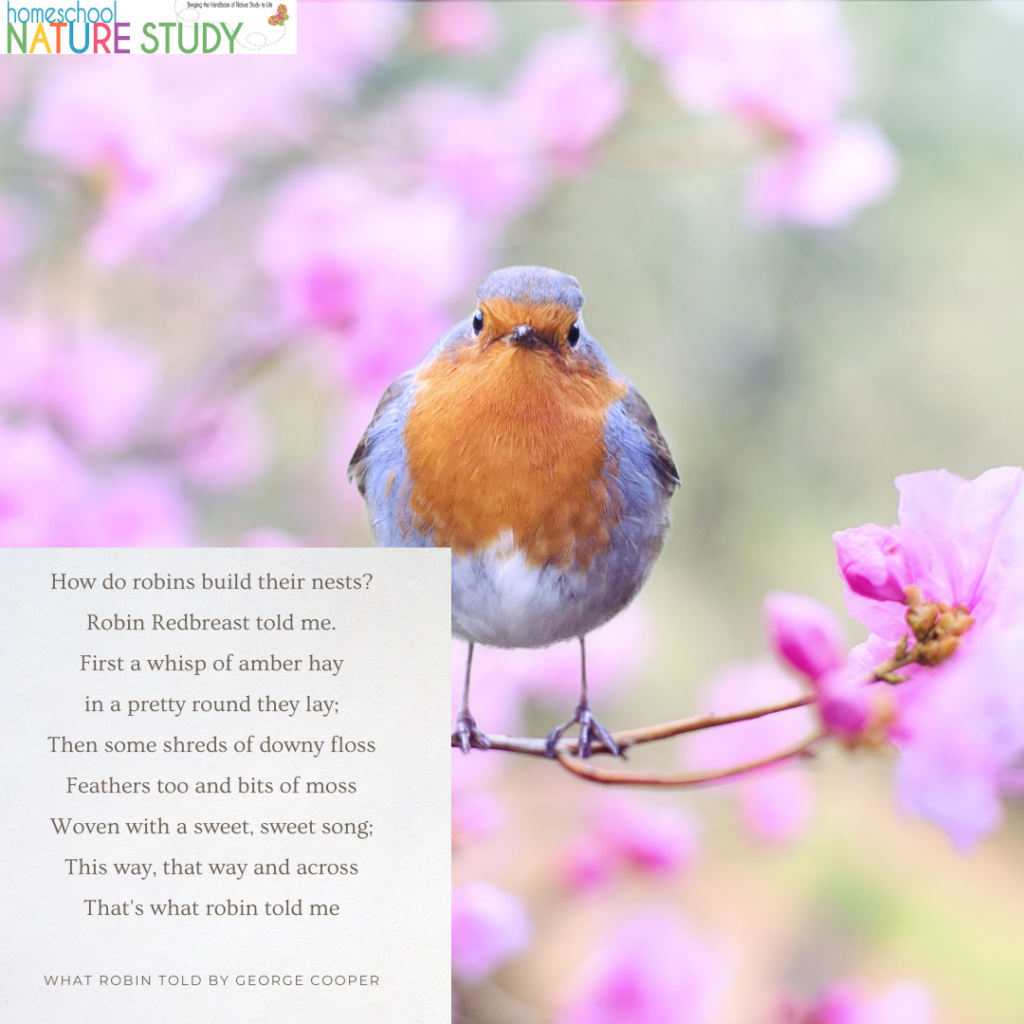
First robin, junco, swallow, hummingbird
Last leaves on the aspen (Yes, you can keep track of “lasts” as well.)
First campfire of the season
First fire in the wood stove
More Nature Study Firsts for You to Observe in Your Homeschool
First bee seen
Frogs chirping– first day heard
First mosquito bite
First skunk smell
First trillium or other wildflower blooming
First acorns on the ground
First green grass
First tulips blooming
First day warm enough for shorts and t-shirts
First freezing temperatures
First snowfall
As you can see from the list, you are not limited to any one season or any one area for your firsts. Challenge your children to come up with some nature firsts of their own.
A calendar of firsts can be kept by the entire family or by each individual child. The observations can be listed in words and/or pictures!
The beauty of this project is that it can be started at any time and can be completed over many years with no guilt if you forget to record something for a period of time. If that happens, just pick up where you left off.
More Ways to Include Nature Study in Your Homeschool
How do you find the joy of nature study in your own backyard? Here are some encouragement for easy homeschool nature study right out your back door.
The simple truth is that everyone has something special and unique to explore in their own backyard or neighborhood.
How To Find The Joy of Nature Study in Your Own Backyard
I always go outside with the expectation that there will be something interesting.
Sometimes you have to look harder to find it than other times.
Nature study has made me more of a positive person…I expect to find something outdoors to make me joyful. I expect that there will be something that we can observe and notice.
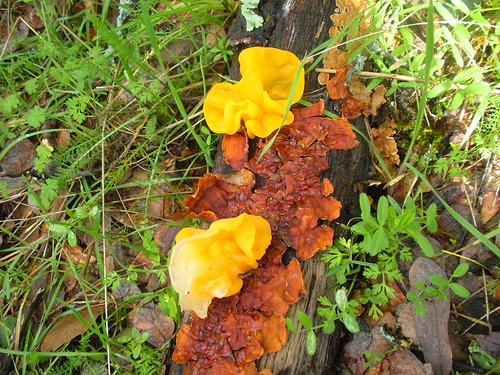
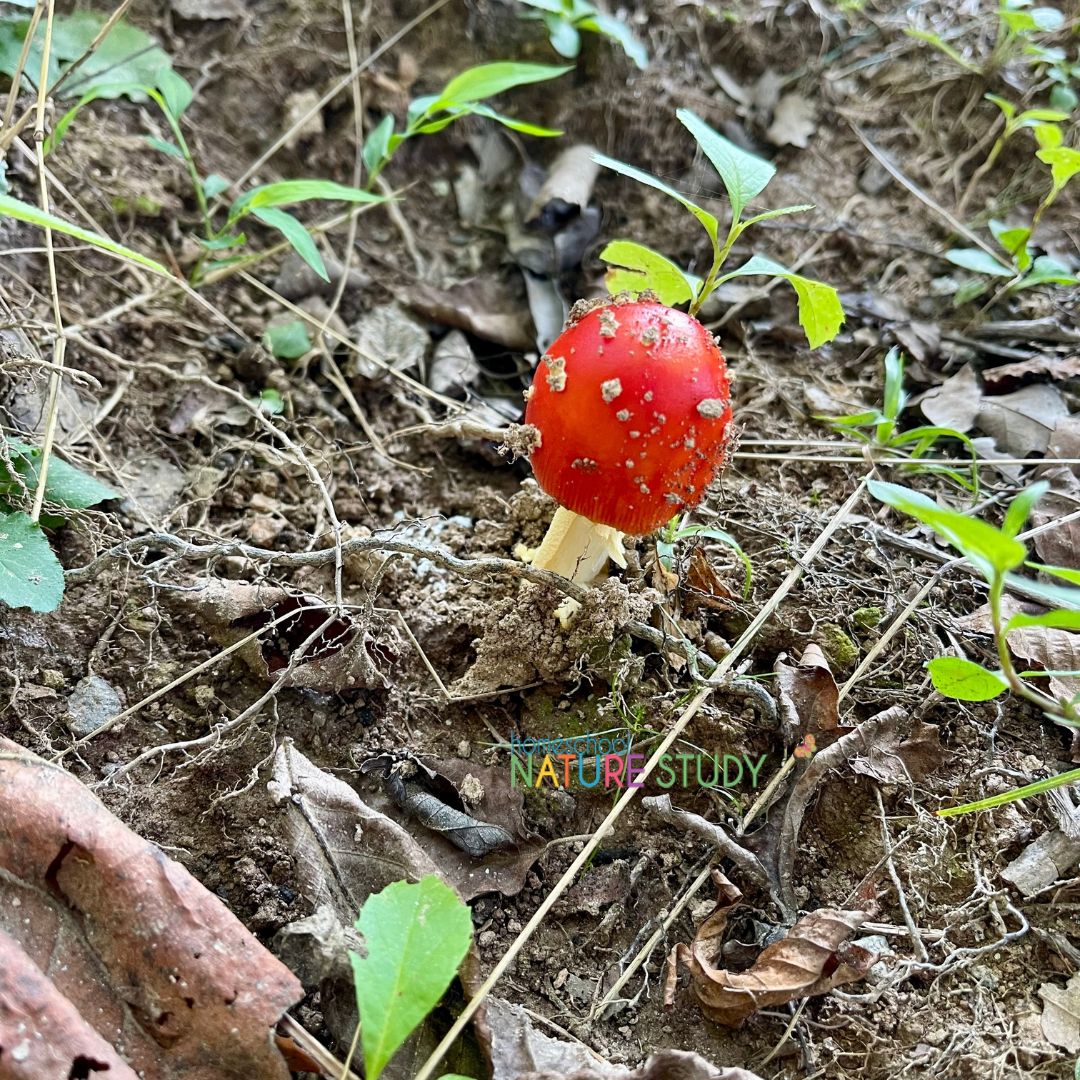
Wow! Look at the color of this fungi? We think it is called Witches Butter.
There is just so much to see and learn about, but we need to train our eyes and hearts to be open to the opportunities that arise.
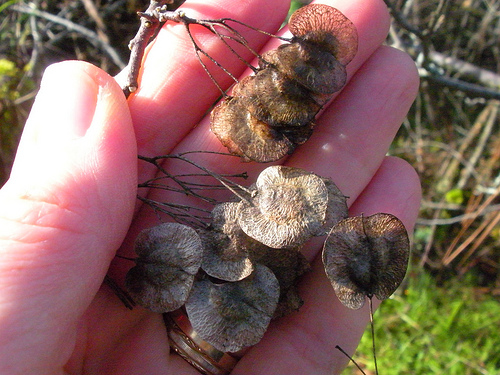
I am amazed by these seeds. As many times as we have hiked down this same path, by this same plant, I have never noticed these really great seeds but there they are.
Keep your senses open to any opportunities and you may be surprised what you find to be interested in along with your children.
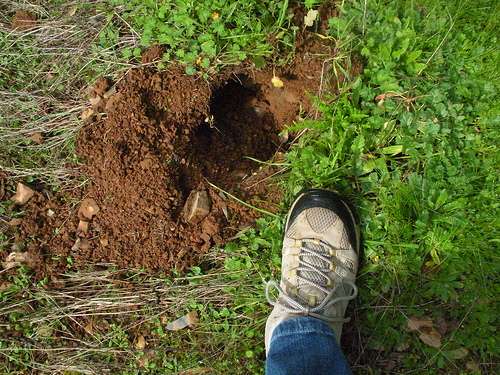
There were lots of fresh critter holes along the trail this week. This one was especially large. We see signs of lots of mammals as we walk and holes are some of the most intriguing signs that we are not alone.
Tips for Simple Homeschool Nature Study
I got to thinking about all of the simple things we have nature study in our own backyard that we have noticed over the years.
If you are not a Homeschool Nature Study member yet, please consider joining to gain the benefit of having a nature study library at your fingertips. There are numerous resources available for you to help create the habit of nature study within your family.
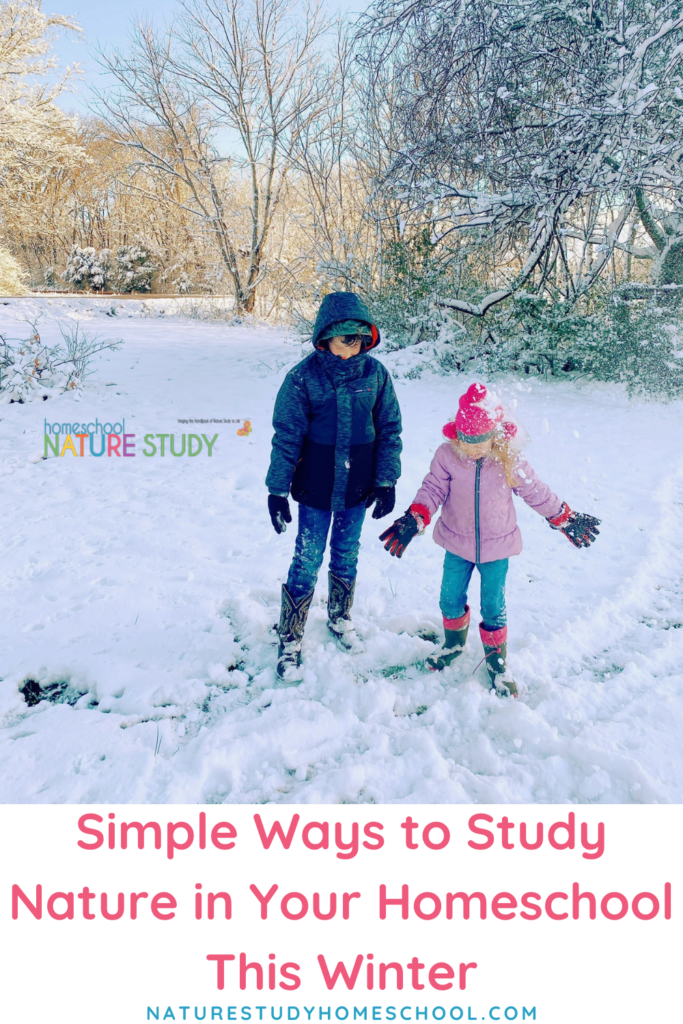
There are so many simple ways to study nature in your homeschool this winter! From nature walks to indoor studies, use this guide as a starting point for making memories together.
Simple Ways to Study Nature in Your Homeschool This Winter
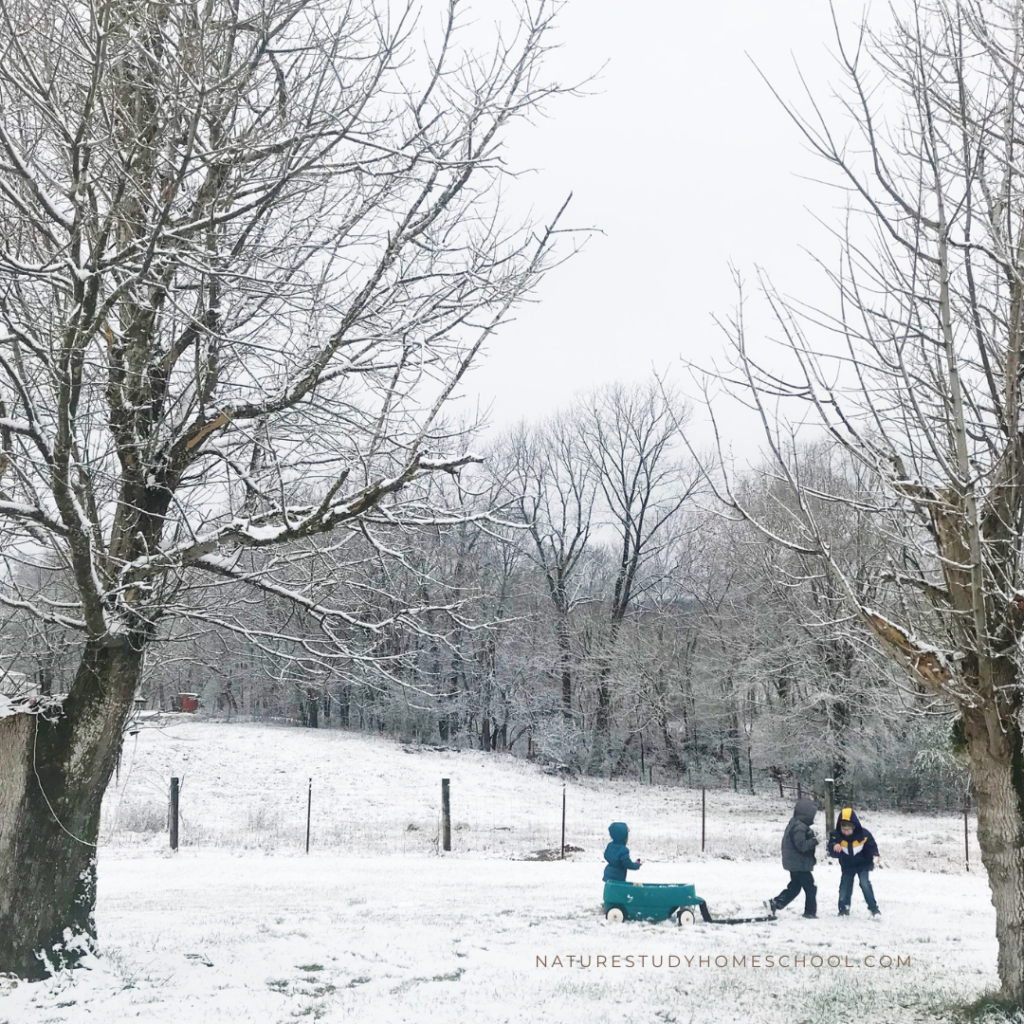
Getting outside for a walk on the first day of winter may be one of the most refreshing activities you could do with your children. The temperatures drop and we huddle inside more and more, especially on the shortest day of the year!
“The most obvious work of nature has been the preparation for winter. A wide range of observation should be used to impress the truth: the trees and shrubs have lost their leaves, and stored the provisions for spring in the buds and branches; many softer plants die down to the ground, storing the food in roots, others in bulbs, and still others in tubers. The question may be asked for each plant that comes up for observation – How did it get ready for winter?”
1. Take a walk this week and spend a few minutes looking at the plants in your yard and neighborhood. Look for bushes and trees without leaves, stopping to note that these plants are many times not dead but just waiting for spring to begin a new growth cycle. Don’t go into too much detail but allow time for quiet observation.
2. After your outdoor time, spend a few minutes discussing how plants get ready for winter. You can bring out the following points:
Some plants (Annuals) have seeds that survive the winter even when the plant does not.
Other plants (Perennials) have roots that survive the winter and start to grow again in the spring.
Deciduous trees shed their leaves, conserve food, and have buds that are waiting until spring to open and grow.
3. Make a nature journal entry recording anything of interest from your outdoor time.
Alternately, make plans to get outside for a brisk nature walk and then to follow up with a nature journal page recording all of the interesting things you found while outside.
Animals in Winter Homeschool Nature Study
“The same thought should be applied to the animals. Most of the birds have gone south because of the cold, and also because their food is gone; the frogs, turtles, and toads are going to sleep all winter down in the mud or earth below the frost; the caterpillars are waiting in their cocoons for the warm spring sunshine; most of the other insects have laid their eggs for the next season, while a few of them have crawled into warm places to wait; the squirrels have gathered a store of nuts, and will soon be asleep in the old tree-trunks; the cats dogs, horses, and cows have grown a fresh coat of hair and fur. Nothing is forgotten; each is ready in its own best way.”
This will be another easy week of nature study that will blend easily with other Outdoor Hour Challenges. Take the opportunity to spend some time outdoors noticing the way that animals prepare for winter. Make this one an investigation!
You might prepare with a little discussion about the various animals and birds that live in your local area. Some ideas to get you started:
migrating or visiting birds
squirrels gathering nuts
insects in cocoons
changes in color of various animals as they prepare for the white of the snow time
Bundle up and spend fifteen minutes outdoors enjoying the December world. A good nature walk is pleasurable for everyone and allows you and your children to appreciate God’s beautiful creation. The best times I can remember with my children are the times we just took it slow and easy, looking for the little things that most people pass by.
Look for signs of animals and think about ways they prepare for winter. You can also make bird and animal observations, noting their behavior. How are they staying warm? finding food? sheltering from the weather?
Encourage everyone to use all of their senses on this walk:
Did they see something colorful or unusual?
How does the air feel on your skin?
Is there a particular fragrance to the air?
Can you listen carefully for a minute or two to distinguish any particular sounds?
Another idea is to ask your children to find differences in the landscape, comparing your neighborhood habitat on this winter day to what they remember about the first day of summer. This is a little harder and you may need to help them get started with a few of your own observations.
More Outdoor Hour Challenge Ideas:
Turn over a rock and see what’s underneath.
Look up in the branches of the trees and see if you can find any birds or other critters.
Sit quietly by the edge of a pond or stream and see what comes along.
Breathe the air and enjoy the day.
Follow Up Indoor Winter Nature Study Activities:
After your outdoor time allow time for a nature journal entry. Use the notebook page or the journal idea from the December Newsletter to record your observations of anything that your child finds interesting. I also have a December World Notebook Page included Homechool Nature Study Membership or you can use one of the journaling pages included in the free membership sample, below.
Maybe this week you could use a different art medium in your journal…many of us get stuck in a rut. Offer colored pencils, thin markers, watercolors, or pastels.
You could also try offering modeling clay as an alternative to drawing the subject this week and then take a photo of the finished product to include in the nature journal.
In Homeschool Nature Study membership, each challenge gives you step by step instructions to get started with simple weekly nature study ideas…even in the middle of winter! This may just be what your homeschool week needs to get you through the cold winter days of January, February, and March.
Each challenge is written for you to complete in your own neighborhood or backyard and you can adapt each challenge to fit your local area with suggestions I offer with each topic. Don’t be discouraged if you look at the list of topics and think you don’t have that particular subject close at hand. I will guide you through finding a replacement to still offer you a weekly dose of nature study.
The winter homeschool nature study challenges were written for families with children of all ages. In addition to the regular challenge, I have bumped up the nature study for older or more experienced children, complete with their own set of notebooking pages. You will be able to use these studies with your whole family and pull it out from year to year and have a nature study resource for all levels.
Outdoor Hour Challenges for Winter – Bring the Handbook of Nature Study to Life in Your Homeschool!
Membership includes all you need for using the Handbook of Nature Study and enjoying learning together as a family. See a sample membership Winter Homeschool Nature Study by signing up with the form, below.
Membership includes all of this plus MORE!
notebook pages and coloring pages
Upper Level notebook pages for advanced or experienced students
Charlotte Mason style exam questions
Complete list of supplies needed
Detailed instructions for each challenge, including links and printables
Nature journal suggestions
Alternate ideas to adapt the challenges to your local area
Members also enjoy:
Bird in Snow video art lesson
First Day of Winter Walk and Observations Page
December World Notebook Page
Winter Weather Observations Journal Page
Window Observations Journal Page
December Words and Poem Journal Page
Special Outdoor Hour Challenges
Snow Study!
Red and Green Outdoor Hour Challenge
Moon and Moon Names
Study on Magnets and the Compass
And more challenges from all of the courses pictured above!
Get Your Free Sample Of Membership: Winter Homeschool Nature Study Download
Most importantly, when you get outside for your winter homeschool nature study, take along a good attitude and leave yourself open to whatever the experience brings. Allow your children to direct you to things they find interesting and then share in their excitement.
Nature study crafts for kids are a hands on way to learn. What beautiful and easy activities for learning and FUN! Let us show you how.
Nature Study For Kids
There is such value in adding nature study! Getting outside for a walk may be one of the most refreshing activities you could do with your children. Not only will you be learning about the beautiful creation in your very own backyard but you will be building lasting memories together.
And, gathering supplies from your yard makes doing a nature craft together even more fun! Spend a little bit of time outdoors then come inside and create. You could even stay outdoors and be crafty on a nice day.
Nature Study Craft Activities For Learning and Fun
Using our nature craft activities makes nature study easy on mom because our craft artist, Victoria, leads you and your students, step by step. Victoria grew up participating in the Outdoor Hour Challenges with her family. Nature has always inspired her work, right from when she was young. She, along with her sister, would go on weekly nature walks following lessons from the Handbook of Nature Study to learn about the beauty of our natural world. She has found through years of nature study that the slow and simple process of painting and being surrounded by nature has become her form of escapism from such a fast paced and material world.
Each craft activity is seasonal and matches what you are already studying in your homeschool. Plus, nature crafts are just so much fun!
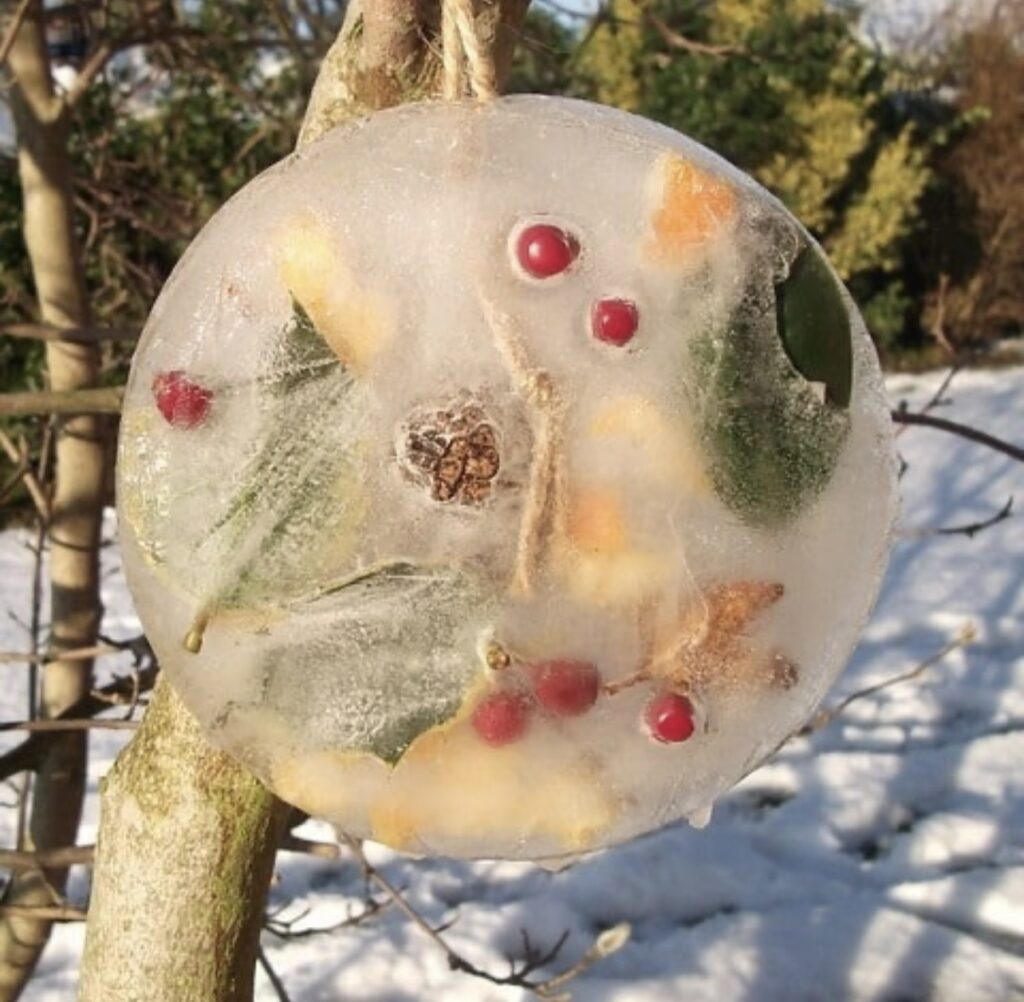
Ice art incorporating foraged berries, leaves, cones or whatever else you find in nature makes for a beautiful garden decoration…even of it only lasts a few hours.
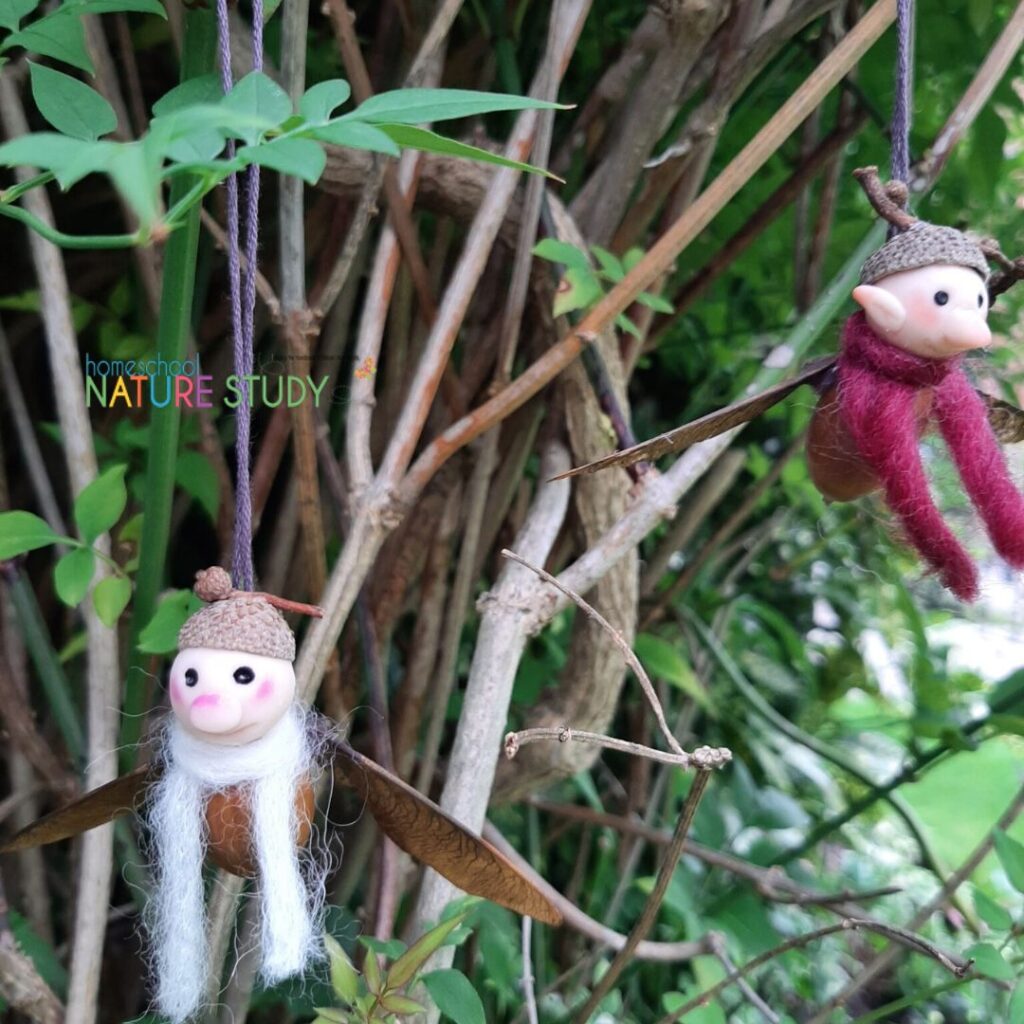
How to Make Forage Fairies
This homeschool nature craft makes it so much fun to get outdoors and forage for your supplies.
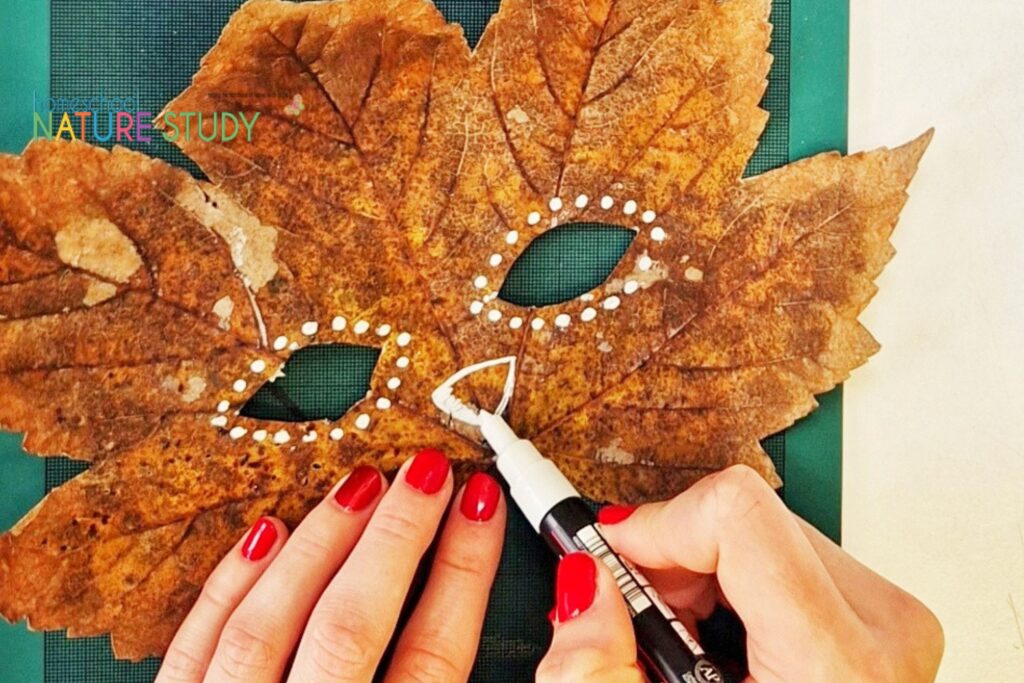
How to Make a Leaf Mask
You will love making a nature craft with leaves! We will be making these gorgeous leaf masks with only a handful of supplies. Let your creativity go wild with these masks!
More Resources For Nature Study In Your Homeschool
We love the nature crafts Victoria shares! And, did you know that Victoria’s mother, Shirley Vels, is your Outdoor Hour Challenge hostess? Not only does Shirley share your weekly Outdoor Hour Challenge, she also encourages fellow homeschool moms with her monthly Outdoor Mom lessons in membership as well!
If you are not a Homeschool Nature Study membership yet, please consider joining to gain the benefit of having a nature study library at your fingertips. There are numerous resources available for you to help create the habit of nature study within your family.
Members also enjoy access to:
Weekly Outdoor Hour Challenges to bring the Handbook of Nature Study to life in your homeschool!
the annual nature study plans
matching courses with materials and journaling pages
interactive calendar with daily nature study prompts
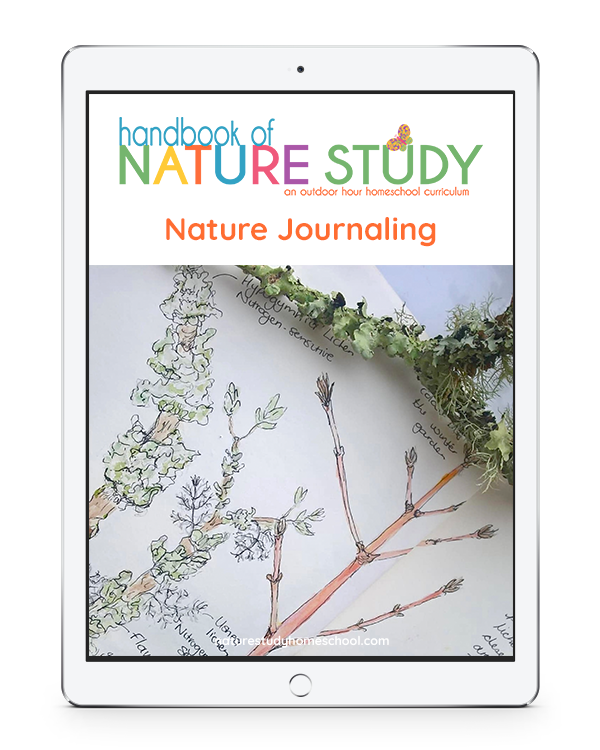
Nature Journaling course
and MUCH more!
Members of Homeschool Nature Study enjoy access to both the Nature Crafts course AND Outdoor Mom plus more exclusive courses and content.
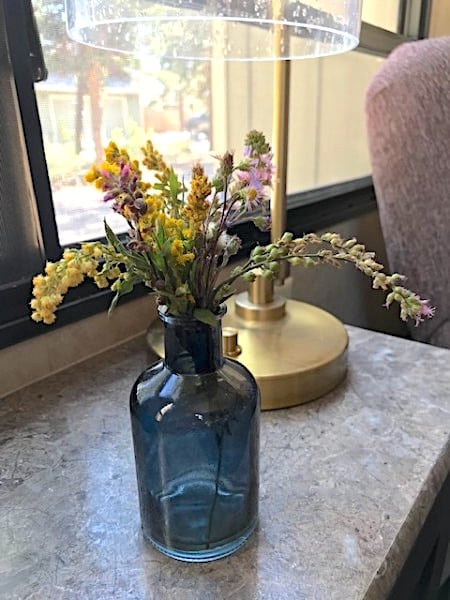
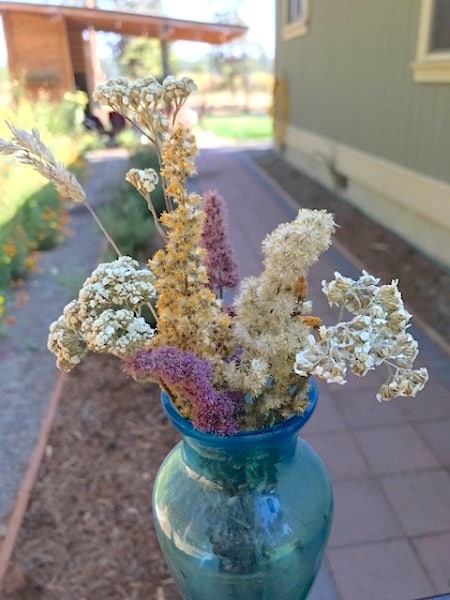
In my eyes, my autumn weed bouquet is as pretty as any flower shop bunch of roses. Invite your children to gather some of your autumn weeds to be indoors as part of your nature display.
Sitting on my desk is a small vase of flowers I collected a few weeks ago. Although they’re all dried up now, they are a fond reminder of an afternoon spent walking and collecting a few blooming things with my daughter.
This inspires me to share an idea with you readers. Why not go out on a crisp autumn day and collect a few flowers, weeds, and grasses from your neighborhood to enjoy in a vase?
A Beautiful Fall Homeschool Activity
My husband and I debate about the definition of a weed, an on-going discussion in our family. I say a weed is something growing where you don’t want it to grow, like in a flower or vegetable garden or in the middle of your manicured lawn. But, if the plant is growing, like most of those in our yard, in a natural landscape, I try to leave it as part of the habitat.
How To Make a Weed Bouquet
Take the opportunity to cut some of the fall weeds for a bouquet to have indoors. You and your children can create a bouquet that makes you happy. Once again, it is a matter of perspective in determining whether a plant is a weed or something amazing to look at as part of your fall homeschool nature studies in a vase.
Please feel free to use this idea as an alternate study to any of the autumn wildflower studies.
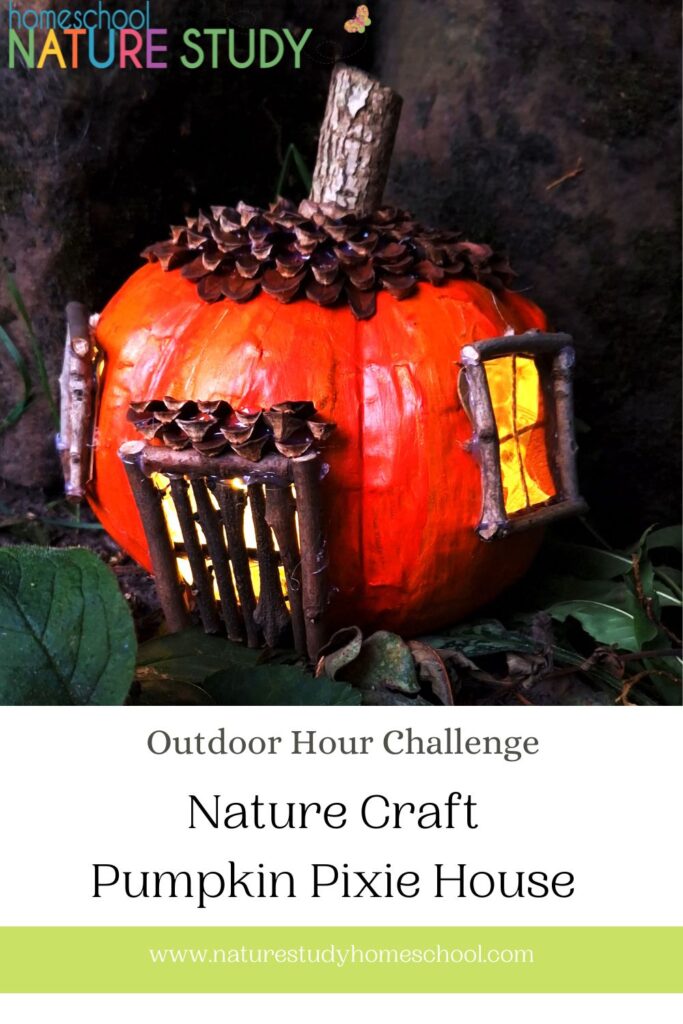
Autumn is finally upon us with all its rust, orange and golden glory, so it’s the best time to make these pumpkin pixie houses. With yellowing leaves, ripening apples and pumpkins galore, what better way to celebrate the new season than with an adorable new nature craft. Enjoy this fabulous new craft for our members – led by Victoria Vels! Join Homeschool Nature Study membership today!
Homeschool Nature Study Membership
Join us for even more homeschool nature studies for all the seasons! With a nature study each week, you will have joyful learning leading all the way through the homeschool year for all your ages!
Not yet a Homeschool Nature Study Member? We’d love for you to join us and take advantage of the numerous studies – already planned out for you, craft ideas, free worksheets, and #outdoorhourchallenge fun! Become a member and bring the love of learning nature and science easily into your home.
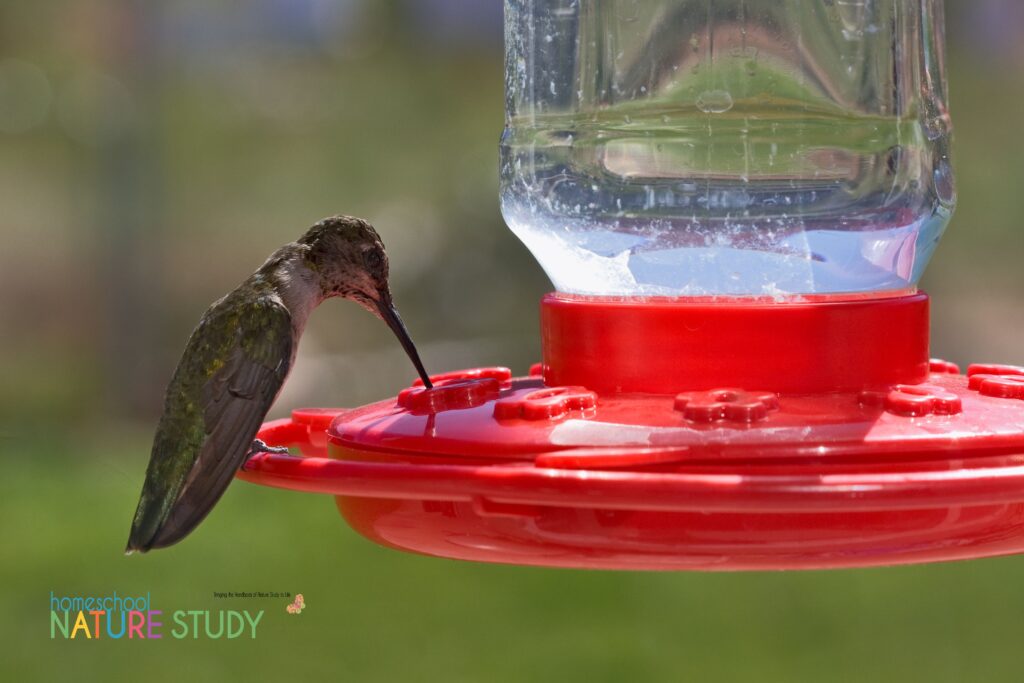
I am learning about bird migration with Project Feederwatch. I am fascinated by birds that migrate. It makes me feel an awe for such creatures and the way they travel up to thousands of miles as the seasons change. When I lived in California, I was aware of birds and the way they would come and go at my feeders season by season. I could anticipate their arrival and then have a fairly good idea of who would be leaving at the turn of the weather.
Learning About Bird Migration with Project Feederwatch
Project Feederwatch each year made me keenly aware that the birds at my feeders were not the same year round. Check out the details at their website, here.
I am getting ready to participate in my first year of Project Feederwatch here in my new home. I have updated my account and created a new description of the feeders and their locations and types. Watching birds is an everyday affair here from my kitchen and family room windows so Project Feederwatch is a perfect match for our lifestyle.
Citizen Science Projects In Your Homeschool
I enjoy participating in a citizen science project that helps gather data for those involved in various bird science projects and studies. Plus, it is something that refreshes me and brings a lot of joy to my life. It is something that I can participate in that doesn’t take a huge commitment of time and I can do it right from my own home, even if I am wearing my pajamas.
This is our first autumn and winter here in our new home so we are still experimenting with various feeder types and the placement within the yard. I had an idea to add a brush pile just outside our back fence after we trimmed some tree limbs. So far I have observed birds and squirrels investigating the jumble of limbs with their needles and cones still intact. It isn’t too far from my cluster of feeders so it will provide some shelter for birds once the snow arrives.
I started right after we moved in creating a list of bird visitors to our yard. I will be keeping that habit going right on through the next few seasons. This should give us a pretty good idea of the migrant visitors as they pass through or stay for awhile. This is a simple way to get your family started with a more in-depth bird study and I encourage you to keep track of the birds that come to your feeders. It may just make you more aware of bird migration!
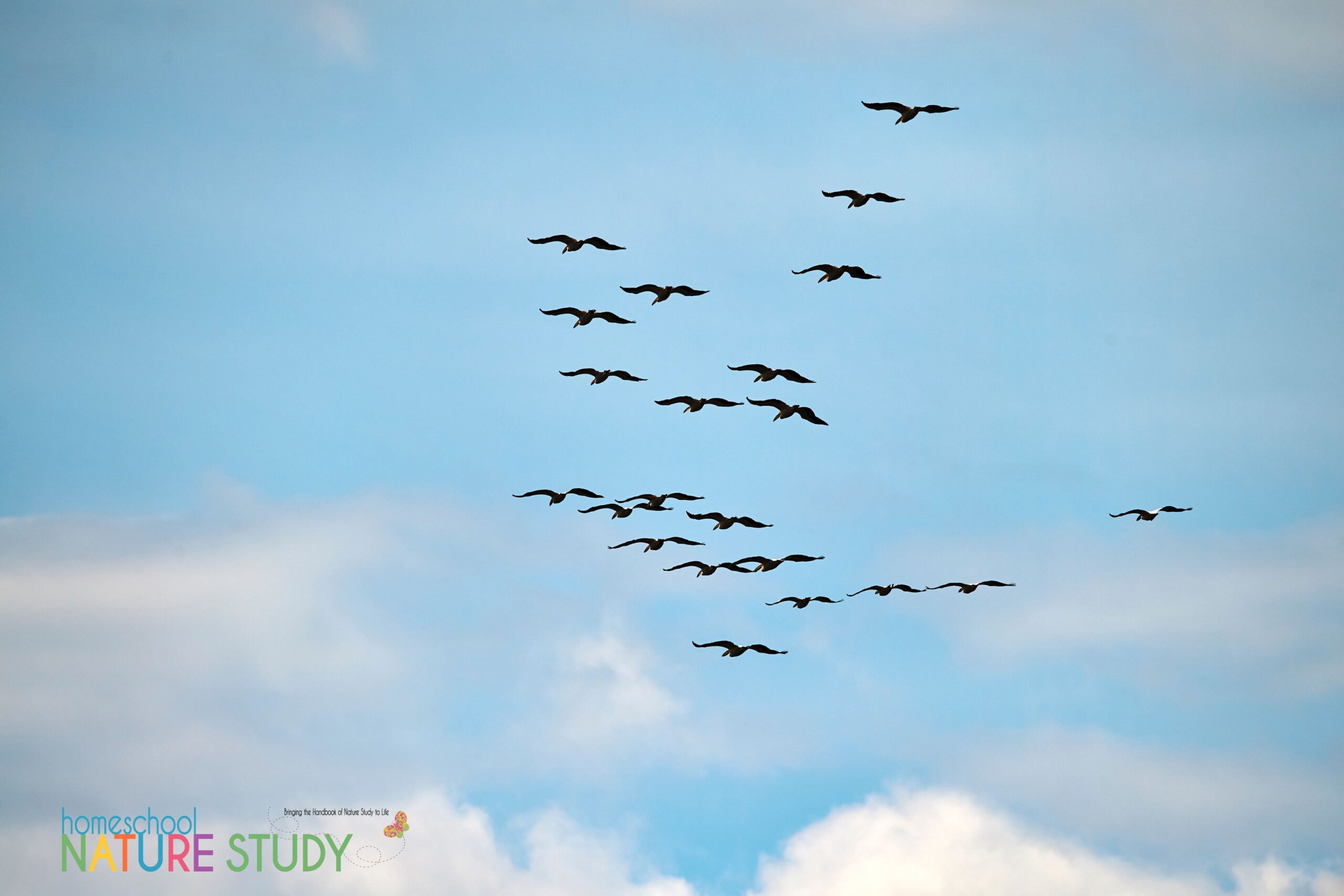
We recently had the experience of hearing and then seeing a group of sandhill cranes fly over our yard. It was about sunset when my son and I were out doing yardwork. I heard in the distance what at first I thought were geese coming overhead. But, it was a strange and unfamiliar sound and not geese at all. (Click over to AllAboutBirds to hear what it sounded like.)
My son spoke up when he realized it was the sound of sandhill cranes. He had heard them before when we lived in California and immediately recognized the rattling loud commotion of a group of cranes flying south over our house. It was exciting to experience this for the first time and I have since done some research into the migration habits of the sandhill crane. Knowing how far they fly has given me such an awe for these large birds. I followed up that time and created a page in my nature journal with this information.
The opportunity to study birds can present itself when you least expect it…look for those opportunities!
Make sure to learn about the Feederwatch program and decide if it is a good fit for your family!
More Resources for Learning About Birds
There is a wealth of birding information on the internet but I have not found a more homeschool-friendly site than the ones sponsored by Cornell University. I would love to encourage you all to subscribe to their homeschool blog (click the logo above to pop over there now).
You can also follow them on Facebook . You can download homeschooling resources here. Of course, my favorite resource is their AllAboutBirds website which is a great tool for identifying and learning more about birds in your own neighborhood.
Birdcast gives you live updates on bird migration! Fascinating to follow! Thanks to Carol for sending this resource.
Join us for even more homeschool nature studies for all the seasons! With a nature study each week, you will have joyful learning leading all the way through the homeschool year for all your ages!
Not yet a Homeschool Nature Study Member? We’d love for you to join us and take advantage of the numerous studies – already planned out for you, craft ideas, free worksheets, and #outdoorhourchallenge fun! Become a member and bring the love of learning nature and science easily into your home.
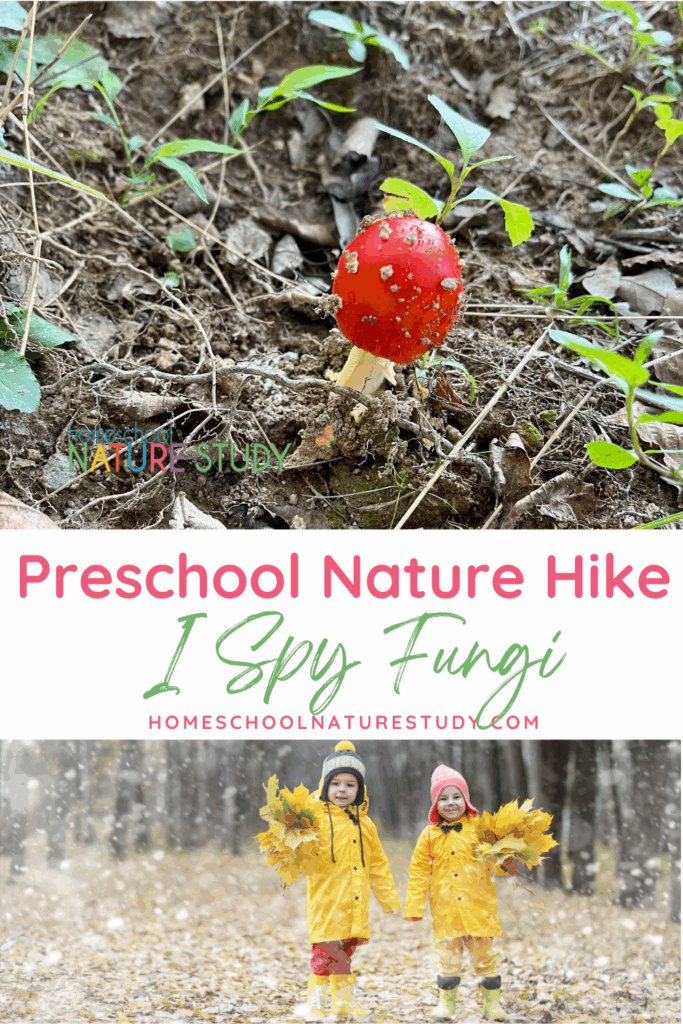
When we think of fall we often picture pumpkins, hay rides, apples, and changing leaves. But it is also the perfect time of year to go on a I Spy Fungi: Preschool Nature Hike.
We didn’t set out to have a fungi nature hunt but it turned into that once we noticed how many different types of mushrooms we were seeing on our walk.
I Spy Fungi: Preschool Nature Hike
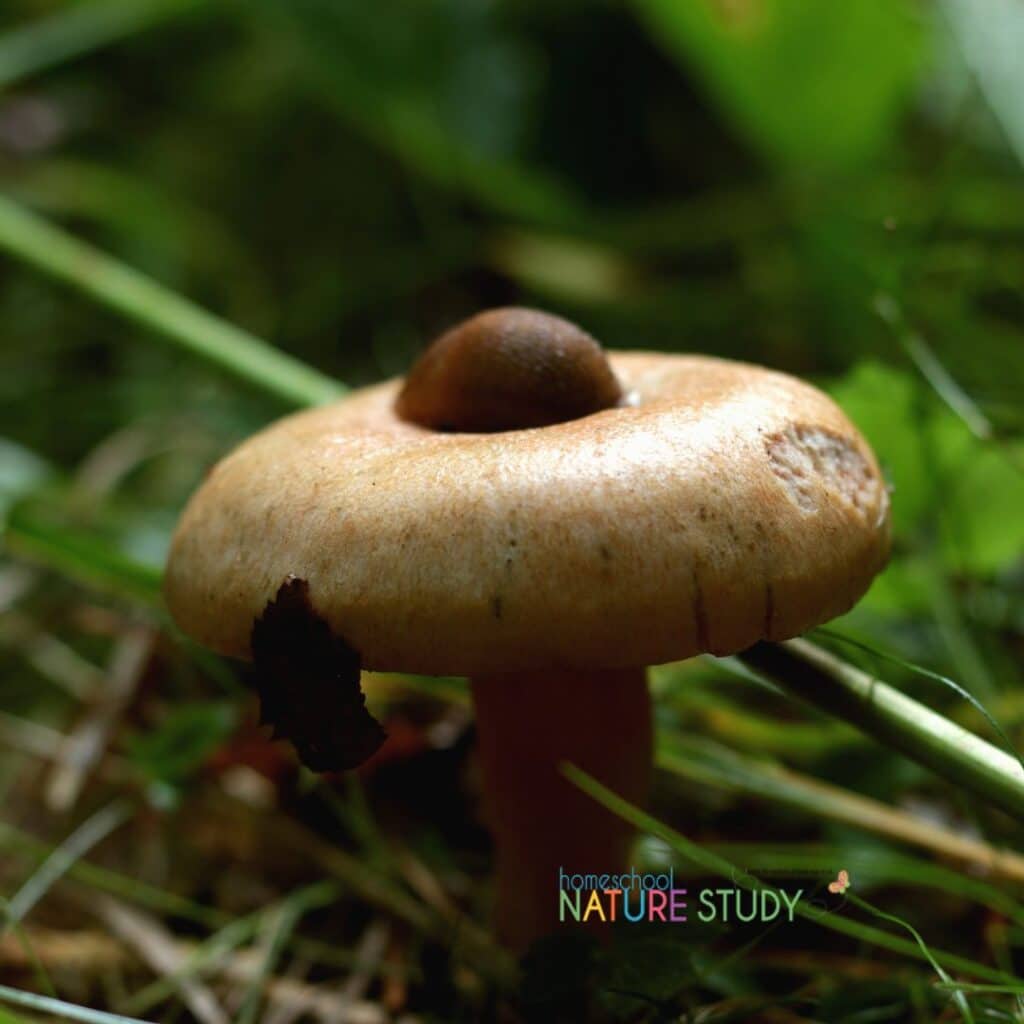
There’s something about fungi that is gross and cool at the same time! While we were walking through the woods, we came across several different types of fungi. With my preschool children, we observed the different colors, shapes, and locations of fungi.
We even found a slug on fungi. That got us thinking– why would a slug want to be on fungi? (Moisture was our guess.)
Slime and mushrooms– what was the connection? Was it part of the mushroom or was it left from an animal? Those were some of the “I Wonders” that we came up with while on our hike.
We also talked about how some mushrooms are safe to eat but others are not — and we just observe mushrooms with our eyes not our hands.
We observed a variety of fungi on our nature walk and had some great discussions about what we saw.
So head out on your own I Spy Fungi hunt! Bring a camera or sketchbook and capture what you find. I’d love to see your photos! Be sure to tag us on Instagram or Facebook.
There are 25+ continuing courses with matching Outdoor Hour curriculum that will bring the Handbook of Nature Study to life in your homeschool! In addition, there is an interactive monthly calendar with daily nature study prompt – all at your fingertips!
Join us for even more homeschool nature studies for all the seasons! With a new nature study each week, you will have joyful learning leading all the way through the homeschool year for all your ages!
Be inspired. Be encouraged. Get outdoors!
By Maureen Spell, a long-time contributor to the Outdoor Hour Challenges.Maureen helps Christian mompreneurs operate their business from a place of joy, purpose, and excellence because they are clear on how their business is serving their family and others. As a homeschool mom, she believes success at home AND business without the mom-guilt, stress and burn-out is possible! Outside of work, she loves having good conversations over a hot chai or GT Gingerberry kombucha and spending time with her husband and seven children. Visit her at MaureenSpell.com
Nature study for teens can be just as engaging and educational, but it does require an age appropriate approach to learning. Here’s what has worked for us.
“Some children are born naturalists, but even those who aren’t were born with natural curiosity about the world and should be encouraged to observe nature.” Charlotte Mason, vol 2 page 58
“They get so used to reading about marvels of nature and never seeing it for themselves that nothing interests them. The way to cure this is to let them alone for awhile and then start something totally different. It’s not the children’s fault that nature bores them; they are naturally curious and eager to explore the world and everything in it. There’s a poem that says that the person who can best appreciate God is the one who is familiar with the natural world He made.” Charlotte Mason, vol 2 page 6
Nature Study and Teens
Sometimes, despite all my efforts, my boys just are not as interested in nature study as I am. I can take them to the most fascinating places to explore and they just want to sit and talk or take a walk by themselves. The setting is perfect and the subjects abound but they are more interested in throwing rocks or digging a hole.
I can’t force them to be interested when this happens.
What To Do If Your Teens Are Bored in Nature
How have we learned to handle this? I allow them the space and time to experience nature on their own terms.
It may look like they are not taking much interest but later on when we are driving in the car or talking at the dinner table, they relate things that they noticed as they had a little freedom.
They learned a lot about the properties of bullwhip seaweed as they tried to use it to tie the driftwood together for this beach structure.
They experienced the redwood forest on their own terms as they searched out Big Foot beyond every bend in the trail.
On every beach they made circles in the sand. It became a tradition.
Nature study does not always go according to my plan. I have learned to keep my options open and let things happen as the day unfolds. Honestly, I learn more as well because they most likely will find something that I wouldn’t because they have their own eyes. My eyes see one thing and they see something completely different if I allow them the space and time to find what interests them in our nature study.
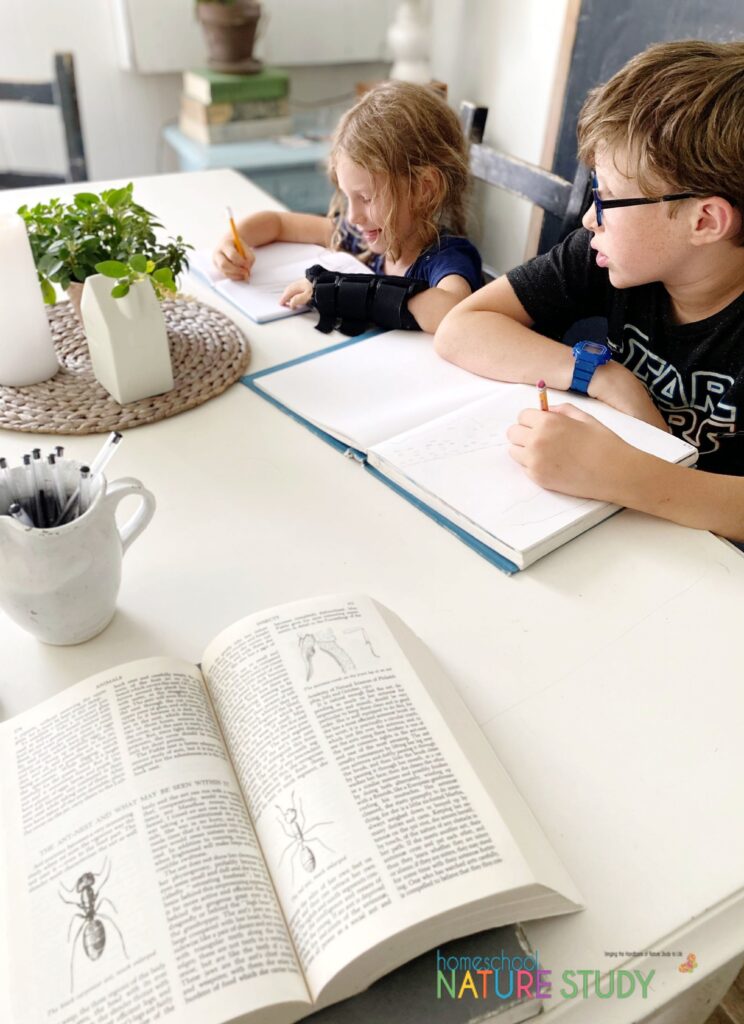
Monthly nature journal activities take your outdoor experiences, your thoughts, new ideas or facts, and make them tangible. Here are some ideas to get you started nature journaling.
Paging through the completed journals gives such a sense of accomplishment, each page a nugget of learning from your nature study.
This time of year is an opportunity to reflect on our goals and habits. I don’t know about you but one thing that has been a little neglected over the last year is my nature journal.
Monthly Projects For Nature Journaling
Our Homeschool Nature Study members will receive new nature journal activities each month! I jotted down a list of journal ideas for each month of the year. Creating a page a month will be a simple and reachable goal and I hope it will help you and your family to complete a few pages too.
Homeschool Nature Journal Supplies Needed?
Let’s keep it simple. Pull your nature journal off the shelf or out of your backpack and take a look at what you have done so far and decide if your journal choice is inspiring you or hindering you.
Or, if you are new to nature journaling, take a trip to the office supply store and look over your journal choices. It is important to like the feel and size of your journal. I like to use sketchbooks but some people like to use fancier journals.
Here are a couple I have used in the past and really liked. They lie flat, are spiral bound, and they hold up to just about any medium I want to use (including watercolor with varying results).
Some links may be affiliate links. Please see our disclosure policy.
I have tried to use the more traditional style of sketchbook for my nature journal and decided I don’t like the way the book doesn’t lie flat and the pages are too slippery. But, many people love the look and feel of the Moleskine style journal.
The point is not to get hung up on choosing a journal but just pick one and get started!
Art Supplies for Writing and Sketching
I use a variety of things to write in my journal.
If you have a good black pen you like pull that out and keep it with your journal.
Gel pens
Prismacolor markers and Prismacolor watercolor pencils round out my nature journal writing and sketching choices.
Don’t forget a good old No. 2 pencil is always handy for making quick sketches in your journal.
Other Journaling Supplies
Other items that may be helpful for your nature journal activities include a small ruler, a jar lid for making circles, double sided tape to adhere items in your nature journal, a pencil sharpener, and a small cup and paint brush for working with watercolor pencils.
The first months of nature journal activities is ready for Homeschool Nature Study members in the Nature Journaling course in membership. This will give members the rest of the month to spend some time outdoors as part of the Outdoor Hour Challenge or other family activity and then create a journal using the suggestion.
Each lesson is filled with ideas and how tos for your family:
June – Sketch Outside
July – Using Your 5 Senses
More nature journal activities coming for members each month!
Share a photo of your nature journal and tag us on social media @outdoorhourchallenge Join us in continuing this fun Nature Journal Project started by our founder, Barb McCoy!
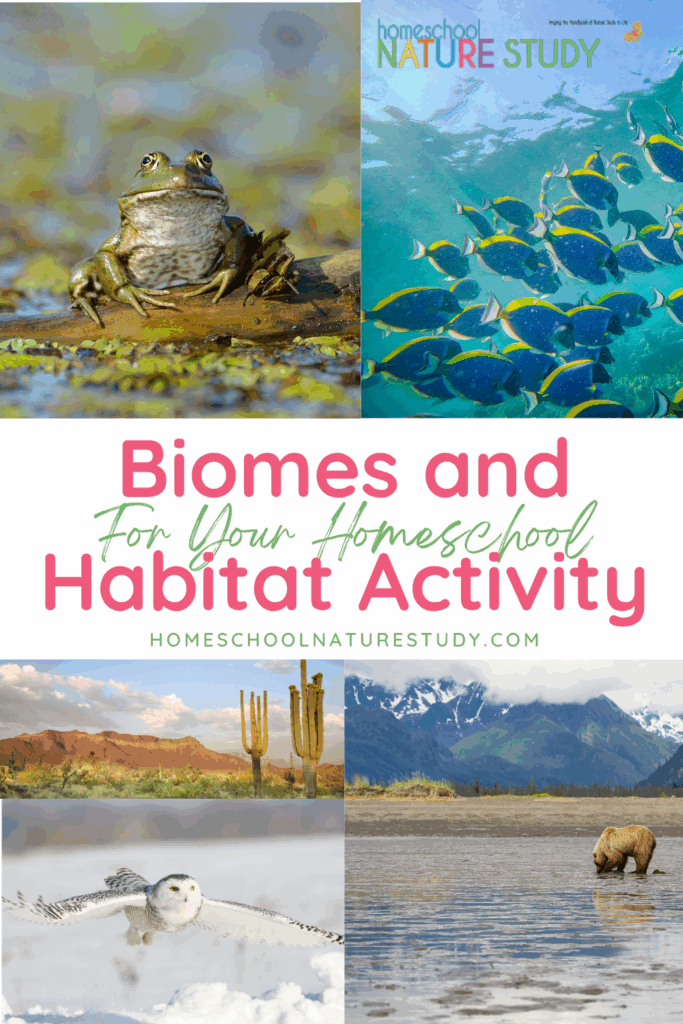
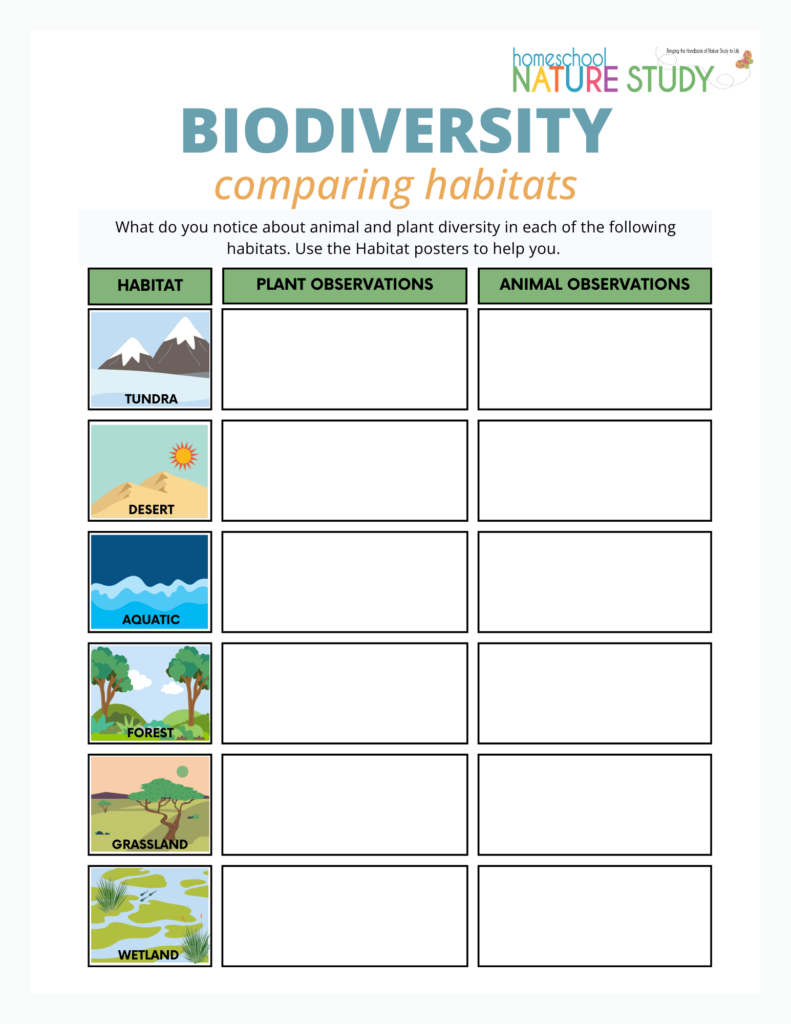
Learn about biomes and compare habitats. With these activities, notice animal and plant diversity and enjoy an in-depth study of our beautiful earth!
Learn About Biomes and Compare Habitats
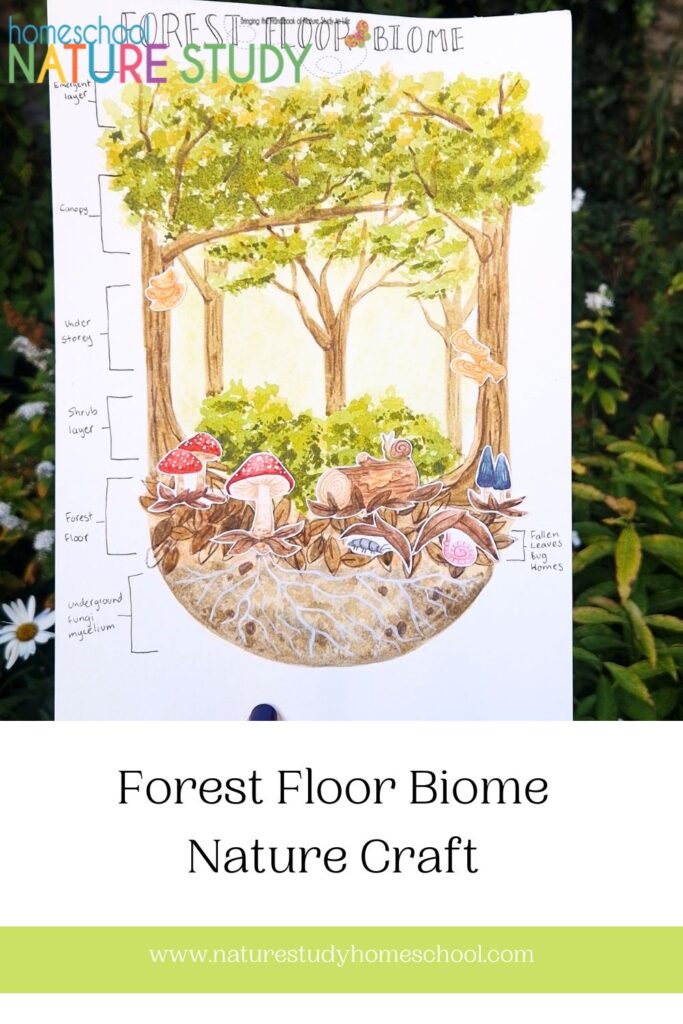
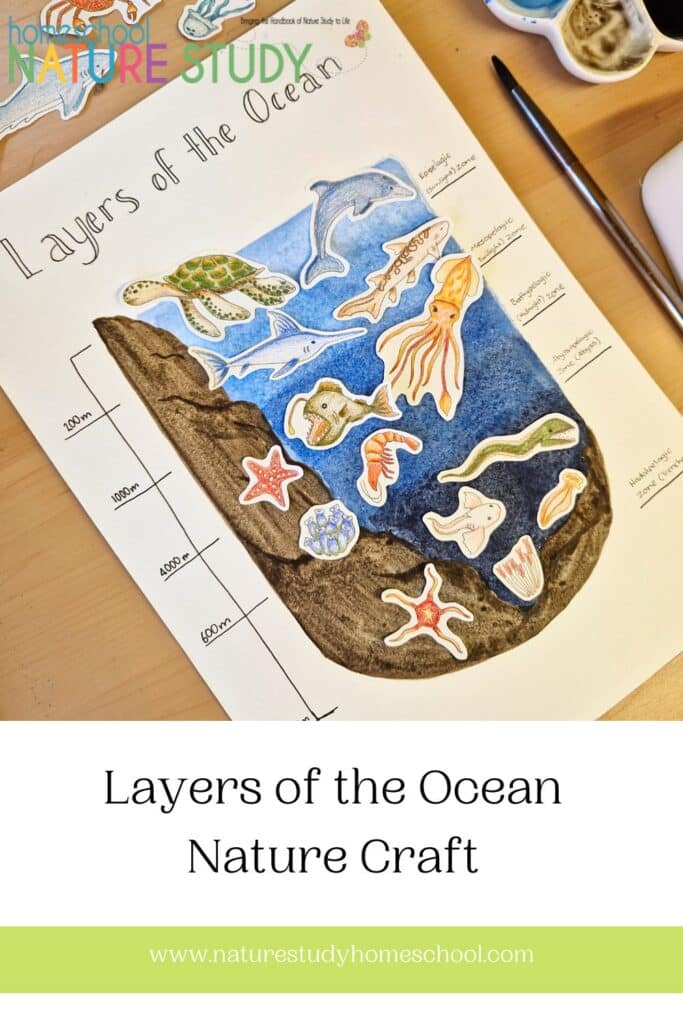
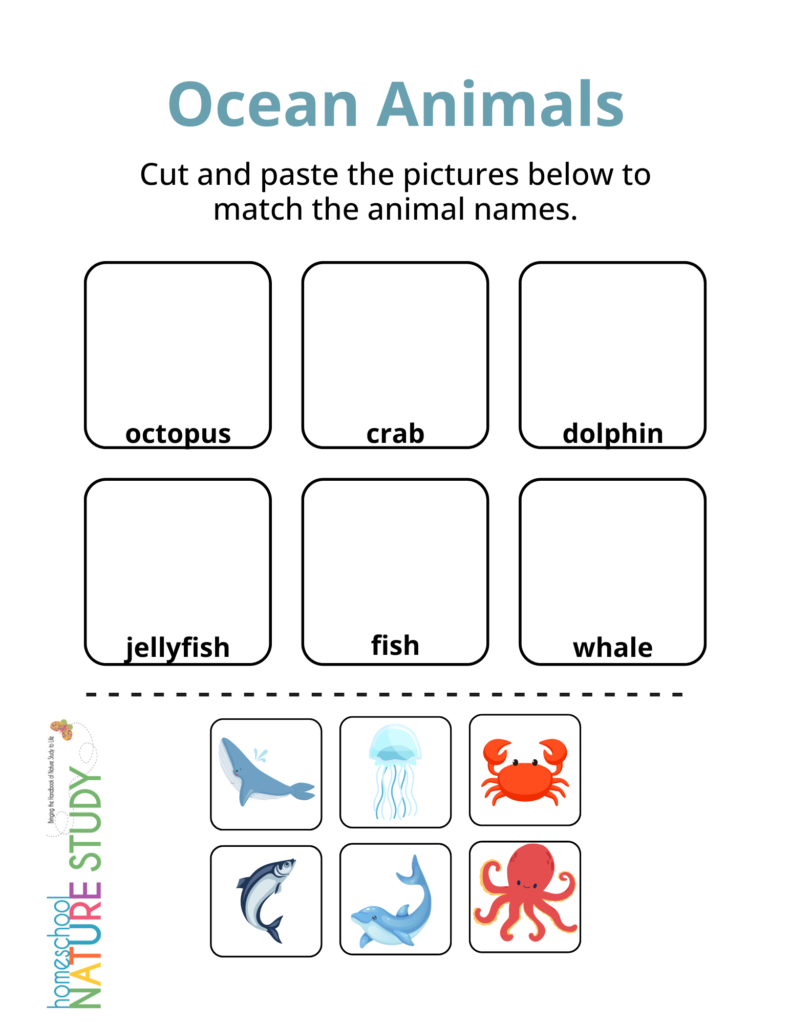
We invite you to enjoy all of the various habitat studies and use the Outdoor Hour Challenges resources and curriculum for your studies. Learn about the forest floor, layers of the ocean, the desert, snow/tundra and more!
Explore a Forest Floor Biome
Autumn is on the horizon with the yellowing of leaves signalling chilly weather to come, so lets create this forest floor biome to celebrate. In this tutorial I will show you how to layer watercolours to create depth as well as texture using a stippling technique. So grab your paints, download the free printable I have created and let’s get crafting!
Layers of the Ocean Art Lesson – Learn About the Ocean Biome
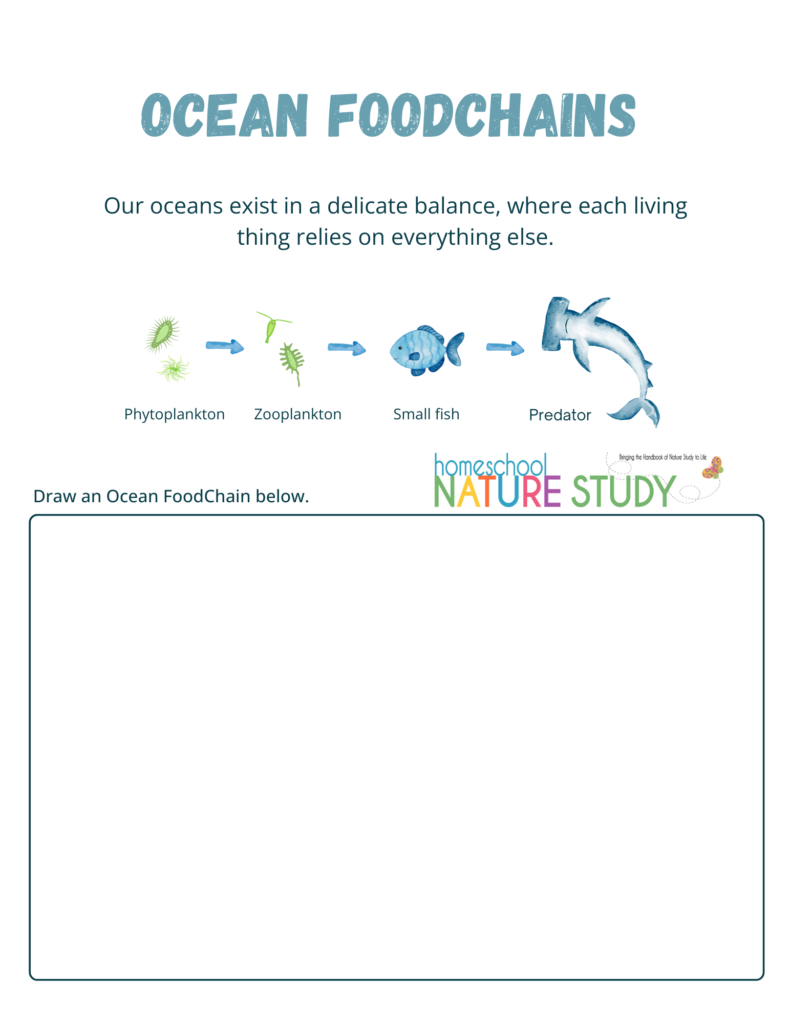
With 5 different layers of the ocean home to many amazing creatures, a layers of the ocean diagram is the perfect study companion to create. I have created a little printable with the outlines for your diagrams. All you have to do is add colour. In this lesson I will teach you some great watercolour techniques so grab your paints and lets get crafting!
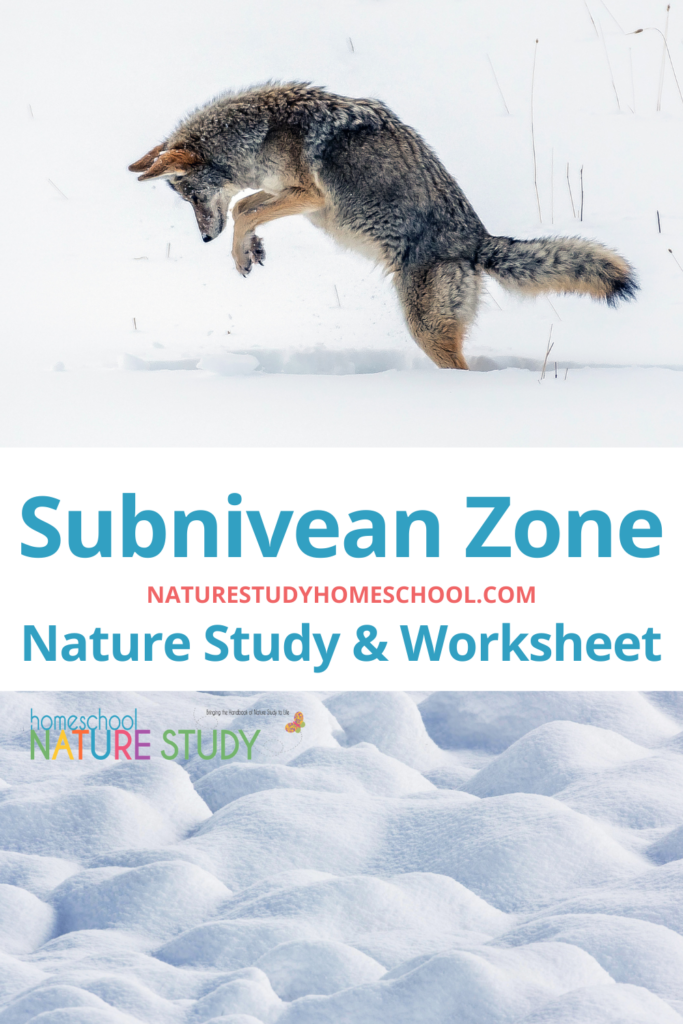
Learn more about the interesting Subnivean Zone animals and predators with these facts and new member worksheet.
The Subnivean Zone is found in and under the snow pack. It’s the space that many creatures inhabit during the winter where the snow actually acts as an insulator from cold winter temperatures. Smaller mammals like mice, voles, pikas, and shrews live in the subnivean zone to escape the cold, wind, and predators.
The smaller mammals create a unique tunnel system to travel around, hunt, and gather food. However, predators like weasels, foxes, coyotes, owls, and wolves, use their amazing senses of smell, hearing, and sight to find these prey below the snow.
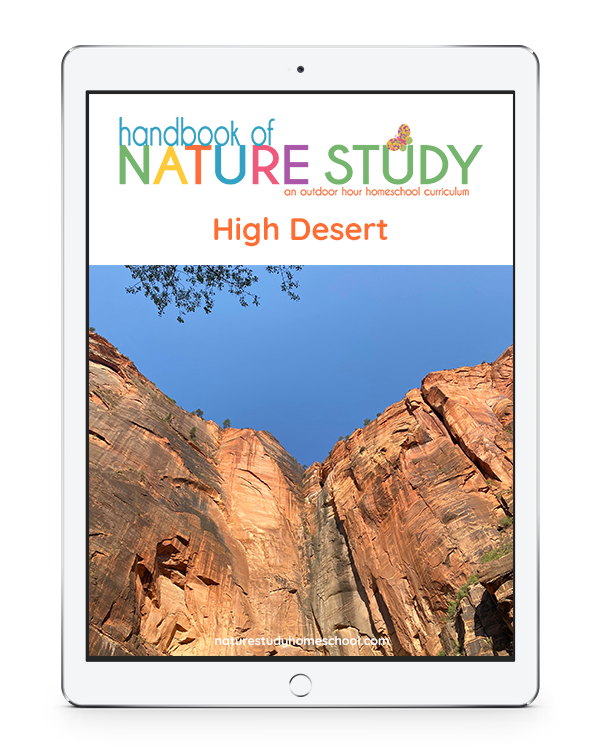
Remember that the yield of a hard country is a love deeper than a fat and easy land inspires, that throughout the arid West the Americans have found a secret treasure … a stern and desolate country, a high bare country, a country brimming with a beauty not to be found elsewhere.” —Bernard DeVoto 1943
“I am happy to share with you just a small snapshot of the diversity of life there is to be found in the High Desert. The topics in this ebook curriculum are some of my favorite nature study subjects from my own personal nature journal and experiences.
This habitat is home to over 350 species of plants and animals that depend on sagebrush for survival: mule deer, pronghorn, golden eagles, black tailed deer, and the spade footed toad to name just a few additional study ideas for continued study.
Start with the topics in this curriculum then keep going!” – Barb McCoy, Outdoor Hour Challenges founder
Our High Desert course is included in membership and gives you a deep dive into the animals, plants and the vast variety of this habitat. It also includes advanced studies options for high school students. Here are some topics included:
Included with this curriculum are advanced notebook pages and advanced follow-up suggestions. Each challenge will include ideas for older students to dig a little deeper and take a more focused look at each topic. The challenges will include notebook pages for the advanced students to use in their nature journals. Please feel free to skip the notebook pages and use any nature journal that you already have started.
You also may wish to download my free printable Nature Study: Three Steps to a Better Nature Study Experience. It will show you how to offer age appropriate nature study to all ages of children in your family. There are also tips and a free printable nature study rubric for advanced students. You can successfully continue nature study with your teenagers. They may need some encouragement to make the study their own by adjusting your subjects, your methods of follow-up, and your attitude towards what nature study should look like.
Wildlife Habitat Plan with 25 More Ideas – With Requirements For Certified Wildlife Habit!
Homeschool Nature Study Members can enjoy this Wildlife Habitat Plan (with Requirements for a Certified Wildlife Habitat!) with prompts for 25 more ideas for your backyard habitat!
Members enjoy this wonderful Biodiversity: Comparing Habitats resource! So much to enjoy while learning about biomes and habitats.
More Biomes and Habitats Nature Studies to Enjoy
How to Make Your Backyard a Natural Habitat for Wildlife – Here are some simple ways you can make your backyard a natural habitat for wildlife. You will love having the opportunity to have nature come to you in your very own backyard. Involve your whole family in the project and spend some time outdoors!
Homeschool Nature Study Membership for Year Round Support
Can you believe all of these homeschool resources you will find in membership? You will also find a continuing homeschool nature study series plus all the Outdoor Hour Challenges for nature study in our Homeschool Nature Study membership. There are 25+ continuing courses with matching Outdoor Hour curriculum that will bring the Handbook of Nature Study to life in your homeschool! In addition, there is an interactive monthly calendar with daily nature study prompt – all at your fingertips!